Summary
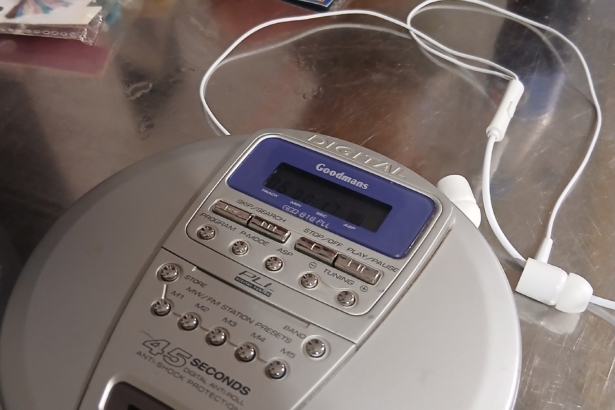
- There is an absurdly satisfying drama to slipping a shiny compact disc into a silver portable CD player.
- The Silver Disc Reign By the late 80s and 90s, the CD player (affectionately nicknamed the Discman, though brands like Goodmans ruled the market too) took over.
- On the other hand, physical disc into a portable player forces you to listen to an entire album from track 1 to track 20 the way the artist intended.
There is an absurdly satisfying drama to slipping a shiny compact disc into a silver portable CD player. Next up, click the lid shut and voila! Listen to that faint mechanical whir-click as the laser reads the track. We live in an era where a glass smartphone screen gives you instant access to 100 million songs. And when one chooses to carry around a plastic disc player, it feels less like a modern inconvenience and more like a heroic act of rebellion.
Well! In order to figure out why Gen Z is suddenly obsessing over vintage music players that take up actual pocket space, we have to look at the wild journey of how we got here.
From Giant Plastic Discs to Invisible Spotify Soundtracks
The evolution of portable music is essentially a history of humans constantly trading physical soul for pure convenience.
The Boombox & Tape Era
Back in 1979, the original Sony Walkman fundamentally changed society by letting people walk down the street with their own personal soundtrack playing on magnetic cassette tape. It was revolutionary, even if you occasionally had to fix a tangled tape using a No. 2 pencil.
The Silver Disc Reign
By the late 80s and 90s, the CD player (affectionately nicknamed the Discman, though brands like Goodmans ruled the market too) took over. Suddenly, music was crisp, digital and skip-resistant. The condition that provided your player had a reliable 45-second anti-shock buffer and you didn’t jump off while walking! Albums came with jewel cases, actual artwork and fold-out lyric booklets you could read on the bus.
The MP3 Tidal Wave
The early 2000s crushed physical media into tiny digital files. The iPod and cheap MP3 players meant you could hoard thousands of low-bitrate songs in your pocket. They effectively killed off the concept of buying an album just to listen to it as a cohesive story.
The Infinite Streaming Void
Today, platforms like Spotify and Apple Music serve us endless music on demand. Every track on Earth is accessible with a single tap. That’s why music easily morphs into background noise rather than a meaningful event.
The Retro Revival
You’d think the generation born into high-speed Wi-Fi would turn their noses up at retro tech. However, physical music sales among young listeners are skyrocketing. It turns out that living entirely online gets exhausting. The antique way of listening to music hits differently for a few fun reasons. Spotify’s algorithm loves to push you into a hyper-specific mood bubble. On the other hand, physical disc into a portable player forces you to listen to an entire album from track 1 to track 20 the way the artist intended. On top, there are no skips, no ads, no doomscrolling while listening. There is a joy in pressing actual spring-loaded plastic buttons instead of tapping a flat screen. The mechanical clicks, volume dials and tangled headphone wires bring a sensory connection. In my opinion, a digital app just can’t match. In the subscription economy, you don’t own anything. If a streaming platform loses licensing rights, your favorite album vanishes overnight. A physical CD on your shelf, however, is yours forever.
Now, let’s be honest! Pulled-out wired earbuds connected to a metallic silver CD player looking like straight out of Y2K sci-fi is an undeniable aesthetic flex.
We welcome your contributions! Submit your blogs, opinion pieces, press releases, news story pitches, and news features to opinion@minutemirror.com.pk and minutemirrormail@gmail.com