Summary
- Invite China to finance and build the hydropower across GB, AJK and KPK the way India financed Bhutan, and let Pakistan’s surplus eventually be wheeled toward Afghanistan, toward India, even toward China itself — which still needs to retire coal capacity and would gladly take clean power off a friend’s grid.
- Two hundred and sixty million Pakistanis have watched their own institutions manage the grid into a Rs2 trillion circular debt trap; they deserve the right to ask whether the one power system in the neighbourhood that has actually solved transmission loss at national scale might do better.
- China will not slaughter 260 million Pakistanis and the national economy, unlike the Ministry of Planning, NEPRA, CPPA, and the Power Ministry, which have laid waste to the nation’s economic foundation much like Genghis Khan’s devastation of the Abbasids in Baghdad.
Pakistan is about to privatise three of its distribution companies — FESCO, GEPCO and IESCO — and call it reform. It is not reform. It is triage, dressed up by three institutions that have run out of the credibility to call it anything else. The government picked these three not because they are the future of Pakistan’s grid, but because they are the only ones healthy enough to survive being sold. Their transmission and distribution losses sit around 9–10 percent, low by Pakistani standards, and their books are clean enough to attract a buyer. That is not a privatisation strategy. That is a garage sale of the family’s least broken furniture while the roof still leaks — supervised by the very carpenters who let the roof rot.
And look who is showing up to bid. Expressions of interest have come from a handful of Pakistani business houses — conglomerates looking for a new asset class. Not one of them has run a national distribution network at scale, with the theft, the political interference, and the feeder-level rot that defines an ex-WAPDA DISCO. We have seen this film before. It was called K-Electric. At the time of its 2005 privatisation, KE was drawing a subsidy of roughly Rs 8 billion. Two decades later, it needed a Rs163 billion tariff differential subsidy in the FY2026–27 federal budget just to keep its consumers’ bills from reflecting its own inefficiency. Twenty-fold growth in the subsidy bill is not what privatisation was sold as. If that is what “successful” privatisation looks like, Pakistan should be terrified of doing it two, or eleven, more times.
The rot is institutional, and it has three addresses. NEPRA has spent years rubber-stamping tariff hikes, capitulating to circular debt, and failing to enforce performance standards on the DISCOs it already regulates — a ceremonial regulator that confuses notifying a tariff with governing a sector. CPPA-G, sitting at the centre of the power purchase and settlement system, has presided over a circular debt mountain that keeps climbing regardless of who is nominally in charge, and has never been made to answer for it. And the Ministry of Power itself has spent a decade approving capacity contracts, rejecting cheaper foreign offers, and rotating leadership through the same small circle of appointees who preside over one crisis and then the next. None of these three institutions has the standing left to supervise a privatisation of this scale. Handing FESCO, GEPCO and IESCO to private buyers while NEPRA still writes the tariff rules, CPPA-G still runs settlement, and the Ministry still calls the shots is not privatisation — it is a death sentence dressed in a share-purchase agreement, executed slowly, one quarterly tariff adjustment at a time, on the very consumers this reform claims to protect. A regulator that could not discipline a state-owned utility is not going to discipline a private one with dollar-indexed tariff protections and lawyers on retainer. Investors bidding for FESCO, GEPCO and IESCO are already demanding exactly that: payment guarantees in US dollars, contractual protection against future renegotiation, and freedom to slash staff. Pakistan is not privatising its grid. It is handing three of its most valuable state assets to whoever negotiates the toughest exit clause, under a regulator, a market operator, and a ministry with no track record of holding anyone to account.
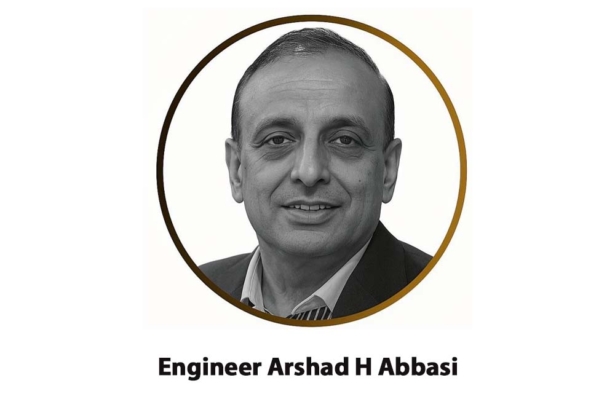
There was a better road, and Pakistan turned it down. In 2016, Chinese Smart Grid firms — brought to the table personally (Engineer Arshad H Abbasi) in that effort — offered to bring smart grid technology into Pakistan’s distribution network, the same technology that helped State Grid Corporation of China push national transmission and distribution losses down to roughly the mid-single digits in recent years. The proposal on the table was a shared-risk model: China would modernise the DISCOs into smart grids over a decade, splitting recovered losses fifty-fifty with the state. It would have cost Pakistan almost nothing upfront and aligned China’s incentives directly with reducing theft and technical loss — the two diseases actually killing Pakistan’s grid. The Ministry of Power and the Planning Commission rejected it. A parallel 2015 pitch to interconnect Pakistan’s grid with China’s has sat on the drawing board for over a decade. Meanwhile Pakistan built its way into the LNG and imported-coal trap that now drives the very capacity payments crushing consumers and taxpayers alike — a trap Chinese engineers, who have spent thirty years wiring one of the largest and most loss-efficient grids on earth, would likely have steered Pakistan away from.
Compare the region. India already exports power to Nepal, Bhutan and Bangladesh and is deepening links with Sri Lanka and Myanmar. Bhutan alone hosts roughly 3,156 MW of Indian-financed hydropower capacity across five major projects — a model of a regional power partner investing in generation rather than merely trading finished electricity. Pakistan, by contrast, cannot even get its own national grid properly connected into Gilgit-Baltistan or Gwadar, a port city that still runs short of reliable power despite sitting at the centre of a multi-billion-dollar Chinese economic corridor. China already has more than 5,000 MW of committed CPEC power capacity inside Pakistan, selected and negotiated by the Planning Commission, and a demonstrated willingness to build hydropower in difficult terrain. It is time to stop pretending Pakistan can manage this alone. Invite China to finance and build the hydropower across GB, AJK and KPK the way India financed Bhutan, and let Pakistan’s surplus eventually be wheeled toward Afghanistan, toward India, even toward China itself — which still needs to retire coal capacity and would gladly take clean power off a friend’s grid.
Because that is what China has been, in a relationship most Pakistanis do not need convincing about: a friend when the ledger was empty, a builder when nobody else would build, a partner sweeter than honey and, on the balance sheet of sixty years of cooperation, standing taller than Everest over every other option on the table. NEPRA and CPPA-G have failed this country. The Ministry of Power, cycling through the same faces and the same wrong bets, has failed this country. China has not. Two hundred and sixty million Pakistanis have watched their own institutions manage the grid into a Rs2 trillion circular debt trap; they deserve the right to ask whether the one power system in the neighbourhood that has actually solved transmission loss at national scale might do better. I do not believe China will disappoint them.
None of this requires abandoning national ownership on paper. It requires admitting, plainly, that Pakistan’s power bureaucracy has run out of credible management. Between them, NEPRA, CPPA-G, the DISCOs, and successive power ministries have produced a system where Dasu, Diamer-Bhasha, Mohmand and Tarbela’s fifth extension are adding thousands of megawatts of capacity through 2030 even as consumers flee to rooftop solar because grid electricity has become unaffordable — a genuinely absurd mismatch between generation planning and market reality. Someone — not the chairman of the NTDC board who has overseen abnormally high tariffs on 660kV HVDC transmission contracts — has to start awarding these projects on cost and competence rather than connections. Right now nobody credible inside these institutions is even asking that question.
This is not a case for surrendering sovereignty. It is a case for admitting that the material that once produced competent power planners and managers in Pakistan is gone— it is the actual threat to sovereignty, because it is bankrupting the state one tariff differential at a time.
The belief of 260 million Pakistanis remains absolute: China will never deceive them. If complete decision-making in the power sector is handed over to China, electricity tariffs and transmission and distribution (T&D) losses can finally be brought to par with China’s own standards—provided there is zero interference from the Government of Pakistan, ministers, and bureaucracy. China will not slaughter 260 million Pakistanis and the national economy, unlike the Ministry of Planning, NEPRA, CPPA, and the Power Ministry, which have laid waste to the nation’s economic foundation much like Genghis Khan’s devastation of the Abbasids in Baghdad.
We welcome your contributions! Submit your blogs, opinion pieces, press releases, news story pitches, and news features to opinion@minutemirror.com.pk and minutemirrormail@gmail.com