Summary
- Across Pakistan, including several regions in Punjab, safe drinking water is still inaccessible to many.
- To ensure the public has access to safe, high-quality drinking water, Chief Minister of Punjab Maryam Nawaz has launched the **”Chief Minister Clean Water Program.”** The Punjab government has allocated PKR 8 billion for this initiative in the current fiscal year’s budget.
- This project is far more than a routine development scheme; it is a vital public health, social welfare, and human dignity initiative aimed at bringing clean water to regions that have lacked this basic facility for years.
By Saif Awan
Water is a tremendous blessing—a truth best understood by those for whom it remains a rare commodity even in this modern era. Across Pakistan, including several regions in Punjab, safe drinking water is still inaccessible to many. Local residents are often forced to travel miles just to fulfill their basic water needs. Even in Karachi, the country’s economic hub, clean drinking water remains scarce. Access to clean water is a fundamental necessity, fully appreciated only by those who yearn for it or those who truly grasp its importance.
Among basic amenities, safe drinking water holds the utmost priority. Clean water directly impacts not only human health but also education, the economy, the environment, and the overall quality of life.
In Punjab, several regions still lack access to safe drinking water. Settlement clusters in Southern Punjab, Cholistan, Thal, and the foothills of Koh-e-Suleman have historically faced a severe water crisis. For decades, millions of residents in these areas have been forced to consume groundwater that contains levels of salts, arsenic, fluoride, and other hazardous contaminants far exceeding international safety limits. Consequently, gastrointestinal, liver, kidney, skin, and bone diseases are widespread, while children’s physical development is severely compromised.
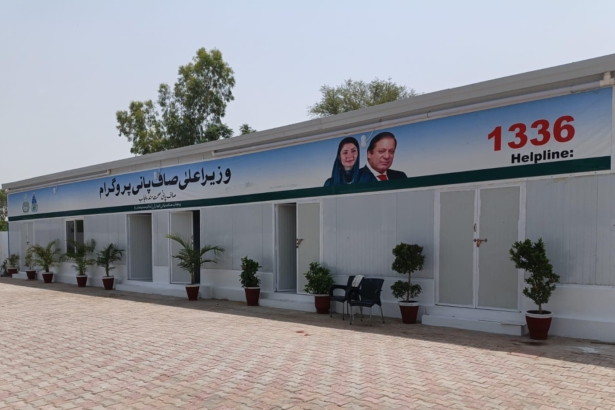
To ensure the public has access to safe, high-quality drinking water, Chief Minister of Punjab Maryam Nawaz has launched the **”Chief Minister Clean Water Program.”** The Punjab government has allocated PKR 8 billion for this initiative in the current fiscal year’s budget. Under this program, 5,600 water filtration plants are being installed across various regions of Punjab. All these filtration plants will undergo digital geo-tagging to facilitate continuous performance evaluation and real-time monitoring.
This project is far more than a routine development scheme; it is a vital public health, social welfare, and human dignity initiative aimed at bringing clean water to regions that have lacked this basic facility for years.
In several districts of Punjab, poor groundwater quality has been a critical concern for decades. High levels of Total Dissolved Solids (TDS), arsenic, fluoride, and nitrates not only affect the taste of water but also inflict long-term adverse health effects.
In the first phase of the Chief Minister Clean Water Program, areas facing the most acute water shortages were selected, specifically in Khushab, Dera Ghazi Khan, Rahim Yar Khan, and Bahawalnagar. State-of-the-art water bottling plants have been established in these districts, where water undergoes multi-stage purification in accordance with international standards. This purified water is then filled into 19-liter bottles and distributed to citizens free of cost. This initiative is especially transformative for families who previously had to travel several kilometers daily to fetch water or were forced to consume contaminated water.
The Punjab Saaf Pani Authority has deployed cutting-edge, internationally imported machinery for the project. Each plant features an advanced multi-stage purification system combined with rigorous laboratory testing to ensure that every drop delivered meets World Health Organization (WHO) standards. A single plant has the capacity to fill approximately 150 bottles per hour. Operating for just ten hours a day, one plant can cater to thousands of families daily. Alongside this, an advanced management system has been established to monitor plant efficiency, water quality, and the supply chain to ensure an uninterrupted supply of clean water to citizens.
A standout feature of this program is that the water bottling plants are powered by **Solar Energy**. This initiative will significantly reduce electricity costs while contributing to environmental conservation, carbon footprint reduction, and the realization of global Sustainable Development Goals (SDGs). Consequently, experts regard this project not merely as a water delivery scheme, but as a comprehensive strategy integrating health, environmental protection, and sustainable development.
Another key aspect of the initiative is its tailored design to accommodate elderly citizens, women, and persons with disabilities who cannot carry or fetch water from distant sources. Large water bottles will be delivered to designated distribution points, allowing residents to collect clean water easily. Additional distribution centers will be established in proportion to population density in each district to maximize public benefit.
The selection of the four initial districts—Dera Ghazi Khan, Khushab, Rahim Yar Khan, and Bahawalnagar—was not coincidental, but based on scientific and technical assessments. Groundwater in these regions has long been deemed unfit for human consumption. In many areas, TDS levels far exceed global standards, while the presence of hazardous elements such as arsenic, fluoride, and nitrates remains a constant concern.
The Chief Minister Clean Water Program is projected to benefit over 29 million citizens in the coming years. Initial results have been highly encouraging, and the government plans to phase this model into other districts, ensuring every citizen across the province gains access to safe, quality drinking water.
If the project maintains its current momentum and standard, it will evolve from a government scheme into a benchmark model for public health, social welfare, and sustainable development in Punjab.
Chief Minister Maryam Nawaz’s “Chief Minister Clean Water Program” is a direct effort to translate this vision into reality. By delivering quality drinking water to millions in remote and underdeveloped areas, its impact will extend well beyond healthcare to encompass education, the economy, the environment, and overall living standards.
The true success of any public project lies not in its announcement, but in its long-term outcomes. If the program continues to maintain transparency, quality, and steady expansion, it holds the potential to become a role model for safe water delivery across Punjab and all of Pakistan.
If every drop of clean water protects a family from illness, enables a child to pursue an education in good health, relieves a mother from the grueling task of fetching water from afar, and affords an elderly person a dignified life—then this is not merely a development project, but the beginning of a genuine transformation in human lives.
We welcome your contributions! Submit your blogs, opinion pieces, press releases, news story pitches, and news features to opinion@minutemirror.com.pk and minutemirrormail@gmail.com