Summary
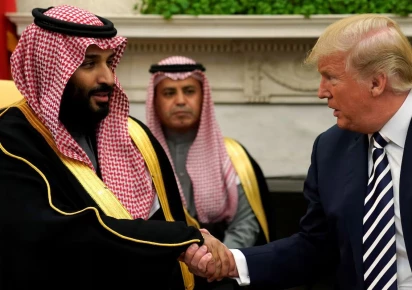
- US President Donald Trump has approved a landmark civilian nuclear agreement with Saudi Arabia, marking a major step in expanding strategic cooperation between the two countries.
- The agreement is designed to support the development of Saudi Arabia’s civilian nuclear energy program while giving American companies a leading role in building the kingdom’s nuclear infrastructure.
- The agreement follows earlier discussions between senior US and Saudi officials, who signed a preliminary framework last year to expand cooperation in the peaceful use of nuclear energy.
US President Donald Trump has approved a landmark civilian nuclear agreement with Saudi Arabia, marking a major step in expanding strategic cooperation between the two countries. The proposed deal is expected to remain in effect for 30 years and is valued at tens of billions of dollars.
The agreement is designed to support the development of Saudi Arabia’s civilian nuclear energy program while giving American companies a leading role in building the kingdom’s nuclear infrastructure. It is expected to create significant investment opportunities for US firms and strengthen long-term energy cooperation between Washington and Riyadh.
Under the proposed framework, American companies could participate in constructing nuclear facilities across Saudi Arabia. The agreement also allows for the possibility of building a uranium enrichment plant in the kingdom if future joint studies by both governments determine that such a project is necessary.
US officials say the deal will enable Washington to remain closely involved in the development of Saudi Arabia’s nuclear program. They believe this cooperation will help ensure that the kingdom’s nuclear activities remain focused on peaceful civilian purposes.
The Trump administration is expected to submit the agreement to the US Congress in the coming days. The pact is being introduced under Section 123 of the US Atomic Energy Act of 1954, which provides the legal framework for civilian nuclear cooperation between the United States and foreign countries.
Once submitted, Congress will have about 90 days to review the agreement. If lawmakers do not reject it during the review period, the agreement will automatically enter into force. Blocking the deal would require Congress to pass a joint resolution with enough votes to override a possible presidential veto.
According to officials familiar with the proposal, the agreement does not include the “Gold Standard,” a condition that permanently bars partner countries from enriching uranium or reprocessing spent nuclear fuel. These activities can potentially be used in the production of nuclear weapons.
The proposed agreement also reportedly does not include the International Atomic Energy Agency’s Additional Protocol. This protocol allows international inspectors to conduct broader inspections and monitor undeclared nuclear facilities. Its absence has raised concerns among some non-proliferation experts and lawmakers.
US officials, however, insist that the agreement contains strong safeguards required under American law. They stress that the deal does not obligate the United States to transfer sensitive uranium enrichment technology or nuclear fuel cycle capabilities to Saudi Arabia. Instead, it establishes a legal pathway for future civilian cooperation while requiring separate approvals for any advanced technology transfers.
The agreement follows earlier discussions between senior US and Saudi officials, who signed a preliminary framework last year to expand cooperation in the peaceful use of nuclear energy.
The proposal has generated debate in Washington. Several Democratic lawmakers, along with some Republicans, have argued that stronger safeguards should be included before the agreement is approved. They believe stricter restrictions are necessary to reduce the risk of nuclear weapons proliferation in the Middle East.
Saudi Arabia has repeatedly stated that its nuclear program is intended to meet growing energy demands and diversify the country’s energy resources. However, Crown Prince Mohammed bin Salman has previously said that if Iran were to acquire a nuclear weapon, Saudi Arabia would also seek similar capabilities. His remarks have fueled international concerns about a possible regional nuclear arms race.
We welcome your contributions! Submit your blogs, opinion pieces, press releases, news story pitches, and news features to opinion@minutemirror.com.pk and minutemirrormail@gmail.com