Summary
- Manzur Ejaz produced a play that moves beyond the conventional narrative of romantic love to explore the deeper realities of power, social hierarchy, human dignity, and the contradictions of the feudal order.
- Consequently, ‘Ranjhan Yaar’ transcends the limits of a romantic folk tale, evolving into a powerful dramatic critique of class hierarchy, caste prejudice, religious exploitation and the moral bankruptcy of the feudal order.The friendship between Dhedhu (Ranjha) and Rangu dissolves the artificial boundaries of class, affirming that humanity is measured not by birth but by conscience.
- Sahib restores Waris Shah’s Heer to its true philosophical stature—not as a romantic legend, but as a profound documentation of power, class hierarchy, and human resistance.
By Tallat Naveed
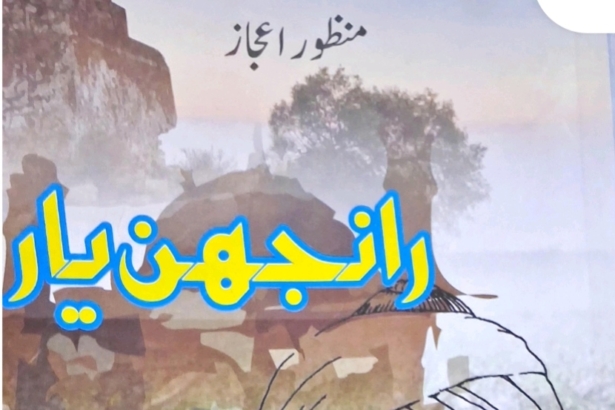
Ranjhan Yaar is an original Punjabi play by the eminent philosopher, historian, literary critic, poet, translator, and scholar Dr. Manzur Ejaz, whose profound understanding of Waris Shah’s Heer has earned him recognition as one of the most insightful interpreters of Punjab’s literary heritage.
The play was written at the request of the Global Arts drama group, whose objective was not to stage another dramatic adaptation of a familiar folk romance. Instead, they envisioned a theatrical work that would unveil the philosophical and anthropological essence of Waris Shah’s Heer. Accepting this challenge, Dr. Manzur Ejaz produced a play that moves beyond the conventional narrative of romantic love to explore the deeper realities of power, social hierarchy, human dignity, and the contradictions of the feudal order.
Rooted in the author’s extensive study of Waris Shah, ‘Ranjhan Yaar’ offers an original and intellectually engaging interpretation of one of Punjab’s greatest literary masterpieces. The play was later performed in Washington, D.C., where it received widespread appreciation for its literary depth, philosophical insight, and compelling dramatic structure. Rather than merely retelling a timeless legend, ‘Ranjhan Yaar’ invites its audience to rediscover Waris Shah’s vision as a profound reflection on society, justice, and the enduring struggle between power and humanity oppressed. Rather than celebrating romance alone, the play unveils the enduring conflict between the feudal ruling class and the dispossessed, revealing how social and economic power shapes human relationships and destinies.
Dr. Manzur Ejaz displays remarkable dramatic artistry in ‘Ranjhan Yaar’ by transforming a familiar folk narrative into a philosophical and socially conscious play. The plot is tightly structured, with each scene advancing both the dramatic action and the central ideological conflict. His characters transcend individual identities to embody opposing social forces, lending the play symbolic depth. The dialogue is concise, intellectually engaging, and dramatically effective, revealing character while exposing the contradictions of the feudal order. In its fusion of social criticism and philosophical discourse, the play recalls the dramatic technique of George Bernard Shaw, whose theatre employs dialogue as a medium for intellectual debate. Through its structural coherence and thematic depth, ‘Ranjhan Yaar’ firmly establishes Dr. Manzur Ejaz as a playwright of remarkable literary vision
He subverts the conventional hierarchy of folk drama by assigning intellectual and moral authority to the marginalised rather than the feudal elite. Characters such as Rangu, Elmu, and Jammu emerge as the true custodians of wisdom, while Heer’s companions Noori and her maid Rano collectively reinforce the play’s philosophy of resistance against class oppression and feudal hegemony. Heer is transformed into a symbol of resilience and moral defiance, and Ranjha into an embodiment of unwavering devotion and human dignity. Consequently, ‘Ranjhan Yaar’ transcends the limits of a romantic folk tale, evolving into a powerful dramatic critique of class hierarchy, caste prejudice, religious exploitation and the moral bankruptcy of the feudal order.The friendship between Dhedhu (Ranjha) and Rangu dissolves the artificial boundaries of class, affirming that humanity is measured not by birth but by conscience. Even more striking is the contrast between Malki, the wife of the feudal lord Chuchak, and Rano, Heer’s humble maid. Bound by the chains of privilege, she lacks the courage to defend her own daughter, while Rano, though socially insignificant, rises as the moral conscience of the play by standing fearlessly beside Heer. In this profound inversion of power, Dr. Manzur Ejaz revives Waris Shah’s enduring philosophy: society is governed by socio-economic injustice, where class interests eclipse blood relations, justice, and ethical values. This vision closely echoes the Marxist critique of feudal hegemony. Consequently, Heer and Ranjha cease to be merely legendary lovers; they become symbols of equality, human dignity, and resistance, whose tragic end exposes a social order that annihilates every voice raised against oppression.
As Rangu reminds us in the closing movement of the play,
ایهه سماج چود ہریاں مھراں دا سماج ، ھیراں رانجھیاں نوں اپنے اندر سمو نہیں سکدا جے کر اندر سمون دا جتن کرے آپ پاٹ جاۓ.
A society founded upon privilege, caste, and feudal power can never become a sanctuary for truth, love, or justice. Its very structure demands the destruction of those who dare to challenge its authority. Heer and Ranjha are therefore not defeated because they loved; they are sacrificed because they embody equality, integrity, and the freedom of the human spirit. Yet, while the feudal order succeeds in silencing their bodies, it fails to extinguish their ideals. The moral courage of Rangu, Elmu, Jammu, Noori, Dena, and Rano survives as an enduring voice of conscience against oppression.
In this lies the enduring greatness of ‘Ranjhan Yaar.’ Dr. Sahib restores Waris Shah’s Heer to its true philosophical stature—not as a romantic legend, but as a profound documentation of power, class hierarchy, and human resistance. The play reminds us that oppressive systems may eliminate individuals, but they can never annihilate the truth they represent. That is why Heer and Ranjha continue to live—not as lovers imprisoned in folklore, but as timeless.
More than a reinterpretation of Waris Shah’s Heer, ‘Ranjhan Yaar’ holds a mirror to the society we continue to inhabit. Its critique of class privilege, feudal authority, religious exploitation, and socio-economic injustice remains profoundly relevant. It is an essential read for anyone who seeks to understand that Heer is not merely a love story, but a timeless philosophy of power, resistance, and human dignity.
A compelling and indispensable read for every serious student of Punjabi literature.
Name of book:Rajhan Yaar
Author: Manzur Ejaz
Published: Kitab Trinjan, Lahore.
Tallat Naveed is Lahore based poetess and literary Analyst.
We welcome your contributions! Submit your blogs, opinion pieces, press releases, news story pitches, and news features to opinion@minutemirror.com.pk and minutemirrormail@gmail.com