Summary
- Interior Minister Mohsin Naqvi’s proposal to seek public approval for the creation of new provinces or administrative units has opened a fresh constitutional debate in Pakistan.
- The debate may now focus on whether a referendum could provide political legitimacy for restructuring the federation while still requiring Parliament and provincial assemblies to follow the constitutional procedure.
- But his remarks have brought the issue of public consent, new provinces and administrative restructuring into the centre of a fresh constitutional discussion.
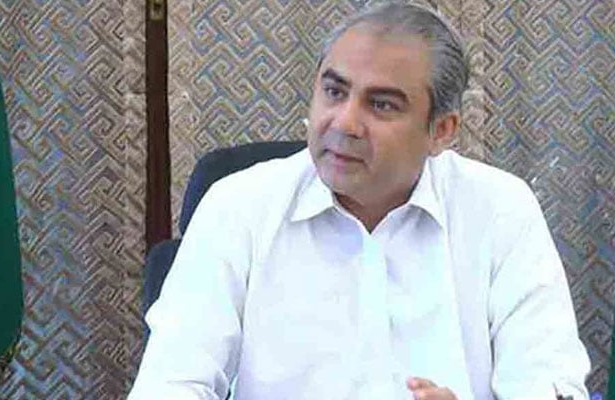
Interior Minister Mohsin Naqvi’s proposal to seek public approval for the creation of new provinces or administrative units has opened a fresh constitutional debate in Pakistan.
Naqvi has suggested that any major restructuring of the country’s administrative system should be based on public consent. His remarks have raised questions about whether a referendum could eventually be used to seek the people’s opinion on the creation of new provinces.
Naqvi did not specifically use the word “referendum” in his recent statement. However, his proposal to prepare a draft plan, present it before the public and ask people whether they accept it has been interpreted as a possible reference to a wider public vote.
Speaking at the National Policy Dialogue in Lahore, Naqvi said administrative restructuring should not be imposed by any individual, political party or government.
He said the issue should first be discussed by Parliament, experts and other relevant stakeholders. After detailed consultations, he said, the public should also be given an opportunity to express its opinion.
Naqvi proposed that a formal draft could be prepared and placed before the people. They could then be asked whether they supported or rejected the proposal.
The proposal has gained importance because the Constitution contains provisions for holding a referendum on matters of national importance.
Under Article 48(6), the prime minister can propose a referendum if he considers it necessary to obtain public opinion on a matter of national importance. The proposal can be placed before a joint sitting of Parliament.
If the joint sitting approves the proposal, the matter can be presented to the public in the form of a question. The question must be framed in a way that allows people to answer either “yes” or “no”.
However, the constitutional position becomes more complicated when the issue involves provincial boundaries.
The Constitution does not clearly state that a referendum can directly create a new province. It also does not provide that a public vote can automatically change the boundaries of an existing province.
Article 239 provides a specific procedure for constitutional amendments. This procedure becomes particularly important when an amendment affects the limits of a province.
Under Article 239(4) and (5), an amendment affecting the limits of a province requires approval through the prescribed parliamentary process. It also requires approval from the concerned provincial assembly by at least a two-thirds majority of its total membership.
Only after these constitutional requirements are fulfilled can the amendment proceed for presidential assent.
This has raised an important legal question.
Constitutional experts are now examining whether the general provision for a referendum under Article 48 can be used in a matter for which the Constitution has already prescribed a separate and specific procedure.
In other words, the central question is whether public approval through a referendum would be sufficient to alter provincial boundaries, or whether Parliament and the concerned provincial assembly must still approve such a change.
The distinction between a province and an administrative unit could also become crucial.
A new province would form part of Pakistan’s constitutional federal structure. Its creation would therefore involve questions relating to constitutional amendments, territorial boundaries, representation and the distribution of administrative powers.
An administrative unit, however, could have a different constitutional status. Governments can create or reorganise administrative arrangements at lower levels without necessarily changing the country’s federal structure.
This distinction could provide greater flexibility for governments seeking to improve administration without immediately embarking on a constitutional process for creating new provinces.
Naqvi’s comments have therefore widened the scope of the discussion. He referred not only to new provinces but also to administrative units.
The issue is consequently no longer simply about whether Pakistan needs more provinces.
It has also become a debate about how public opinion should be obtained on major changes to the country’s administrative structure.
Supporters of greater provincial or administrative decentralisation argue that smaller units could improve governance and service delivery. They also believe that public participation could give greater legitimacy to any restructuring plan.
Opponents, however, could raise questions about the constitutional process and the potential political consequences of changing provincial boundaries.
The debate may now focus on whether a referendum could provide political legitimacy for restructuring the federation while still requiring Parliament and provincial assemblies to follow the constitutional procedure.
For now, Naqvi’s proposal has not resulted in any formal decision to hold a referendum.
But his remarks have brought the issue of public consent, new provinces and administrative restructuring into the centre of a fresh constitutional discussion.
We welcome your contributions! Submit your blogs, opinion pieces, press releases, news story pitches, and news features to opinion@minutemirror.com.pk and minutemirrormail@gmail.com