Summary
- The committee discussed better water monitoring, planning based on reliable data and more efficient use of available water resources.
- The committee said increasing demand for water made modern irrigation systems more important.
- The committee said better machinery, modern irrigation and improved water management could help increase farm production while reducing waste.
Islamabad: Encroachments on rivers, nullahs and other natural waterways are increasing flood risks across Pakistan, a parliamentary committee warned, calling for strict action to clear blocked water channels. The committee also expressed displeasure over the absence of the Sindh Irrigation Secretary and warned that the matter could be sent to the Privileges Committee.
The Senate Standing Committee on Water Resources, chaired by Senator Jam Saifullah Khan, reviewed the flood situation, disaster preparedness, water storage and coordination between federal and provincial authorities.
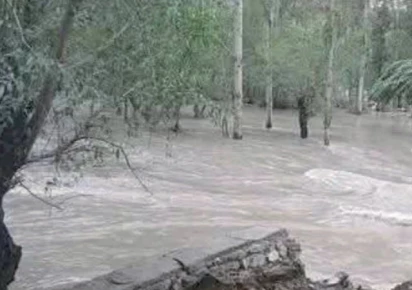
The meeting was held at the National Disaster Management Authority headquarters. Members expressed serious concern over illegal construction and other encroachments along natural waterways, including the Ravi River and nullahs in different parts of the country.
The committee said natural water channels must remain open so floodwater can move safely during heavy rainfall and monsoon emergencies. It called for strict measures to remove encroachments and prevent further occupation of rivers, drains and other water bodies.
The Secretary of the Ministry of Water Resources informed members that a draft Flood Plain Regulations Act had already been shared with provincial governments. Chairman Jam Saifullah Khan directed the ministry to follow up with the provinces and strengthen joint efforts for flood prevention and management.
The committee also expressed displeasure over the absence of the Secretary Irrigation of the Sindh government. Members indicated that continued non-attendance could lead to referring the matter to the Privileges Committee.
The chairman directed the Sindh Irrigation Secretary to personally attend the next meeting. Another sensitive issue discussed was water distribution between provinces. The committee said any solution must be based on consensus, particularly because lower riparian provinces have concerns about water sharing.
Members called for a wider national debate on water security and Pakistan’s long term water problems. The chairman said water security was directly connected with food security and the future of coming generations.
He said all stakeholders should be part of an open national discussion so disagreements could be addressed through broader agreement. The committee was also briefed on the current monsoon situation and the government’s emergency response arrangements.
Members were informed that the Prime Minister had formed an Emergency Response Committee headed by a senior federal minister. The committee is responsible for coordinating with all concerned authorities, including district administrations, during the monsoon emergency.
Senator Jam Saifullah Khan said such coordination should not remain active only during floods or disasters. He said the system should operate throughout the year so institutions remain prepared before emergencies begin.
The parliamentary delegation was received by the Chairman of NDMA at the National Emergencies Operations Centre. Members received a briefing on the technology used for disaster monitoring and decision making.
NDMA officials explained the use of Global and National Portals, Hydro Analytics and the Water Equation system. The committee was also briefed on Disaster Lens 2026. Officials described it as an integrated technology based system designed to improve disaster risk assessment, preparedness and government decision making.
The committee appreciated NDMA’s use of advanced technology, data analysis and risk information for disaster management and water planning. Water storage was another major subject discussed during the meeting. Members said Pakistan needed stronger water storage capacity to manage both shortages and excess floodwater.
The committee discussed better water monitoring, planning based on reliable data and more efficient use of available water resources. It also discussed technology based solutions to improve national water security and reduce risks linked to climate change.
Members were briefed on the possible use of smaller local water storage facilities. The committee was told that such facilities could be used alongside large dams to store extra floodwater. This could help reduce flood damage while also saving water for future use.
The growing pressure from population growth and climate change was also discussed. The committee said increasing demand for water made modern irrigation systems more important.
It called for new irrigation technologies that could produce more crops while using less water. Members said such measures were important not only for water conservation but also for Pakistan’s food security.
The Ministry of Water Resources told the committee that research had been conducted comparing high efficiency crop production methods with existing farming practices. The chairman directed officials to present the full findings at the committee’s next meeting.
Mechanized agriculture was also discussed as a possible way to increase agricultural production. Members observed that tax incentives for higher horsepower tractors could help farmers modernize agricultural operations.
The committee said better machinery, modern irrigation and improved water management could help increase farm production while reducing waste. The meeting also focused on stronger cooperation between the federal government, provinces, district administrations and disaster management authorities.
Members stressed that floods and water shortages cannot be managed effectively if different institutions work separately. The committee said better data sharing, early warnings and clear responsibility among institutions were essential for protecting communities.
After the meeting, committee members visited several NDMA facilities. These facilities included the Centre of Excellence, the Logistics and Humanitarian Hub, and the Disaster Resilient Infrastructure Models centre.
Officials briefed the delegation on emergency preparations, logistics, disaster response and technology being used during crises. The committee said its visit helped improve coordination between Parliament and NDMA.
It called for stronger early warning systems, better water management, modern technology and long term planning to protect Pakistan against floods, water shortages and climate related disasters. The committee made clear that Pakistan’s water challenge is no longer limited to building dams or distributing river water.
We welcome your contributions! Submit your blogs, opinion pieces, press releases, news story pitches, and news features to opinion@minutemirror.com.pk and minutemirrormail@gmail.com