Summary
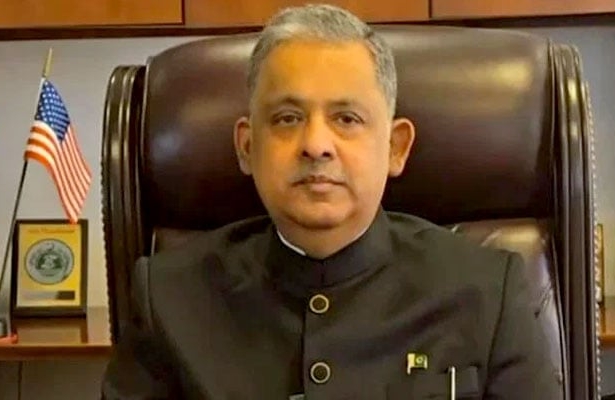
- Pakistan’s Ambassador to the United States Rizwan Saeed Sheikh has strongly criticised India’s unilateral actions regarding the Indus Waters Treaty, warning that such measures could pose a serious threat to peace and security in South Asia.
- He emphasised that the Indus Waters Treaty is a binding international agreement that imposes obligations on both Pakistan and India.
- Sheikh urged India to reverse its unilateral measures concerning the treaty and comply fully with its obligations under international law.
Pakistan’s Ambassador to the United States Rizwan Saeed Sheikh has strongly criticised India’s unilateral actions regarding the Indus Waters Treaty, warning that such measures could pose a serious threat to peace and security in South Asia.
In a detailed article published by a US-based journal, Sheikh responded to an earlier article by India’s ambassador to the United States and rejected what he described as misleading and unfounded claims about the treaty.
The Pakistani envoy said India had repeatedly attempted to reinterpret the treaty’s history, framework and purpose in a manner that was inconsistent with the facts.
He emphasised that the Indus Waters Treaty is a binding international agreement that imposes obligations on both Pakistan and India. According to Sheikh, neither country can unilaterally alter, suspend or disregard those commitments.
Sheikh particularly rejected the notion that India could suspend the treaty through a unilateral decision. He maintained that international agreements cannot be set aside simply because one party chooses to do so.
The ambassador said the treaty remains legally valid and operational, with its provisions continuing to bind both countries. Pakistan, he added, remains committed to fulfilling its obligations under the agreement and resolving related matters through established legal and international mechanisms.
Sheikh urged India to reverse its unilateral measures concerning the treaty and comply fully with its obligations under international law.
He argued that respecting international agreements is essential to preventing disputes over shared water resources from escalating into wider regional tensions.
The Indus Waters Treaty, brokered by the World Bank and signed by Pakistan and India in 1960, governs the use of the Indus River system’s waters. The agreement has remained a key framework for managing water resources between the two neighbouring countries despite repeated periods of political and military tension.
Sheikh’s remarks come amid heightened tensions between Islamabad and New Delhi over the future of the treaty, with Pakistan maintaining that any unilateral suspension or alteration would violate international legal commitments.
We welcome your contributions! Submit your blogs, opinion pieces, press releases, news story pitches, and news features to opinion@minutemirror.com.pk and minutemirrormail@gmail.com