Summary
- The attack was reportedly carried out in retaliation for recent US strikes against Iranian targets and oil tankers around the Strait of Hormuz.
- The latest escalation followed US military strikes that Washington said destroyed five Iranian oil tankers.
- The US Central Command released footage of the operations and said the strikes were carried out after Iranian forces allegedly targeted a US Navy warship with ballistic missiles.
Saudi Arabia has strongly condemned what it described as “unjustified” and “brutal” Iranian attacks on Jordan, as the wider conflict between Iran and the United States continues to spread across the region.
In a statement, Saudi Arabia’s Foreign Ministry said it stood firmly with Jordan and supported all measures taken by Amman in response to what it called Iranian aggression.
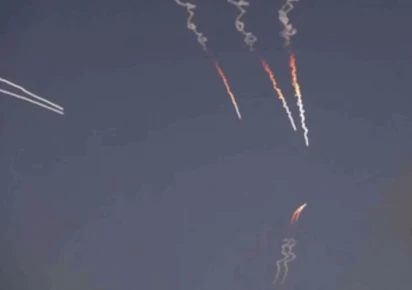
The condemnation came after Iran’s Islamic Revolutionary Guard Corps said it had launched ballistic missiles at a US military facility in Jordan. The attack was reportedly carried out in retaliation for recent US strikes against Iranian targets and oil tankers around the Strait of Hormuz.
Iranian state media reported that the Revolutionary Guards also targeted 10 ships in and around the strategic waterway. The targets reportedly included two US vessels and eight oil tankers.
Jordanian authorities said their air defences intercepted 18 of the 20 Iranian missiles launched towards the country. The remaining two missiles reportedly landed in unpopulated areas. Officials said there were no casualties.
A US official also said the Iranian attack failed to cause significant damage and confirmed that all American personnel stationed at the base were accounted for.
The latest escalation followed US military strikes that Washington said destroyed five Iranian oil tankers. The US Central Command released footage of the operations and said the strikes were carried out after Iranian forces allegedly targeted a US Navy warship with ballistic missiles.
US Secretary of State Marco Rubio warned that further Iranian attacks on American naval forces would trigger additional action against Iranian oil shipments.
The growing confrontation has disrupted the relative calm that had prevailed for several weeks. Military installations, commercial shipping and energy infrastructure have increasingly come under attack, raising concerns about the impact on global oil supplies.
The Strait of Hormuz has become a major flashpoint. The waterway is one of the world’s most important energy routes, and continued attacks on shipping could significantly disrupt the movement of crude oil and other energy products.
Oil prices rose further on Wednesday, with Brent crude approaching $100 a barrel as traders assessed the risks to tanker traffic through the Strait of Hormuz. Concerns over additional supply disruptions have also been fuelled by attacks carried out by Iran-aligned Houthi forces against Saudi Arabia.
Saudi Arabia’s Civil Defence, meanwhile, lifted a security alert in the southern city of Khamis Mushait. The alert had been issued a day after Houthi attacks on the city and other nearby locations left 73 people injured and reportedly caused fires at oil facilities.
The Houthis said they had targeted an airbase in Khamis Mushait as well as oil-related infrastructure in surrounding areas. The attacks were among the most serious strikes on Saudi territory since the wider US-Israeli conflict with Iran began.
Saudi authorities did not immediately provide detailed information about the reason for the latest alert in Khamis Mushait.
Tensions between Saudi Arabia and the Houthis have also increased in recent months. The renewed fighting has raised fears that Yemen could again descend into a wider conflict after a UN-brokered truce in 2022 significantly reduced the intensity of the war.
Saudi Arabia supports Yemen’s internationally recognised government, while the Houthis control large parts of the country, including the capital, Sanaa. The group maintains close ties with Iran, placing Yemen at the centre of the broader regional confrontation.
The Houthis declared a naval blockade against Saudi Arabia in the Red Sea in July. In response, the Saudi-led coalition launched strikes against what it described as Houthi military positions.
Fighting has intensified further in recent days. Saudi-backed Yemeni government forces have launched a broad offensive against Houthi-held territory after accusing the group of attempting to advance on government positions.
The Yemeni government has said its objective is to retake territory controlled by the Houthis. The escalation has added another layer to an already complex regional conflict involving Iran, the United States and their respective allies.
Houthi-run Al Masirah television, citing the group’s health ministry, reported that at least 21 people had been killed in Saudi strikes in Yemen’s Al Jawf province over the previous two days. Saudi Arabia has not confirmed responsibility for those reported strikes.
We welcome your contributions! Submit your blogs, opinion pieces, press releases, news story pitches, and news features to opinion@minutemirror.com.pk and minutemirrormail@gmail.com