Summary
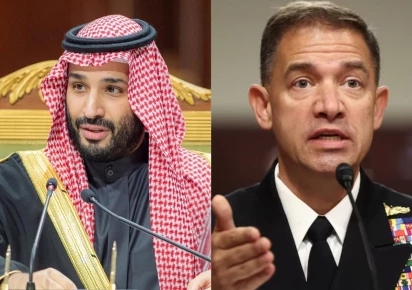
- Saudi Crown Prince Mohammed bin Salman and US Central Command chief Admiral Brad Cooper have held talks on regional security and efforts to ease tensions, as the conflict involving Iran continues to threaten stability and global energy supplies.
- The strategic waterway remains a major route for global oil and liquefied natural gas shipments, and disruptions caused by the conflict have raised fears of further pressure on international energy markets.
- The conflict is also putting increasing pressure on global oil markets.
Saudi Crown Prince Mohammed bin Salman and US Central Command chief Admiral Brad Cooper have held talks on regional security and efforts to ease tensions, as the conflict involving Iran continues to threaten stability and global energy supplies.
According to Saudi state media, the two officials discussed defence cooperation between Riyadh and Washington, developments across the region and diplomatic efforts aimed at reducing tensions and strengthening security.
The meeting came as concerns surrounding the Strait of Hormuz intensified. The strategic waterway remains a major route for global oil and liquefied natural gas shipments, and disruptions caused by the conflict have raised fears of further pressure on international energy markets.
Saudi Arabia also announced the launch of a multinational defensive maritime alliance, with 13 countries joining the initiative. Representatives from 39 countries attended a planning meeting held at the Western Fleet Command in Jeddah, which Saudi authorities described as an important step towards putting the alliance into operation.
Meanwhile, Washington has signalled that its economic and military pressure on Tehran could intensify. US Treasury Secretary Scott Bessent said the United States was preparing measures against Iran on a scale not previously seen in efforts to economically isolate a country.
Bessent said the strategy would combine tougher economic restrictions with continued pressure surrounding the Strait of Hormuz. He indicated that further announcements could come next week as Washington seeks to increase pressure on Tehran.
US Defence Secretary Pete Hegseth also said the US Navy could maintain a blockade of Iranian ports and shipping routes for an indefinite period, arguing that American forces had sufficient capacity to rotate vessels and sustain the operation.
The standoff has already severely affected shipping through the Strait of Hormuz. Traffic has fallen sharply compared with levels recorded before the conflict, when roughly 130 to 140 vessels passed through the waterway each day. The decline has raised concerns about disruptions to international energy supplies.
Tensions escalated further after two vessels operated by Abu Dhabi National Oil Company were reportedly attacked while travelling through the strait. The UAE condemned the incident and blamed Iran for the attacks.
Iran has rejected US claims over control of the waterway and has indicated that normal shipping will not resume until its demands are addressed. Tehran has called for the removal of economic sanctions and the release of frozen Iranian assets.
The conflict is also putting increasing pressure on global oil markets. The International Energy Agency has revised its estimate for the decline in global oil supply, projecting a reduction of about 4.3 million barrels per day this year, equivalent to around 4% of global supply.
Although oil prices fell by more than 2% on Thursday amid concerns over weaker demand and rising US crude inventories, renewed reports of attacks linked to Iran-backed forces have continued to fuel uncertainty in energy markets.
The economic consequences are spreading beyond the region, with economists warning that a prolonged conflict could significantly weaken global growth and increase the risk of recession in some economies.
US President Donald Trump has faced growing domestic pressure to bring the conflict to an end as higher fuel prices weigh on American consumers and threaten his political standing ahead of November’s midterm elections.
While Trump has repeatedly warned that military action against Iran could escalate, he has so far avoided deploying ground troops or launching attacks against some of the region’s most sensitive strategic targets. More recently, he has indicated a greater reliance on economic pressure.
Hegseth, meanwhile, said Washington’s priority remained preventing Iran from acquiring a nuclear weapon and declined to comment on whether previous ceasefire decisions had been mistakes.
With diplomatic efforts struggling and tensions around the Strait of Hormuz continuing, Saudi-US security coordination is emerging as a key factor in attempts to contain the wider regional crisis and protect vital international shipping routes.
We welcome your contributions! Submit your blogs, opinion pieces, press releases, news story pitches, and news features to opinion@minutemirror.com.pk and minutemirrormail@gmail.com