Summary
- According to research published in the journal Nature Geoscience, scientists have found molecular and genetic evidence indicating that the salty water flowing from Blood Falls has a marine origin.
- According to the researchers, the new evidence strongly supports the theory that the water at Blood Falls originates from a reservoir of ancient seawater that became trapped beneath the Taylor Glacier millions of years ago.
- The researchers said the presence of strong marine genetic signatures in the red saline water provides evidence that an ancient marine ecosystem once existed there before becoming isolated beneath Antarctica’s thick ice sheet.
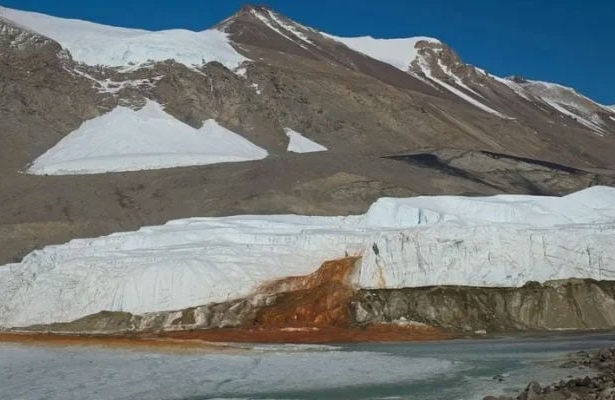
Scientists have uncovered an important clue about the source of the mysterious red water flowing from Antarctica’s famous Blood Falls in Taylor Valley.
The iron-rich and crimson-coloured saline water has fascinated researchers for decades. While its red color has long been attributed to the iron it contains, a new study offers fresh insight into where the water originated.
According to research published in the journal Nature Geoscience, scientists have found molecular and genetic evidence indicating that the salty water flowing from Blood Falls has a marine origin. The findings strengthen the long-standing theory that the water was once part of an ancient sea.
Researchers collected and analyzed 167 samples of water, sediment and air from Blood Falls and the surrounding area. The study found that samples from Blood Falls contained 9 percent eukaryotic genetic signatures associated with marine environments compared with only about 1 percent in samples collected from nearby locations.
According to the researchers, the new evidence strongly supports the theory that the water at Blood Falls originates from a reservoir of ancient seawater that became trapped beneath the Taylor Glacier millions of years ago.
The researchers said the presence of strong marine genetic signatures in the red saline water provides evidence that an ancient marine ecosystem once existed there before becoming isolated beneath Antarctica’s thick ice sheet.
Scientists believe this discovery could improve our understanding of how microscopic organisms survive in some of the harshest environments on Earth.
The findings may also help researchers investigate the possibility of life beneath the icy surfaces of other worlds, including Europa, one of Jupiter’s moons and Enceladus, a moon of Saturn.
We welcome your contributions! Submit your blogs, opinion pieces, press releases, news story pitches, and news features to opinion@minutemirror.com.pk and minutemirrormail@gmail.com