Summary
- Islamabad: Questions over accountability within Pakistan Customs have surfaced before a Senate committee after lawmakers were informed that some officials facing established corruption allegations at airports had received minor disciplinary punishments, including censure and withholding of annual salary increments, instead of stronger action.
- The committee also expressed concern over the continued circulation of an estimated 400,000 non customs paid vehicles in the former FATA and PATA areas, with only around 125,000 registered with the Excise Department, leaving a difference of approximately 275,000 vehicles between the two reported figures.
- The committee raised questions about whether such punishments were sufficient to discourage corruption among officials entrusted with enforcing customs laws and protecting government revenue.
Islamabad: Questions over accountability within Pakistan Customs have surfaced before a Senate committee after lawmakers were informed that some officials facing established corruption allegations at airports had received minor disciplinary punishments, including censure and withholding of annual salary increments, instead of stronger action.
The committee also expressed concern over the continued circulation of an estimated 400,000 non customs paid vehicles in the former FATA and PATA areas, with only around 125,000 registered with the Excise Department, leaving a difference of approximately 275,000 vehicles between the two reported figures.
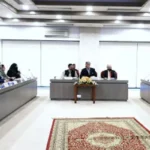
The revelations emerged during a meeting of the Senate Standing Committee on Finance and Revenue, chaired by Senator Saleem Mandviwalla.
The committee reviewed inquiries and investigations against customs officials posted at airports over allegations of corruption and misuse of official authority.
Members expressed dissatisfaction over the nature of punishments awarded to officials in cases where corruption allegations had been established through departmental proceedings.
Lawmakers questioned why some officials were punished only through censure or withholding of annual increments instead of facing major disciplinary action.
Censure is a formal warning recorded against a government employee, while withholding an increment means stopping an increase in salary for a specified period.
The committee raised questions about whether such punishments were sufficient to discourage corruption among officials entrusted with enforcing customs laws and protecting government revenue.
Chairman Federal Board of Revenue (FBR) briefed the committee on the legal limitations affecting disciplinary proceedings against government employees.
He referred to provisions of the Civil Servants Act, 1973, particularly those relating to disciplinary procedures and the imposition of major penalties.
The FBR chairman suggested that the relevant law should be reviewed and revised to address the difficulties faced in taking stronger disciplinary action.
The committee emphasized that officials found involved in corruption must face appropriate punishment under the law.
Chairman Senator Saleem Mandviwalla directed FBR to submit complete details of pending inquiries and a timetable for their completion at the next meeting.
The committee also reviewed complaints against officers and officials working in different wings of FBR. Officials informed lawmakers that improvements had been made in disciplinary proceedings during the past two years.
Another significant development concerned the controversial consumption certificates case.
The FBR chairman informed the committee that a senior officer in Grade 20 had been suspended following the matter’s examination by a Senate standing committee.
He said an in depth inquiry was underway. The committee stressed that the investigation must establish responsibility and that officials found involved in wrongdoing should face action in accordance with the law.
Another major issue involved the continued use of non customs paid vehicles in the former FATA and PATA regions.
The committee was informed that approximately 400,000 such vehicles were operating in these areas, while only around 125,000 had been registered with the Excise Department.
The figures indicate a registration gap of approximately 275,000 vehicles, although officials did not provide a complete vehicle wise verification record.
The committee examined the continued use of these vehicles following the merger of the former tribal areas and beyond the prescribed five year exemption period.
Members raised questions about the legal status of the vehicles and the practical difficulties involved in bringing them within the regular customs and registration system.
Officials informed the committee that government authorities faced serious operational and security challenges in certain areas.
They disclosed that customs and police personnel attempting to confiscate non customs paid vehicles had faced serious threats, including life threatening attacks.
The security situation was identified as a major obstacle to enforcement operations.
The committee was informed that confiscating such vehicles without a comprehensive plan could create further difficulties for law enforcement personnel.
Senator Saleem Mandviwalla expressed concern over the scale of the problem and called for a practical and workable solution.
He directed FBR to consult all relevant stakeholders and submit detailed information and proposals at the next meeting.
The chairman indicated that the issue could be taken up as a separate agenda item for detailed consideration.
The committee emphasized that any solution must take account of the applicable legal framework, public revenue, the circumstances of vehicle owners and the security of customs and police personnel.
Members also discussed the promotion system for government employees, particularly the use of technical evaluation reports and Performance Evaluation Reports in appointments to higher grades through the Central Selection Board.
Lawmakers stressed the importance of fair, objective and transparent assessments to ensure that promotion decisions were based on merit.
We welcome your contributions! Submit your blogs, opinion pieces, press releases, news story pitches, and news features to opinion@minutemirror.com.pk and minutemirrormail@gmail.com