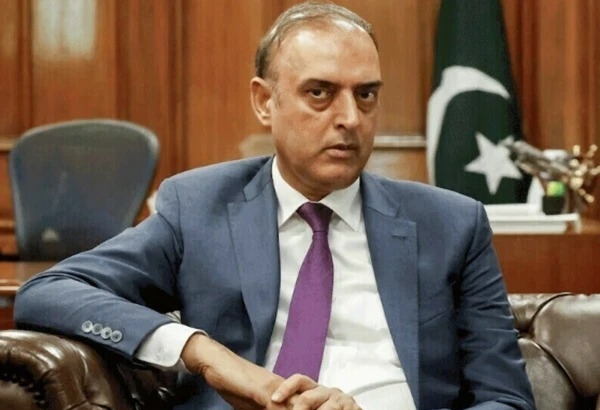
State Bank warns rising oil prices may impact economy

Meerab Khan
By
Meerab Khan
Meerab khan is a BS English literature and linguistic student at Allama Iqbal open university. She can be reached at meerabkhan111306@gmail.com
3 Min Read

Summary

  • State Bank of Pakistan (SBP) Governor Jameel Ahmad has said the central bank will reassess its financial projections if the recent increase in international oil prices continues, as higher energy costs could influence inflation, economic growth, and the country’s external balance.
  • Speaking about the country’s economic performance, the SBP governor noted that Pakistan demonstrated resilience during fiscal year 2026 despite geopolitical tensions and global economic uncertainty.
  • According to the central bank, Pakistan’s gross domestic product (GDP) is expected to grow by 3.7 percent in fiscal year 2026.

AI Generated Summary

Pakistan’s economic outlook remains cautiously optimistic despite growing concerns over rising global crude oil prices. State Bank of Pakistan (SBP) Governor Jameel Ahmad has said the central bank will reassess its financial projections if the recent increase in international oil prices continues, as higher energy costs could influence inflation, economic growth, and the country’s external balance.

Speaking about the country’s economic performance, the SBP governor noted that Pakistan demonstrated resilience during fiscal year 2026 despite geopolitical tensions and global economic uncertainty. He said the country’s economy remained stable, supported by improved macroeconomic indicators and prudent monetary policies.

According to the central bank, Pakistan’s gross domestic product (GDP) is expected to grow by 3.7 percent in fiscal year 2026. While this represents steady economic progress, officials remain watchful of external risks particularly fluctuations in global energy markets that could affect import costs and domestic inflation.

Jameel Ahmad said the inflation outlook for fiscal year 2027 is expected to improve compared with the previous year. Average inflation during fiscal year 2026 stood at 7.05 percent, close to the State Bank’s projected range of 5 to 7 percent. However, he cautioned that sustained increases in crude oil prices may require policymakers to revisit inflation and growth forecasts in the coming months.

The governor also highlighted positive developments in Pakistan’s banking sector, particularly in financing for small and medium-sized enterprises (SMEs). He revealed that lending to SMEs has doubled over the past four years, while the number of businesses receiving loans has increased by 75 percent. He emphasized that banks should develop sector-specific financial products to support business expansion, job creation, and sustainable economic growth.

On the external front, Pakistan’s current account showed encouraging signs. During the first eleven months of fiscal year 2026, the country recorded a current account surplus of $255 million. The State Bank expects the current account to remain in surplus for the full fiscal year and projects another surplus in fiscal year 2027, reflecting improving external sector stability.

While Pakistan’s economic indicators continue to show gradual improvement, the trajectory will largely depend on global commodity prices, especially crude oil. Any prolonged increase in energy costs could place renewed pressure on inflation and foreign exchange reserves. For now, the central bank remains confident but vigilant, prepared to adjust its forecasts as economic conditions evolve.

We welcome your contributions! Submit your blogs, opinion pieces, press releases, news story pitches, and news features to opinion@minutemirror.com.pk and minutemirrormail@gmail.com
Share This Article
Meerab khan is a BS English literature and linguistic student at Allama Iqbal open university. She can be reached at meerabkhan111306@gmail.com
Leave a Comment

Leave a Reply

Your email address will not be published. Required fields are marked *