
Summary
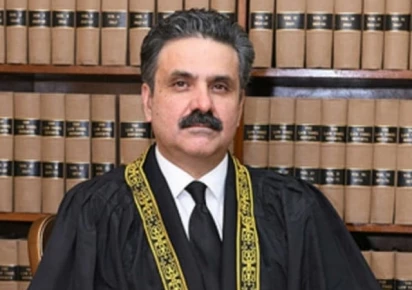
- Chief Justice of Pakistan Yahya Afridi has led a national delegation to the 14th St Petersburg International Legal Forum in the Russian Federation.
- The Pakistani delegation includes the Chief Justice of the Federal Constitutional Court, Aminuddin Khan, alongside Pakistan’s Ambassador to the Russian Federation.
- On the sidelines of the summit, Chief Justice Afridi held numerous bilateral meetings with foreign judicial heads to expand institutional dialogue and court cooperation.
Chief Justice of Pakistan Yahya Afridi has led a national delegation to the 14th St Petersburg International Legal Forum in the Russian Federation. The global event, running from 24 to 26 June 2026, focuses on strengthening international judicial cooperation and advancing domestic legal reform agendas.
The Pakistani delegation includes the Chief Justice of the Federal Constitutional Court, Aminuddin Khan, alongside Pakistan’s Ambassador to the Russian Federation. On the sidelines of the summit, Chief Justice Afridi held numerous bilateral meetings with foreign judicial heads to expand institutional dialogue and court cooperation.
However, this active foreign outreach has triggered intense scrutiny within Pakistan’s legal fraternity. Since the passage of the 26th Constitutional Amendment, the superior judiciary has signed Memorandums of Understanding with the highest courts of China and Turkiye, and is now working to establish a similar framework with Russia.
Many prominent legal experts are questioning the rationale behind forging close ties with judicial systems that are widely perceived to operate under heavy executive dominance. The proposed collaborations are expected to cover judicial education, court administration, legal research, and digitalisation.
Former additional attorney general Waqar Rana observed that courts in Russia, China, and Turkiye have historically supported authoritarian regimes under the guise of security concerns. He noted that whilst Pakistani courts traditionally try to balance liberty and public order, the scales have recently tilted heavily toward the executive.
Expressing similar concern, Barrister Asad Rahim Khan described the trip as extraordinary given recent strict domestic rules limiting judicial interaction with the outside world. He questioned what Pakistan could realistically learn from a compromised Russian court system that has entirely subordinated itself to executive control.
Legal analyst Faisal Siddiqi remarked sharply that the conference signals the judiciary finding its place within a framework of autocratic legalism, characterised by weak courts navigating a dominant executive branch.
In contrast, an official statement from the Supreme Court maintained that the forum offered a crucial platform to showcase Pakistan’s judicial modernisation, particularly in digital transformation and access to justice. The Public Relations Officer emphasised that the tour reinforces the court’s commitment to judicial diplomacy and technological integration.
We welcome your contributions! Submit your blogs, opinion pieces, press releases, news story pitches, and news features to opinion@minutemirror.com.pk and minutemirrormail@gmail.com