Summary
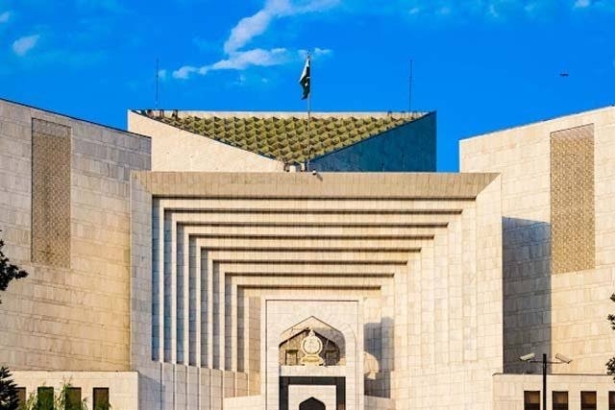
- ISLAMABAD: The Supreme Court of Pakistan has issued guidelines aimed at ensuring that children are not deprived of financial support simply because their father or grandfather lacks the means to pay maintenance.
- 1477/2023, Pakistan Bait-ul-Mal through Managing Director, Islamabad vs Raj Ram and others, a bench headed by Justice Yahya Afridi held that courts should consider referring deserving minors to Pakistan Bait-ul-Mal (PBM) when it is established that their father or grandfather is genuinely unable to meet their maintenance obligations.
- Under the mechanism outlined by the Supreme Court, a family or trial court would first determine whether the father or grandfather is genuinely unable to pay maintenance.
ISLAMABAD: The Supreme Court of Pakistan has issued guidelines aimed at ensuring that children are not deprived of financial support simply because their father or grandfather lacks the means to pay maintenance.
In a judgment issued on August 24, 2026, in C.M.A. 1477/2023, Pakistan Bait-ul-Mal through Managing Director, Islamabad vs Raj Ram and others, a bench headed by Justice Yahya Afridi held that courts should consider referring deserving minors to Pakistan Bait-ul-Mal (PBM) when it is established that their father or grandfather is genuinely unable to meet their maintenance obligations.
The court noted that responsibility for a child’s maintenance ordinarily falls upon the father and where applicable the grandfather. However, financial hardship, unemployment, illness or other circumstances may sometimes leave both unable to provide adequate support.
In such situations, the court said a maintenance case should not simply end because the person responsible for payment is financially incapable. Instead, the matter may be referred to the relevant state welfare institution so that the child’s circumstances can be assessed for possible assistance.
Under the mechanism outlined by the Supreme Court, a family or trial court would first determine whether the father or grandfather is genuinely unable to pay maintenance. If the circumstances justify state assistance, the court can refer the child’s case to Pakistan Bait-ul-Mal.
PBM would then assist, where necessary, with the relevant application and assess the applicant’s financial and social circumstances according to its applicable policies and eligibility requirements. The institution would subsequently determine what form and level of assistance could be provided.
The Supreme Court made it clear that such a referral would not replace the legal framework governing Bait-ul-Mal. Rather it would provide a practical link between the courts and the welfare institution so that deserving children can be considered for support.
The ruling has been welcomed by lawyers and child welfare advocates who believe it could provide an alternative for families whose maintenance cases become difficult to resolve because of genuine financial hardship.
The decision is particularly significant for children whose guardians are unemployed, seriously ill or living in extreme poverty. Support through the state welfare system could potentially help address basic needs such as food education and healthcare subject to PBM’s eligibility criteria.
The judgment also does not permanently remove the maintenance responsibility of a father or grandfather. If their financial circumstances improve the issue of maintenance liability can be reconsidered in accordance with the law.
The Supreme Court’s ruling therefore establishes a welfare-oriented approach in cases where family resources are insufficient while preserving the underlying legal obligations of parents and guardians.
The decision is expected to guide family courts in dealing with maintenance cases involving genuinely indigent guardians and could strengthen coordination between the judicial system and Pakistan’s social welfare framework.
We welcome your contributions! Submit your blogs, opinion pieces, press releases, news story pitches, and news features to opinion@minutemirror.com.pk and minutemirrormail@gmail.com