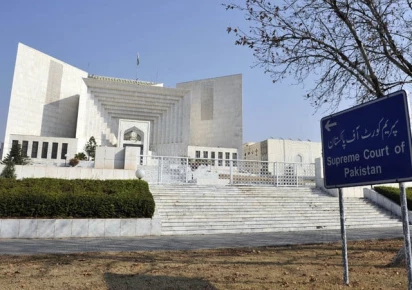
Summary
- In a landmark judgment aimed at protecting women’s property rights, the Supreme Court of Pakistan has restored the inheritance share of two sisters in ancestral land after a legal battle spanning more than seven decades.
- The court directed revenue authorities to immediately amend land records and ensure the sisters receive their legal share of the ancestral property.
- The court also highlighted Islamic teachings regarding inheritance, noting that these principles leave no ambiguity regarding women’s legal and religious rights to property.
In a landmark judgment aimed at protecting women’s property rights, the Supreme Court of Pakistan has restored the inheritance share of two sisters in ancestral land after a legal battle spanning more than seven decades.
The ruling also established an important legal principle that anyone claiming ownership through an oral gift, commonly known as hiba, carries the responsibility of proving that such a gift genuinely took place.
The case originated in 1955 following the death of the family’s father. According to court records, two brothers transferred the inherited property into their own names, arguing that their mother and sisters had voluntarily gifted their shares to them through an oral arrangement.
However, the sisters challenged the claim, maintaining that the alleged gift was fabricated to deprive female heirs of their lawful inheritance rights.
A two-member bench of the Supreme Court at the Lahore Registry, headed by Justice Shahid Bilal Hassan and including Justice Shakeel Ahmad, accepted the appeal and overturned the earlier rulings of the trial court, appellate court and high court that had upheld the disputed transaction.
The court directed revenue authorities to immediately amend land records and ensure the sisters receive their legal share of the ancestral property.
In its detailed judgment, the apex court ruled that beneficiaries of an alleged oral gift must provide convincing evidence that the gift fulfilled all legal requirements. The court emphasized that merely claiming a gift had occurred was not enough to establish ownership.
According to settled legal principles, a valid gift requires three essential elements: a clear declaration by the donor, acceptance by the recipient, and transfer of possession of the property.
The Supreme Court observed that lower courts had committed a serious error by treating the existence of a revenue mutation as proof that the gift transaction had actually taken place.
The judgment clarified that revenue mutations are maintained primarily for administrative and fiscal purposes and do not create, transfer or extinguish ownership rights.
The court further rejected arguments that the claim was filed too late, noting that the mother and sisters had continued receiving income from the land for several years after the alleged gift, indicating that they were unaware of any valid transfer excluding them from inheritance.
The bench stressed that inheritance rights arise automatically upon the death of a family member and are protected under Pakistani law as well as Islamic principles.
The judgment declared that inheritance is not dependent on the goodwill of male relatives or family traditions but is a legally protected right that belongs equally to all heirs.
The Supreme Court warned against attempts to deprive women of their inheritance through fraudulent gifts, manipulated land records, social pressure or customary practices, stating that courts must carefully scrutinize every such transaction.
The judges observed that denial of inheritance to women remains a serious social issue in Pakistan and often begins within families before eventually reaching the courts.
The ruling reaffirmed that constitutional guarantees, including equality before the law and protection of property rights, fully support women’s entitlement to inheritance.
The court also highlighted Islamic teachings regarding inheritance, noting that these principles leave no ambiguity regarding women’s legal and religious rights to property.
Emphasising the collective responsibility of the state, judiciary and society, the Supreme Court stated that women must receive inheritance not only in theory but also in practice.
With the ruling, all previous judgments of subordinate courts were declared ineffective, and authorities were ordered to correct the land record to ensure the sisters receive their rightful share after 71 years of litigation.
We welcome your contributions! Submit your blogs, opinion pieces, press releases, news story pitches, and news features to opinion@minutemirror.com.pk and minutemirrormail@gmail.com