Summary
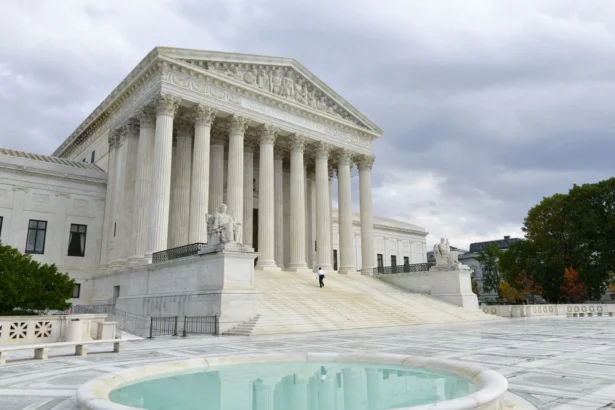
- The US Supreme Court opened its new nine month term Monday by hearing arguments in a closely watched case pitting oil giants ExxonMobil and Suncor Energy against local officials in Boulder, Colorado, who are seeking monetary damages over the companies’ alleged role in driving climate change.
- US based Exxon and Canada based Suncor brought their appeal after Colorado’s state supreme court allowed Boulder’s lawsuit, which accuses the companies of violating state law, to move forward.
- Energy companies and allied trade groups have compiled a largely successful track record before the Supreme Court over the past two decades in cases involving climate liability and the scope of federal environmental regulation, a pattern this case could extend further.
The US Supreme Court opened its new nine month term Monday by hearing arguments in a closely watched case pitting oil giants ExxonMobil and Suncor Energy against local officials in Boulder, Colorado, who are seeking monetary damages over the companies’ alleged role in driving climate change.
The case marks the first of several major disputes already lined up for the court’s docket this term, with additional arguments expected in the coming months over President Donald Trump’s immigration policies and state level bans on assault style rifles. The court, which carries a 6-3 conservative majority, has steadily shifted American law to the right in recent years and opened its term, as it traditionally does, on the first Monday in October.
US based Exxon and Canada based Suncor brought their appeal after Colorado’s state supreme court allowed Boulder’s lawsuit, which accuses the companies of violating state law, to move forward. The Trump administration has thrown its support behind the oil companies, arguing that federal law bars Boulder’s claims from proceeding in the first place.
Boulder’s city and county governments allege that Exxon and Suncor helped drive climate change while misleading the public about the risks associated with fossil fuels. The local governments are seeking to hold the companies financially responsible for both past and future costs tied to climate change, including infrastructure repair, environmental damage, emergency response and public health harms. Burning fossil fuels releases greenhouse gases such as carbon dioxide into the atmosphere, a process that traps heat and contributes to rising global average temperatures over time.
The case carries significance well beyond Boulder itself. Exxon and Suncor told the justices that nearly 60 state and local governments have filed similar lawsuits seeking billions of dollars in damages from fossil fuel companies, with additional cases continuing to be filed. A Supreme Court ruling favoring the oil companies could pave the way for many of those pending cases to be dismissed outright.
Supporters of Exxon and Suncor argue that allowing Boulder’s broadest claims to proceed would hand individual states sweeping authority over corporate conduct occurring far beyond their own borders, a precedent they warn could create significant legal uncertainty for companies operating nationally. The companies also argue that Boulder’s claims improperly intrude on territory already governed by the federal Clean Air Act. Energy companies and allied trade groups have compiled a largely successful track record before the Supreme Court over the past two decades in cases involving climate liability and the scope of federal environmental regulation, a pattern this case could extend further.
Justice Samuel Alito has recused himself from the case. Alito holds stock in several oil and gas companies, though not in Exxon or Suncor specifically, according to his financial disclosure filings.
Monday’s arguments represent the latest instance of energy sector companies turning to the Supreme Court to limit climate related liability or narrow the reach of federal environmental oversight, a strategy that has increasingly shifted the battleground over climate accountability away from state courts and toward the nation’s highest court. With similar lawsuits pending in multiple states and significant financial exposure at stake for the industry, the outcome of the Boulder case is likely to shape the broader landscape of climate litigation nationwide. The court’s decision is expected by the end of June.
We welcome your contributions! Submit your blogs, opinion pieces, press releases, news story pitches, and news features to opinion@minutemirror.com.pk and minutemirrormail@gmail.com