Summary
- The answer may have serious consequences for convicts who have completed their substantive terms of imprisonment but remain incarcerated because they are unable to pay a substantially increased amount of diyat resulting from prolonged criminal proceedings.
- This observation may prove central to determining whether an increased diyat amount can fairly be imposed where the delay was not attributable to the accused.
- If diyat continues to increase until the conclusion of proceedings or the date of payment, an accused may ultimately be required to pay an amount substantially greater than that applicable when the offence occurred.
By Muhammad Imran, Staff Member, SAHSOL-LUMS and Ch. Mustafa, Law Graduate, SLC, Superior University
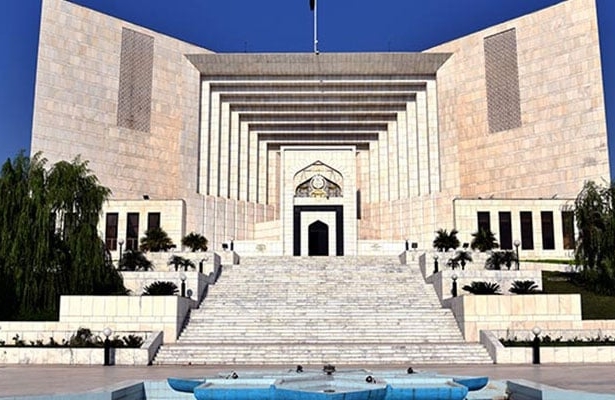
Introduction: The Supreme Court of Pakistan has reserved its judgment on an appeal filed by convict Nadeem Khan, raising an important legal question concerning the determination of diyat (blood money) in cases of intentional murder: At what point should the amount of diyat be determined? The issue lies at the intersection of Islamic criminal jurisprudence, statutory interpretation, fairness, due process, and the practical realities of Pakistan’s criminal justice system. The Court must determine whether diyat should be calculated with reference to the date of the offence, the date of conviction, or the date on which payment becomes due.
The answer may have serious consequences for convicts who have completed their substantive terms of imprisonment but remain incarcerated because they are unable to pay a substantially increased amount of diyat resulting from prolonged criminal proceedings.
Proceedings Before the Supreme Court: A three-member bench of the Supreme Court, headed by Justice Muhammad Hashim Khan Kakar and comprising Justice Salahuddin Panhwar and Justice Ishtiaq Ibrahim, heard Nadeem Khan’s appeal. Justice Kakar identified the central issue: whether diyat should be assessed according to its value at the time of the offence, arrest, conviction, or payment. The question is not merely procedural; it directly concerns the extent to which an accused may bear an increased financial burden caused by circumstances beyond his control.
Counsel for the convict submitted that Nadeem Khan had already completed his substantive sentence and remained in custody solely because of his inability to pay diyat. It was also submitted that the prevailing amount had increased to approximately Rs 19.7 million.
Justice Salahuddin Panhwar observed that the substantial financial consequences associated with murder may serve as a deterrent and referred to the traditional Islamic concept of diyat, historically associated with the value of one hundred camels.
Justice Ishtiaq Ibrahim, however, highlighted the consequences of systemic delay, observing that deficiencies in the administration of justice should not cause an accused to suffer disproportionately. This observation may prove central to determining whether an increased diyat amount can fairly be imposed where the delay was not attributable to the accused.
Should Diyat Be Determined at the Time of the Offence? A strong argument exists in favour of determining diyat with reference to the date on which the offence was committed. Criminal liability arises from the commission of the offence, and it may therefore be argued that the financial consequences flowing from that act should be assessed according to the legal benchmark prevailing at that time.
If diyat continues to increase until the conclusion of proceedings or the date of payment, an accused may ultimately be required to pay an amount substantially greater than that applicable when the offence occurred. Such an increase may result not from any misconduct by the accused, but from inflation, prolonged investigation, repeated adjournments, or delays in trial and appeals. This raises a fundamental question of justice: Should an accused bear an increased financial liability merely because the criminal justice system took years to conclude the case?
The Problem of Systemic Delay: Pakistan’s criminal justice system frequently experiences delays caused by prolonged investigations, procedural complications, shortages of judicial resources, adjournments, and lengthy appellate proceedings. An accused often has little control over these circumstances. If the amount of diyat rises during the pendency of proceedings, two persons who committed similar offences may face substantially different financial liabilities simply because one case concluded earlier than the other. The difference would not necessarily reflect a difference in culpability but rather the efficiency—or inefficiency—of the justice system.
Therefore, where delay is attributable to institutional failures, it may be unjust to impose the resulting increased financial burden upon the accused.
Legal Certainty and Fairness: Determining diyat at the time of the offence would provide a clear point at which financial liability crystallises. Such an approach would promote legal certainty, predictability, and fairness.
A prolonged criminal case should not itself become an additional source of punishment. However, a distinction may be necessary where the accused deliberately causes or prolongs proceedings. An accused who abuses the judicial process should not necessarily benefit from his own conduct, whereas a person affected by delays attributable to the prosecution or the courts should not automatically suffer an increased liability.
Rights of the Victim’s Heirs: The matter cannot, however, be considered solely from the perspective of the accused. The legal heirs of the deceased also possess legally recognised rights under the framework governing qisas and diyat.
If the amount of diyat is permanently frozen at the value prevailing many years earlier, inflation may substantially erode its real economic value. The heirs may consequently receive compensation that no longer reflects the economic value associated with the prescribed measure of diyat.
The Supreme Court must therefore reconcile two competing considerations:
- Protecting an accused from an enhanced financial burden caused by systemic delay; and
- Protecting the legal heirs from receiving compensation whose real value has been significantly eroded by inflation and the passage of time.
Possible Approaches to Determining Diyat
- Determination at the Time of the Offence
Under this approach, diyat would be calculated according to the applicable rate on the date of the offence. Its principal advantage is legal certainty and protection against an increasing liability caused by judicial delay.
However, it may adversely affect the economic interests of the victim’s heirs where considerable time has passed.
- Determination at the Time of Conviction
Under this approach, the amount would be determined when criminal liability is judicially established. This may provide a middle ground between the date of the offence and the date of payment.
Nevertheless, significant delays before conviction could still substantially increase the financial burden.
- Determination at the Time of Payment
This approach would calculate diyat according to its prevailing value when payment becomes due. While it preserves the contemporary economic value of the prescribed amount, it creates the greatest risk of an ever-increasing liability.
In cases involving prolonged proceedings and financial incapacity, this may result in continued imprisonment even after completion of the substantive sentence.
Continued Detention and Financial Incapacity: Nadeem Khan’s case illustrates the practical consequences of this controversy. According to submissions before the Court, he has completed his substantive sentence but remains incarcerated because he cannot pay diyat. This raises serious concerns regarding personal liberty and genuine financial incapacity. Where the amount has increased substantially during years of litigation, continued detention may effectively result from circumstances beyond the convict’s control.
A distinction must therefore be drawn between a person who deliberately refuses to pay despite having the means and a person who is genuinely incapable of satisfying the obligation.
Recommendations: The Supreme Court should utilise this opportunity to establish a clear and uniform framework for determining diyat.
First, the Court may authoritatively identify the legally relevant point in time for calculating diyat to ensure consistency and predictability.
Second, serious consideration may be given to the date of the offence as the presumptive benchmark, particularly where delays are not attributable to the accused. An individual should not suffer an enhanced financial burden solely because of institutional inefficiency.
Third, the Court may adopt a differentiated approach by distinguishing between delays caused by the criminal justice system and those deliberately caused by the accused.
Fourth, the rights of the victim’s heirs must remain adequately protected. Any interpretation should seek to prevent unfair erosion of the real value of compensation while ensuring that systemic delay does not become an additional punishment.
Finally, clear judicial guidelines should address the relevant date for calculation, the effect of prolonged delay, responsibility for such delay, the rights of legal heirs, and the position of convicts who have completed their substantive sentences but remain unable to pay.
Conclusion: The appeal of Nadeem Khan presents the Supreme Court with an important opportunity to clarify a significant question of Pakistan’s criminal jurisprudence: At what point does the monetary liability arising from diyat crystallise?
A strong case exists for ensuring that an accused is not subjected to an ever-increasing financial liability solely because the criminal justice system has taken years to conclude proceedings. The date of the offence therefore deserves serious consideration as the presumptive point of determination, particularly where delay is not attributable to the accused.
We welcome your contributions! Submit your blogs, opinion pieces, press releases, news story pitches, and news features to opinion@minutemirror.com.pk and minutemirrormail@gmail.com