Summary
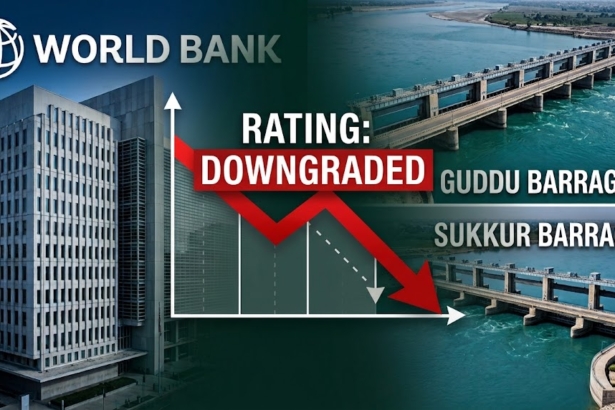
- ISLAMABAD: The World Bank has lowered its assessment of Pakistan’s Sindh Barrages Improvement Project, citing slower-than-expected progress in strengthening barrage operations and institutional capacity, even as physical rehabilitation work at the Guddu and Sukkur barrages continues to advance.
- The development objective and implementation progress ratings of the $314.93 million project have both been revised from “Satisfactory” to “Moderately Satisfactory.” However, the project’s overall risk classification has remained at “Substantial.” The project is aimed at improving the safety, reliability and operational management of the Guddu and Sukkur barrages while enhancing the capacity of the Sindh Irrigation Department to manage, operate and maintain these critical water infrastructure facilities.
- Rehabilitation work remains on track Despite the downgrade in the overall implementation assessment, the World Bank noted that major rehabilitation activities at both barrages are progressing and are expected to be completed during the first half of 2027.
ISLAMABAD: The World Bank has lowered its assessment of Pakistan’s Sindh Barrages Improvement Project, citing slower-than-expected progress in strengthening barrage operations and institutional capacity, even as physical rehabilitation work at the Guddu and Sukkur barrages continues to advance.
The development objective and implementation progress ratings of the $314.93 million project have both been revised from “Satisfactory” to “Moderately Satisfactory.” However, the project’s overall risk classification has remained at “Substantial.”
The project is aimed at improving the safety, reliability and operational management of the Guddu and Sukkur barrages while enhancing the capacity of the Sindh Irrigation Department to manage, operate and maintain these critical water infrastructure facilities.
According to the latest assessment, approximately 82.25% of the project financing has already been disbursed, reflecting significant progress in the use of allocated funds.
Rehabilitation work remains on track
Despite the downgrade in the overall implementation assessment, the World Bank noted that major rehabilitation activities at both barrages are progressing and are expected to be completed during the first half of 2027.
The project has faced several implementation challenges, including a cofferdam breach at Sukkur Barrage in March 2026, but the Bank said the incident has not derailed the broader rehabilitation programme.
By July 2026, rehabilitation and modernization activities at the two barrages had reached approximately 84% completion, compared with the ultimate target of full completion by June 2028.
A total of 125 gates have been replaced under the project. These include 25 canal gates at Guddu, 56 main barrage gates at Guddu and 44 main barrage gates at Sukkur.
The replacement and modernization of these gates are considered important for improving the operational reliability of the barrages and strengthening their ability to manage high river flows.
Institutional reforms lag behind physical progress
While construction and rehabilitation activities have made substantial headway, the World Bank highlighted a weaker performance in operational and institutional reforms.
The operation and maintenance performance scorecard improved only marginally, rising from 40 points in December 2025 to 44 points in July 2026. This remains significantly below the project’s target of 90 points by June 2028.
The Bank identified several areas where implementation needs to accelerate, including sediment testing procedures, calibration of canal head regulators and the award of a performance-based maintenance contract.
Technical studies concerning long-term flood and sediment management at Sukkur Barrage have also been completed. However, the Bank noted that the recommendations and systems developed through these studies still need to be translated into practical operations.
Flood protection capacity to increase
One of the major objectives of the project is to strengthen the flood-handling capacity of the Guddu and Sukkur barrages.
Once rehabilitation activities are fully completed, the combined flood passage capacity of the two barrages is expected to rise from approximately 900,000 cusecs to 1.2 million cusecs.
The increase is expected to strengthen Pakistan’s ability to manage extreme river flows and reduce risks to downstream communities and irrigation infrastructure.
The project is estimated to benefit around five million people, particularly communities and agricultural areas dependent on the irrigation system.
The revised closing date for the Sindh Barrages Improvement Project has been set for June 30, 2028.
We welcome your contributions! Submit your blogs, opinion pieces, press releases, news story pitches, and news features to opinion@minutemirror.com.pk and minutemirrormail@gmail.com