Summary
- “We expect negotiations with Israel on a security agreement to resume soon,” Shaibani said.
- Shaibani also said the United States had been applying continued pressure on Israel to return to negotiations and work toward an agreement with Syria.
- Syrian President Ahmad al-Sharaa said on July 26 that Syria was working with several countries to reach a security agreement with Israel, arguing that such an arrangement could eventually create conditions for “comprehensive peace.” At the same time, Damascus has maintained its claim over the occupied Golan Heights.
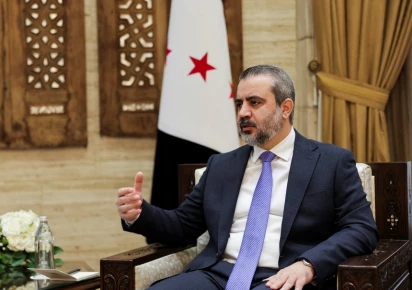
Syrian Foreign Minister Asaad al-Shaibani said on Sunday that diplomatic contacts between Syria and Israel had been suspended following an Israeli strike on the Abu al-Duhur airbase in northern Syria. However, he expressed optimism that negotiations over a proposed security agreement could resume soon, saying Damascus still viewed diplomacy as the preferred way forward.
Speaking to Western media, Shaibani said Syria expected talks with Israel to restart in the near future. He said Damascus hoped negotiations would eventually result in the withdrawal of Israeli forces from Syrian territory.
“We expect negotiations with Israel on a security agreement to resume soon,” Shaibani said. He also called on Israel to recognise what he described as a “historic opportunity” for diplomacy, stressing that Syria had not closed the door to negotiations.
According to the foreign minister, Syria’s immediate objective is to stop Israeli military attacks and establish confidence-building measures between the two sides. He said the negotiating process had been disrupted following the Iran-Israel war but expressed hope that diplomatic discussions would resume in the coming period.
Shaibani also said Israel had carried out a strike against the Abu al-Duhur facility despite Damascus informing Israel that the location would not be converted into a Turkish military base. Nevertheless, he reaffirmed Syria’s intention to continue receiving Turkish assistance, particularly in the areas of military training and cooperation.
“We will not dispense with this support,” he said.
The Syrian foreign minister described communication with Israel as necessary because, in Damascus’ view, Israel continues to pose a threat to Syria’s security. However, he stressed that Syria did not want dialogue to continue indefinitely without producing tangible results.
Shaibani said Syria and Israel had already reached understandings earlier this year on most aspects of a proposed security agreement. He claimed that almost all of the provisions had been agreed upon on paper, although the agreement had not been finalised.
Under the proposed arrangement, Israel would be required to stop attacking Syria, refrain from interfering in Syrian internal affairs and end its military operations inside the country. The agreement would also involve the withdrawal of Israeli forces from territories seized after the collapse of Bashar al-Assad’s government.
The proposal would establish several security zones along the border. Shaibani said one of these would be a buffer zone in which only United Nations personnel would be present, while other designated areas would allow Syrian forces to deploy at different levels.
However, Shaibani accused Israel of lacking the political will to complete the agreement. He said Damascus had not seen sufficient motivation or genuine commitment from Israel to reach a final deal.
Regarding the occupied Golan Heights, the minister said Syria’s immediate priority was to end Israeli attacks before addressing the broader territorial dispute. He suggested that negotiations over the Golan Heights and a potential peace agreement could take place at a later stage.
Shaibani also said the United States had been applying continued pressure on Israel to return to negotiations and work toward an agreement with Syria.
The comments come amid Damascus’ broader efforts to establish more stable relations with neighbouring countries. Syrian President Ahmad al-Sharaa said on July 26 that Syria was working with several countries to reach a security agreement with Israel, arguing that such an arrangement could eventually create conditions for “comprehensive peace.”
At the same time, Damascus has maintained its claim over the occupied Golan Heights. Israel has controlled most of the territory since 1967.
Following the fall of Assad’s regime in late 2024, Israel declared the 1974 disengagement agreement void and moved into the Syrian buffer zone and several other strategic positions, including the Syrian side of Mount Hermon, also known as Jabal Al-Sheikh.
Despite the suspension of talks and continuing tensions, Shaibani’s latest comments suggest that Damascus remains open to diplomacy and hopes negotiations can resume to reduce military escalation and address Syria’s security concerns.
We welcome your contributions! Submit your blogs, opinion pieces, press releases, news story pitches, and news features to opinion@minutemirror.com.pk and minutemirrormail@gmail.com