Summary
- Information Minister Attaullah Tarar has criticised Jamiat Ulema-e-Islam-Fazl (JUI-F) chief Maulana Fazlur Rehman over his party’s protest call, while questioning Pakistan Peoples Party (PPP) Chairman Bilawal Bhutto-Zardari’s opposition to holding a referendum on the creation of new provinces.
- The information minister also criticised Bilawal Bhutto-Zardari for opposing a referendum on the creation of new provinces.
- The debate over a referendum has exposed differences within the ruling coalition, particularly between the PPP and other political figures supporting public consultation on the creation of new provinces.
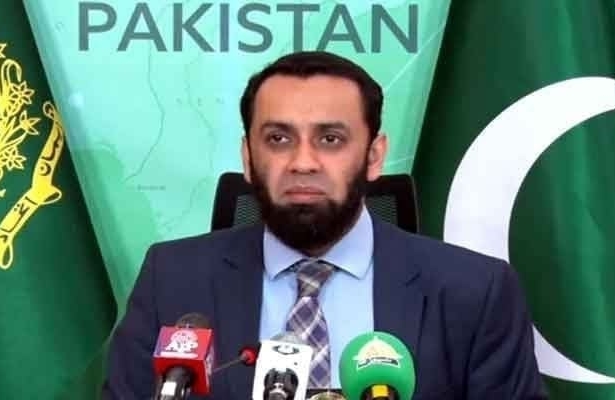
Information Minister Attaullah Tarar has criticised Jamiat Ulema-e-Islam-Fazl (JUI-F) chief Maulana Fazlur Rehman over his party’s protest call, while questioning Pakistan Peoples Party (PPP) Chairman Bilawal Bhutto-Zardari’s opposition to holding a referendum on the creation of new provinces.
Speaking in a television programme on Thursday, Tarar urged Fazlur Rehman to avoid confrontation and stop disrupting traffic through road closures. He described the protests as a relatively minor political issue and called on the JUI-F leadership to reconsider its approach.
The minister alleged that the JUI-F chief was pursuing confrontation despite efforts by some party members to persuade him to adopt a different course.
Tarar also made controversial remarks about Fazlur Rehman’s political position, questioning whether he stood with Pakistan or Afghanistan and the Taliban. He compared the party’s conduct to that of a militant organisation.
He urged the JUI-F chief to step back and explore ways to resolve political differences through dialogue. Tarar said communication channels should remain open to prevent further tensions.
The JUI-F’s protest call had disrupted traffic in several cities, with demonstrators blocking roads at different locations. However, most of the affected routes had reportedly reopened.
The information minister also criticised Bilawal Bhutto-Zardari for opposing a referendum on the creation of new provinces.
Tarar questioned why the PPP chairman was reluctant to seek public opinion on the issue, arguing that citizens should have an opportunity to express their views.
He also challenged Bilawal’s description of Pakistan Tehreek-e-Insaf (PTI) founder Imran Khan as a political prisoner, saying that if the PPP chairman believed Khan was being detained for political reasons, he should present his arguments before a court.
Tarar accused Bilawal of mixing political arguments with legal matters, saying that issues requiring legal arguments should be addressed through the judicial system.
However, the minister clarified that disagreements between the PPP and other coalition partners over political matters did not mean their working relationship had deteriorated. He added that the PTI could also be consulted if the proposal for new provinces was brought before parliament.
Bilawal has rejected the proposal to hold a referendum on new provinces, maintaining that the matter should be addressed through parliament and constitutional procedures.
Speaking in Multan on November 26, the PPP chairman warned that a referendum on the issue could become one of the most controversial in Pakistan’s history. He argued that parliament could resolve the matter through democratic debate without requiring a public vote.
He also called for political consensus and urged opposition parties to participate in discussions on electoral reforms.
Earlier, Bilawal had described Imran Khan as a political prisoner and expressed his desire to see a political environment in which former prime ministers were not imprisoned after leaving office. He also called for a political reset to restore public confidence in the country’s political system.
The debate over a referendum has exposed differences within the ruling coalition, particularly between the PPP and other political figures supporting public consultation on the creation of new provinces.
The PPP wants the matter resolved through parliament and constitutional mechanisms rather than a referendum.
Meanwhile, reports indicate that no formal proposal for holding a referendum on new provinces has been initiated by the relevant government ministries or the Prime Minister’s Office.
The Election Commission of Pakistan has also not received any official notification regarding a referendum plan.
We welcome your contributions! Submit your blogs, opinion pieces, press releases, news story pitches, and news features to opinion@minutemirror.com.pk and minutemirrormail@gmail.com