Summary
- What the numbers show The Pakistan Demographic and Health Survey 2017–18 gives a sobering picture of how little economic power many married women hold (PDHS 2017–18): – Only 19% of married women were employed in the past year, compared with 98% of married men.
- – Three in ten women said finding money for treatment was a problem when they needed health care.
- Economic abuse also keeps women trapped.
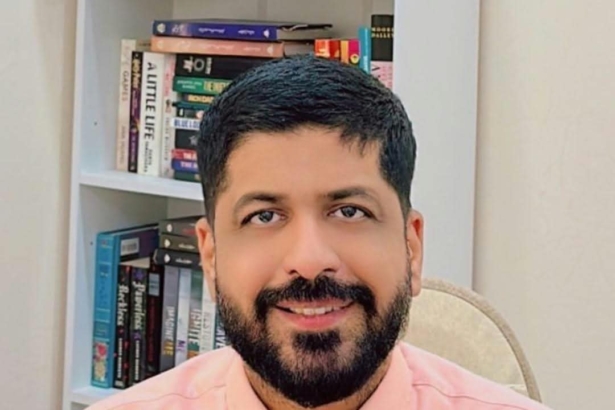
By Dr. Malik Sherjeel Awan, PsyD
The Abuse That Hides in the Household Budget
When we talk about domestic violence in Pakistan, we picture a slap, a
burn, a broken arm. As the world marks the 16 Days of Activism against
gender-based violence from 25 November, those images will fill our
screens again, and they should. But there is another kind of abuse
that rarely makes the news, because it happens quietly, at the kitchen
table, over money.
It looks like this. A wife hands over her salary every month and must
ask for bus fare. A husband takes her gold “for safekeeping” and it is
never seen again. She is not allowed to work, or she is made to quit.
She has no idea what the family owns, and if she asks, she is told it
is not her business. Every rupee comes with a question, and every
question comes with a lecture.
This is economic abuse. And it is far more common than we admit.
The law already recognises it
Pakistani law is ahead of our culture here. The Sindh Domestic
Violence (Prevention and Protection) Act 2013 lists “economic abuse”
as a form of domestic violence, defining it as the deprivation of
economic or financial resources, or restricting a person’s continued
access to resources they are ordinarily entitled to (Sindh DV Act
2013, s.5). The World Health Organization likewise counts controlling
behaviours as part of intimate partner violence (WHO).
Yet few families would use the word “abuse” for a husband who controls
every paisa. We call it “managing the house”. We call it tradition.
What the numbers show
The Pakistan Demographic and Health Survey 2017–18 gives a sobering
picture of how little economic power many married women hold (PDHS
2017–18):
– Only 19% of married women were employed in the past year, compared
with 98% of married men.
– Of employed women who earned cash, about half decided on their own
how to spend it.
– 76% of working women earned less than their husbands.
– Just 3% of ever-married women owned a house, alone or jointly,
compared with 72% of men. Only 2% owned land, compared with 27% of
men.
– Three in ten women said finding money for treatment was a problem
when they needed health care.
Not every one of these households is abusive. Many couples share money
fairly and lovingly. But when a woman has no income, no property and
no say, she has very little protection if her husband chooses to use
money as a weapon. Dependence is not abuse in itself. It is the ground
on which economic abuse grows.
Why it matters for the mind
From a psychological point of view, economic abuse reaches far beyond
the wallet. Having to ask permission for basic needs teaches a grown
woman to feel like a child. Being told she is careless or wasteful,
again and again, erodes her confidence in her own judgement. Not
knowing whether there will be money for her children’s school fees or
her own medicine keeps her in a constant state of low-level fear.
WHO links intimate partner violence to depression, anxiety and
post-traumatic stress. Economic abuse also keeps women trapped. One of
the first questions any woman considering leaving a violent home asks
is: how will I survive? When the honest answer is “I can’t”, she
stays. The PDHS found that 34% of ever-married women had experienced
spousal violence. Economic control is often what keeps the door locked
from the inside.
What we can do
Families can stop treating women’s money as a family pool. A
daughter’s salary, her mehr and her jewellery are hers. Parents can
say this clearly before and after marriage, and back their daughters
up when it is challenged.
Women can keep a small, safe measure of independence. A personal bank
account, copies of important documents (CNIC, nikah nama, children’s
B-forms) in a safe place, and some knowledge of household finances are
not acts of disloyalty. They are basic safety.
Banks and employers can help. Simple steps, such as making sure women
can open and run accounts without a male relative’s involvement, and
paying salaries directly into a woman’s own account, reduce the chance
that earnings are taken.
Awareness campaigns should name it. During these 16 days, provincial
departments and NGOs should explain, in Urdu and regional languages,
that controlling a wife’s money, taking her earnings or forbidding her
from working can be a form of domestic violence under the law.
Religious voices matter. Our tradition gives a wife the right to her
own property and her mehr. Leaders who remind communities of this can
do more than any poster.
A different measure of a good marriage
A marriage is not good because no one has been hit. It is good when
both people are safe, respected and free, including with money. If you
are a woman who must beg for what is already yours, your unease is not
ingratitude. It is a sign that something is wrong. The Ministry of
Human Rights helpline, 1099, is free.
This year, let’s widen our idea of violence. Some of the deepest harm
is done not with a fist, but with a closed purse.
Dr. Malik Sherjeel Awan is a clinical psychologist based in Makkah and
the author of books on psychology and relationships. He is followed by
over a million people across Instagram, TikTok and Facebook.