Summary
- Lahore has roughly 1,500 such bazaars in its residential streets and mohallas, employing more than 85,000 people who do not appear in any official employment figure.
- The gulab jamun tastes exactly the way I remember it.” This reflects the deep attachment people have to the small shops in their mohallas, which serve not only as places of business but also as important parts of everyday life.
- The question worth asking, before the next road is widened and the next shop disappears, is not whether Lahore can survive without its mohalla bazaars.
The small mohalla bazaar quietly carries Lahore’s living memory, and it is slowly disappearing
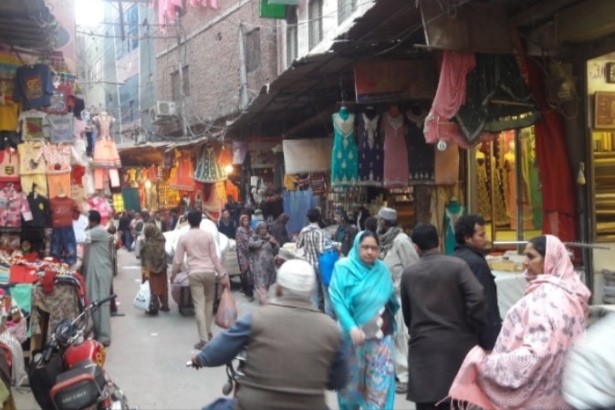
When did you last buy something from a person who knew your name? Not a cashier, not a delivery rider, but a real person who remembers that you prefer the smaller brinjals and adds an extra handful of coriander without being asked or the general store owner who puts your usual tea brand on the counter the moment he sees you walk in, before you have said a single word. In Lahore, that person is usually half a block away, often a local vendor sitting at the same street corner for years. They may not have a signboard or an online page, but people know them and trust them because they have been serving the neighborhood for a long time.
Lahore has roughly 1,500 such bazaars in its residential streets and mohallas, employing more than 85,000 people who do not appear in any official employment figure. They are neither the famous Liberty nor Ichra bazaar. They are the people who have been part of the neighborhood for as long as anyone can remember, the corner grocery store or the tailor who has watched generations of students pass through his shop. They are an economy that no plaza has managed to replace, because what they sell is not just groceries or stitching. It is familiarity.
A vegetable vendor who has worked at the same corner for over twenty years, knows which family on the left side of the street buys more coriander and which one needs their vegetables packed before eight. He does not write any of this down. It lives in his head, and it will stay alive only as long as he does. When asked about it, he said:
“I have been sitting on this corner for twenty-two years. I know every family on this street. When they shop, what they often want and how much they usually spend. Last week a woman came and said she only had two hundred rupees at that moment. I gave her what she needed and told her to pay whenever. She has been my customer for fifteen years. You cannot put a price on that kind of trust.”
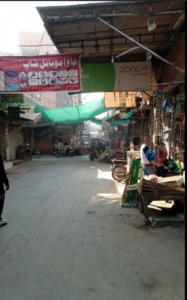
One of the most valuable things about a mohalla bazaar is the trust it creates. When a family is short on money, the shopkeeper often notes and asks them to pay later. It is not charity or a loan, but a simple understanding between neighbours who know and trust each other.
The food coming out of these streets is not just cheap. It is, in many cases, genuinely irreplaceable. A 2023 survey found that 73% of Lahoris named a specific mohalla stall, not a restaurant as the source of their favourite food spot. Places like Goga Nakheebia, famous for decades across Lahore, built that reputation not through advertising but through taste alone. The same can be said for countless neighbourhood stalls known for their fresh jalebis, gulab jamuns, and other traditional treats. What keeps people coming back is not just the food. It is the fact that they have been coming back for so long that stopping would feel like missing something.
A man who stops at the same gulab jamun stall every Friday said:
“My grandmother used to bring me here every Friday. She has been gone twelve years now but I still come here, the same day. I bring my own children now. The gulab jamun tastes exactly the way I remember it.”
This reflects the deep attachment people have to the small shops in their mohallas, which serve not only as places of business but also as important parts of everyday life.
For many women in Lahore’s older neighbourhoods, the trip to the mohalla bazaar is the one routine outing of the day and it is far more than a grocery run. Everything a household needs is within a few steps. Women do not need to drive to a mall to find what her family needs for the week. It is all here, available at small shops, at prices most people can afford. Women move through these bazaars with a quiet authority. They know which stall has fresh vegetables, which one gives proper weight, and which one to avoid entirely. They are the most consistent customers that helps explain why mohalla bazaars remain an important part of local culture, woven into the daily routines and social life of the communities they serve.
These bazaars have survived a lot over the years but now it is harder to survive the city’s own development plans. New roads cut through old neighbourhoods and the bazaars that once sat comfortably beside them are suddenly in the way. Shops lose access, customers lose their walking route, and a market that fed a neighbourhood for thirty years quietly empties out. New plazas are being built where small traders once worked, but the rents are often too high for local vendors.
There are those who will say the mohalla bazaar is a problem as much as it is a charm. The streets are congested; the shops cover the roads the road and the hygiene is not always what it should be. These are not unfair observations. Many people overlook what replaces the mohalla bazaar when it disappears. It is usually not a better version of the same space, but a plaza for wealthier customers, a wider road, or an empty plot waiting for development. Despite its imperfections, the old bazaar remains affordable, accessible, and deeply connected to everyday neighbourhood life. Fixing its problems is a reasonable task. Removing it entirely is a different matter.
What gets removed is never just a small shop. When a cobbler who has held the same corner for twenty years is cleared out, a neighbourhood loses the person who knew how each family wore through their shoes. When a food vendor’s spot is taken for a wider road, a taste that existed nowhere else quietly ends.
Lahore has always changed. Cities must. But there is a difference between a city that changes and a city that forgets. The mohalla bazaar might be noisy, cramped and barely holding on financially but it is also one of the few places left in this city where buying something still feels like a human exchange rather than a transaction. The question worth asking, before the next road is widened and the next shop disappears, is not whether Lahore can survive without its mohalla bazaars. It already knows it can. The real question is whether it wants to.
We welcome your contributions! Submit your blogs, opinion pieces, press releases, news story pitches, and news features to opinion@minutemirror.com.pk and minutemirrormail@gmail.com