

Summary
- A citizen crushed by inflation and utility bills sees senior officials travelling in convoys of 20 or 30 vehicles and asks a simple question: if the country is so poor, why does its government continue to live so lavishly?
- Yet the country continues to struggle to bring large parts of the informal economy and powerful economic interests into the effective tax net.
- The question is, why ordinary consumers continue to bear the consequences of a system whose structural failures were created by successive governments and powerful stakeholders.
By Engr. Abdur Rehman Khichi
There is something deeply disturbing about the way Pakistan’s ruling elite continues to conduct itself in a country where millions of people struggle to afford food, electricity, fuel and basic healthcare. According to a recent World Bank assessment of the MENAAP region, around 48 percent of the region’s poor are in Pakistan, with people surviving on roughly $3 (around PKR 840) a day. The other half of the region’s poor population is concentrated largely in countries such as Yemen, Afghanistan and Syria, countries facing war and prolonged conflict. Pakistan’s own figures are equally disturbing: with a national poverty line of around PKR 8,483 per person per month and a poverty rate of 28.9 percent, roughly 70 million Pakistanis live below the official poverty threshold. For these people, putting food on the table, paying electricity bills and buying fuel are daily struggles. Yet the priorities of the state often seem to belong to another world.
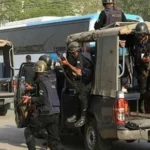
At a time when the government repeatedly calls for austerity, reports of the Punjab government’s purchase of a luxury aircraft costing roughly PKR 10 billion, despite an aircraft already being available, and the federal procurement of dozens of luxury bulletproof vehicles are difficult to justify. A citizen crushed by inflation and utility bills sees senior officials travelling in convoys of 20 or 30 vehicles and asks a simple question: if the country is so poor, why does its government continue to live so lavishly? The contradiction becomes even sharper in taxation. The salaried class is among the easiest groups to tax because its income is documented and tax is deducted at source. Yet the country continues to struggle to bring large parts of the informal economy and powerful economic interests into the effective tax net. When the Federal Board of Revenue falls short of its targets, the burden often returns to those who are already paying. The government also relies heavily on petroleum taxes and levies to raise revenue, meaning that every litre of fuel carries a substantial fiscal burden. The ordinary citizen therefore pays not only for the cost of petroleum but also helps compensate for the state’s broader revenue-collection problem. The irony is painful: the documented taxpayer is squeezed harder because he is easy to find.
For the poor, there is little such thing as an amnesty. An unpaid electricity bill can lead to disconnection; unpaid taxes can bring penalties. But when powerful economic interests need relief, governments repeatedly find ways to offer tax concessions, exemptions, incentives, restructuring and amnesty-like schemes. This creates a perception that Pakistan has two systems, one for those who must obey the rules and another for those powerful enough to negotiate them. The same contradiction appears in commodity policy. Pakistan has repeatedly exported commodities when they are abundant and relatively cheap, only to facilitate imports when domestic supplies become short and prices rise. Trade is not the problem; the question is who benefits and who bears the risk. If influential traders can profit from both export and import opportunities while ordinary consumers absorb the resulting price shocks, then the state is failing in its responsibility to protect food security.
The country’s energy sector offers another example. Pakistan’s power crisis, circular debt and Independent Power Producer arrangements have created enormous financial obligations, while consumers continue to face extremely high electricity prices. Plants can become uneconomical or remain shut while capacity payments still burden the system. Factories reduce production, businesses struggle and households cut consumption, yet the citizen continues to pay. The question is, why ordinary consumers continue to bear the consequences of a system whose structural failures were created by successive governments and powerful stakeholders.
Most damaging of all is the apparent absence of accountability. When FBR misses its targets, the shortfall is recovered from those already within the tax system. When energy costs rise, consumers pay. When inflation rises, families eat less. When businesses close, workers lose jobs. When the economy deteriorates, young Pakistanis leave the country. Yet those responsible for policy failures can continue receiving appointments, official privileges, bonuses, vehicles and even awards. If failure has no consequences for the powerful, while its costs are imposed on ordinary citizens, why would anyone believe in the system? This is ultimately more than an economic crisis. It is a crisis of trust.
Pakistan became independent in 1947, but the psychology of the colonial ruler and the subject did not disappear with the Union Jack. The British Viceroy may have been replaced by a local political, bureaucratic, military or business elite, but the distance between rulers and citizens often remains. The ruler travels behind tinted windows and security convoys; the citizen waits in traffic. The ruler receives state-funded privileges; the citizen pays for them. The ruler speaks of sacrifice; the citizen is expected to make it. This is the colonial mindset that Pakistan must overcome. Pakistan does not merely need another bailout of IMF, another tax target or another austerity programme. It needs a new social contract in which sacrifice is shared, public money is treated as public money and the citizen is treated as a citizen, not a subject. Because the greatest cost of elite privilege is not the price of a jet, a convoy, free fuel or a government vehicle. It is the loss of public trust. And once citizens stop believing that the state is fair, no speech from a head of state, no patriotic slogan and no promise of reform will be enough to make them believe in the system again.
We welcome your contributions! Submit your blogs, opinion pieces, press releases, news story pitches, and news features to opinion@minutemirror.com.pk and minutemirrormail@gmail.com