Summary
- To nineteenth-century society, the idea that a wife could leave an unhappy marriage was not merely immoral; it was considered an attack on the very foundation of civilization itself: the marriage.
- This does not necessarily mean that society has abandoned the institution of marriage.
- Recognizing this social transformation does not automatically mean celebrating divorce, nor does it mean condemning marriage.
When Henrik Ibsen wrote A Doll’s House in 1879, Europe was not prepared for Nora Helmer’s final act, where she left her husband. The sound of a woman shutting the door on her husband and children became one of the most controversial moments in literary history. To nineteenth-century society, the idea that a wife could leave an unhappy marriage was not merely immoral; it was considered an attack on the very foundation of civilization itself: the marriage.
The reaction was so intense that German theatre managers forced Ibsen to change the ending. In the revised version, Nora looks at her sleeping children, collapses emotionally, and stays in the marriage. Society wanted the family preserved at all costs. Marriage was sacred. Separation was shameful. A woman’s identity was expected to remain tied to sacrifice, endurance, and silence.
More than a century later, something similar is unfolding in Pakistan, particularly in Islamabad.
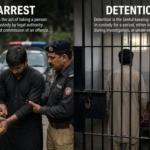
According to recent reports, family courts in Islamabad are facing an unprecedented rise in khula and maintenance cases. More than 45,000 khula-related cases have reportedly already been filed this year, with over 300 new cases emerging daily. The number of family disputes continues to rise, reaching 100,000 cases in 2025. Alongside this trend, court marriages have also increased significantly, many ending in disputes soon after marriage.
This phenomenon is often discussed only through statistics or social criticism. Yet beneath these numbers lies a deeper sociological transformation, one that history has witnessed before: a doll’s house. The most striking aspect is not the increase in divorce. It is the change in social attitudes toward marriage itself.
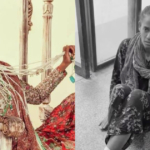
Pakistan today appears to be experiencing debates that Europe confronted more than one hundred years ago. In traditional Pakistani society, much like Victorian Europe, marriage has long been treated as sacred, permanent, and socially untouchable. Previous generations often viewed separation as failure, dishonour, or rebellion against family values. Women were expected to tolerate emotional hardship, neglect, incompatibility, and sometimes even abuse for the sake of preserving the household structure.
This is precisely the social environment that Nora challenged in A Doll’s House. At the time, audiences were horrified not because Nora committed a crime, but because she chose herself over an unhappy domestic life. Society could forgive a flawed husband more easily than it could accept a woman leaving the marriage altogether. Her departure symbolized individual dignity over social expectation.
Today, in Islamabad’s family courts, one can observe echoes of the same historical transformation. Increasingly, people, particularly women, are refusing to remain in marriages they perceive as emotionally unbearable, unequal, or destructive. Whether one agrees with this shift or not, it represents a visible social reality.
This does not necessarily mean that society has abandoned the institution of marriage. Rather, it may indicate that expectations from marriage are changing. Earlier generations often prioritized endurance and collective family reputation. Modern generations increasingly prioritize emotional compatibility, respect, mental peace, and personal autonomy. The pace of this transition, however, varies across societies.
Europe underwent these debates gradually through industrialization, feminism, legal reform, and changing gender roles over decades. Pakistan, by contrast, is witnessing social change at a much faster pace due to urbanization, education, digital connectivity, economic pressures, and shifting cultural narratives. Ideas that once took generations to spread now travel instantly through social media, television, and global interaction.
This is why the comparison with Ibsen’s drama becomes deeply relevant. History does not repeat itself in identical forms, but human societies often move through similar psychological and cultural stages. The same fears once expressed in nineteenth-century Europe, that family systems would collapse, morality would disappear, and social order would weaken, are now frequently heard in discussions within Pakistan. Yet it is important to approach this issue carefully and honestly.
Recognizing this social transformation does not automatically mean celebrating divorce, nor does it mean condemning marriage. It simply means acknowledging that societies evolve, and that concepts once considered absolute eventually become contested. The sanctity of marriage remains deeply important for millions of families in Pakistan. At the same time, increasing numbers of individuals no longer believe that preserving a marriage at any cost is always the highest social virtue.
Perhaps the real lesson from A Doll’s House is not about encouraging separation, but about understanding how societies react when individuals begin demanding dignity, identity and personal autonomy within family life.
More than a century ago, Europe feared Nora’s door slam. Today, Pakistan is hearing similar sounds, not from theatre stages, but from courtrooms and homes. Whether this transformation strengthens or weakens society remains a question for future generations. But one thing is undeniable: social change, once it begins, rarely moves backward.