Summary
- The 2025 inquiry unequivocally implicates the contractor, which propounded the rock-filled cofferdam modification owing to consultant MM Pakistan’s dereliction in delivering sound technical guidance and design.
- The inquiry’s criticism of the consultant is that it conditionally accepted the contractor’s design without ensuring technical compliance, and that it passed WAPDA’s July 2023 request for a cofferdam performance review to the contractor instead of assessing it independently.
- Second, commission an independent technical review of the cofferdam design, the geological data behind it and the decision to accept it.
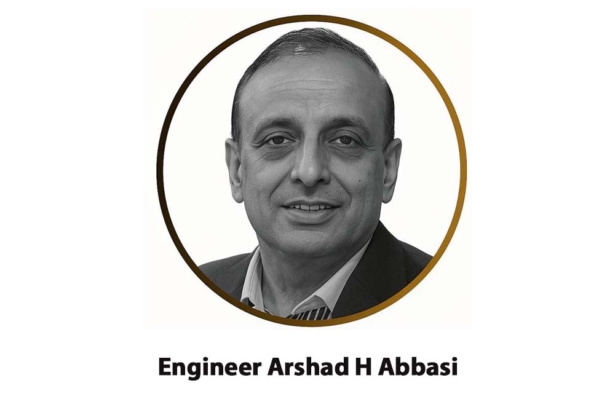
Disclaimer: I am a professional engineer and co-founder of the Energy Excellence Centre at NUST and Engineering University Peshawar. I write in a personal capacity, and these views are my own, not those of any institution. I have no connection to PowerChina or to any other party in this matter. The facts below come from public reporting and the 2025 inquiry. Much of the contractor’s experience is its own account and has not been independently audited. Nothing here is a finding about what caused the 9 November collapse.
I have been fascinated by hydroelectricity since I was a child. A river held back and turned into light in a thousand homes still seems to me one of the great achievements of engineering. I became an engineer because of that fascination, and it is why the events at Tarbela’s Fifth Extension hit me so hard. I cried, and I am not embarrassed to say it. When a project like this fails, it is not only concrete and steel that are lost. People’s trust in the idea that we can build great things safely is lost too.
In the debate that followed, most of the attention has gone to the consultant, MM Pakistan, and to the fees that rose sharply. Those questions are legitimate. But they risk hiding a more basic one: who proposed the design that the inquiry found the contract did not allow?
The 2025 inquiry unequivocally implicates the contractor, which propounded the rock-filled cofferdam modification owing to consultant MM Pakistan’s dereliction in delivering sound technical guidance and design. Conversely, PowerChina’s track record across all other hydropower projects has been ostensibly sterling—a divergence attributable to the fact that the engineering consultants presiding over those initiatives were far more competent and qualified than MM Pakistan. And PowerChina is far from a newcomer. Formed in 2011 from Sinohydro, HydroChina and other power engineering firms, the state-owned group says it has completed 103 projects in Pakistan over 36 years. Its list includes the civil works of the Tarbela 4th and 5th Extensions, the Diamer Basha dam in a joint venture with FWO, Gomal Zam and Ghazi-Barotha. At home it was among the main contractors on Three Gorges and built Xiluodu, which won a 2016 FIDIC Outstanding Project award. It claims over 100 large hydropower plants.
The Tarbela 4th Extension was reported finished in June 2021, 27 days ahead of schedule. This is a company that knows this dam, this river and this regulator.
(One clarification matters for fairness. PowerChina is a different company from China Gezhouba Group, which built Neelum-Jhelum, Dasu, Suki Kinari and Mohmand. Those projects should not be credited or blamed here.)
Compare the two parties. The consultant, a consortium of Mott MacDonald UK and MM Pakistan, was no stranger to Tarbela either. MM Pakistan had worked on Tarbela 4 and was studying Tunnel 5 power conversion as early as 2014. But the contractor is the larger and more seasoned actor, with the deeper bench of construction experience and the greater practical knowledge of how ground behaves under a design.
That matters. The inquiry’s criticism of the consultant is that it conditionally accepted the contractor’s design without ensuring technical compliance, and that it passed WAPDA’s July 2023 request for a cofferdam performance review to the contractor instead of assessing it independently. A checker’s failure is real, but a checker can only check what someone else has put in front of them. The party that proposed the design, and had the most experience with such designs, carries the first-order responsibility for it. In my profession we teach that experience should make an engineer harder to mislead, not easier to excuse.
An honest portrait must include the difficult parts of the record. At Coca Codo Sinclair in Ecuador, a 1,500 MW project built by Sinohydro, thousands of cracks were reported and the dispute went to arbitration. In August 2025, Ecuador’s finance minister said PowerChina would pay $400 million. A pressure-well collapse there in December 2014 killed 14 people. The Karuma project in Uganda faced delays over wall cracks.
I want to be careful. These cases involved geological and defect disputes in other countries, and they are not evidence of what happened at Tarbela. They are, however, a reason why the 9 November collapse needs a genuinely independent review rather than a conclusion reached by those with a stake in the answer.
What should accountability look like? First, publish the full inquiry report. The Planning Minister has already asked for it to be shared. Second, commission an independent technical review of the cofferdam design, the geological data behind it and the decision to accept it. The question of which ground data the designers actually held remains open, and claims about a 1962 geology report cannot be confirmed from the available record. Third, split the consultancy cost increase between the original consortium, the replacement firm, extended duration and price adjustment. The figures reported in the press and in the official minutes differ, and until the split is public, the increase should not be pinned on any single firm. Fourth, identify the firm that replaced the consultant and review how it was chosen. Fifth, examine WAPDA’s own payment record, since the consortium’s exit followed unpaid invoices, and WAPDA is part of this story too.
None of this is about punishing one company for the sake of a headline. It is about learning the right lesson. If we blame only the smaller, more convenient party, the next contractor with a clever redesign will find the same weak checks waiting for it.
I came to love dams as a child because they seemed like promises kept: stand here, trust this, and it will hold. Tarbela deserves to keep that promise. Honouring it begins with asking the most experienced party in the room the hardest questions.
We welcome your contributions! Submit your blogs, opinion pieces, press releases, news story pitches, and news features to opinion@minutemirror.com.pk and minutemirrormail@gmail.com