Summary
- Far from a standard burial procession, this carefully planned journey through major cities and highly revered Shia shrines serves as a profound reflection of the political, historical, and religious architecture upon which the Islamic Republic is built.
- By bringing Khamenei’s procession through Qom, the state heavily underscored the traditional religious mandate that legitimizes the office of the Supreme Leader.
- By including Najaf in the itinerary, the organizers purposefully demonstrated that Khamenei’s influence and religious legacy extended far beyond the geographic borders of Iran, asserting a strong connection with the broader international Shia populace.
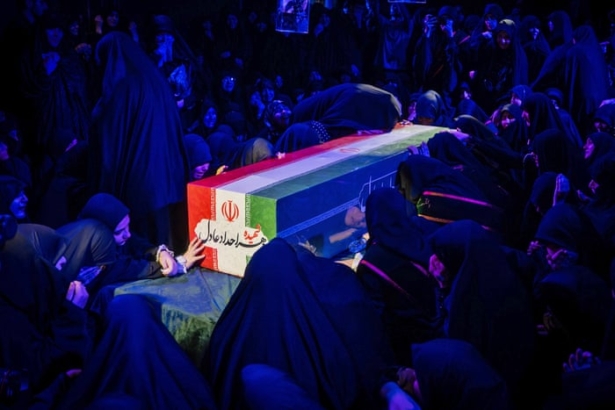
Following the passing of Iran’s Supreme Leader, Ayatollah Ali Khamenei, the state orchestrated an extensive, deeply symbolic funeral route spanning multiple cities across both Iran and Iraq. Far from a standard burial procession, this carefully planned journey through major cities and highly revered Shia shrines serves as a profound reflection of the political, historical, and religious architecture upon which the Islamic Republic is built. By sending the late leader through these specific locations, the state is actively projecting the continuity of its clerical system and reinforcing its ties to the global Shia community during a major transitional phase.
The journey naturally commenced in the nation’s capital, Tehran, which acts as the undeniable epicentre of Iran’s political and institutional authority. A massive public viewing was arranged at the iconic Grand Mosalla of Tehran. As a sprawling complex traditionally used for significant Friday prayers, massive religious events, and major state addresses, the Mosalla embodies the direct intersection of clerical leadership and state governance. Following the viewing, a massive procession moved through the main thoroughfares of the capital. Because Tehran houses all primary branches of government including the parliament, presidency, judiciary, and military locations, particular segment of the route served a dual purpose. It provided a centralized space for public mourning while simultaneously broadcasting a clear message of stability, order, and leadership continuity to the rest of the world. From the political capital, the funeral route shifted to Qom, the theological heartbeat of Iran. Qom is universally recognized for hosting the country’s most powerful religious seminaries (hawzas), which have trained generations of influential scholars and clerics. It is the very soil where the foundational ideologies of the 1979 Islamic Revolution were nurtured. By bringing Khamenei’s procession through Qom, the state heavily underscored the traditional religious mandate that legitimizes the office of the Supreme Leader. The stop allowed seminary students and top-tier religious jurists to pay their final respects, while also honoring the city’s spiritual anchor: the magnificent mausoleum of Fatima Masumeh, the revered sister of Shia Islam’s eighth imam.
In an expansive geopolitical move, the funeral journey crossed international borders into neighboring Iraq, making stops at two of the most sacred locations in Shia Islam. The first Iraqi destination, Karbala, holds unparalleled emotional and historical weight as the resting place of Imam Hussein. His seventh-century martyrdom remains the foundational narrative of sacrifice, resistance against injustice, and spiritual endurance within Shia tradition, themes that Iran’s leadership has long incorporated into its state identity. Next, the procession traveled to Najaf, home to the revered shrine of Hazrat Ali and a historical rival to Qom in Islamic scholarship. By including Najaf in the itinerary, the organizers purposefully demonstrated that Khamenei’s influence and religious legacy extended far beyond the geographic borders of Iran, asserting a strong connection with the broader international Shia populace.
The historic journey peaked and halted in Mashhad, Iran’s ultimate holy city, located in the northeastern province of Khorasan. Mashhad houses the expansive Imam Reza Shrine, an architectural marvel that draws tens of millions of devout pilgrims from around the globe every single year. This final stop carries immense personal significance alongside its deep religious gravity, as Mashhad was Ayatollah Khamenei’s birthplace and the cradle of his early Islamic education and political activism. Choosing to lay him to rest permanently near the Imam Reza Shrine creates a poetic closure, bringing his life story full circle. Symbolically, it seamlessly fuses his personal history with Iran’s most sacred geographic monument, finalizing a ritual narrative where religious devotion and national identity become one.
We welcome your contributions! Submit your blogs, opinion pieces, press releases, news story pitches, and news features to opinion@minutemirror.com.pk and minutemirrormail@gmail.com