Summary
- An NGO need not be an intelligence asset to do an intelligence asset’s work; it need only have no real expertise in the subject it dominates — climate policy, water governance, agricultural economics — and an unlimited budget to keep producing position papers that the Government of Pakistan, lacking the technical capacity to interrogate them, simply absorbs as truth.
- A Plea, Not a Verdict We are not naïve to the obvious objection, and intellectual honesty demands we state it: India has consistently and categorically never denied directing any campaign of economic destabilisation against Pakistan, and much of what is described above — the motives behind NGO funding, the intent behind climate advocacy, the source of regulatory capture — rests on inference and pattern rather than on documents that would satisfy a court.
- A government that cannot answer that question about the voices shaping its energy, water, and climate policy has already lost a war it does not know it is fighting.
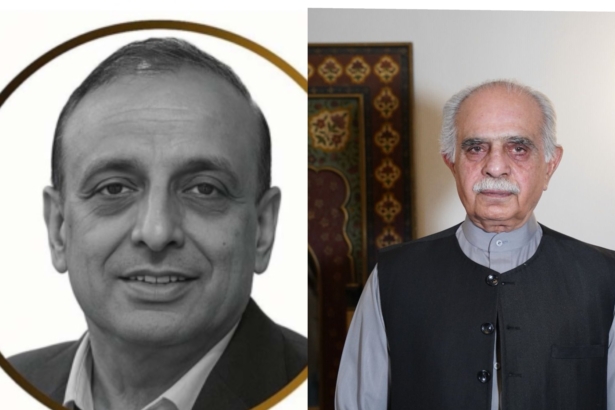
By General Ghulam Mustafa (Served in different staff and command assignments, commanded a Corps, raised and commanded Army Strategic Force Command)
- The Anatomy of an Open Wound
- The Moles We Refuse to Name, the Capture We Refuse to See
- A Plea, Not a Verdict
- This Is Not an Op-Ed. This Is an SOS.-
&
Engineer Arshad H Abbasi, Co-founder, Energy Excellence Centres at NUST and Engineering University Peshawar, International Transboundary Water Expert
There is a particular grief reserved for those who watch a house burn while its occupants argue about whose turn it is to fetch water. That is the grief of writing this. For seventy-eight years, Pakistan and India have stood as nuclear-armed siblings born of the same partition wound, sharing rivers that do not ask permission to flow and a soil that remembers undivided footsteps. And for at least three of those decades, while our newspapers and our generals kept their eyes fixed on the Line of Control, a quieter and in our view far more devastating war was waged — not with tanks, but with tariffs; not with missiles, but with memoranda; not in covert basements, but, we contend, in plain sight, inside our own ministries.
We must say this plainly, with sorrow rather than spectacle: the threat to Pakistan’s sovereignty today is not primarily the Indian army. It is the slow, patient, and — we argue — barely-concealed practice of economic espionage: the theft of financial forecasts, the cultivation of bureaucrats, the placement of friendly faces on the boards of public-sector organisations, the mapping of critical supply-chain routes, and the harvesting of sovereign debt data. Classical doctrine treats economic espionage as a covert affair, conducted in shadows by intelligence officers under diplomatic cover. We contend that what has happened to Pakistan does not deserve that dignity of secrecy. It has been allowed to operate so openly — through NGOs headquartered in Islamabad, through advisory contracts, through “capacity-building” workshops, through seats quietly won on regulatory boards — that calling it covert almost flatters it. A covert operation hides. This, we lament to say, has been permitted to walk through the front door.
The Anatomy of an Open Wound
Consider the dams. After the genuine triumphs of Mangla and Tarbela, Pakistan’s hydropower ambitions met a campaign — beginning, by many accounts, in the 1990s — that recast dams not as engines of sovereignty but as ecological villains. Cheap, dispatchable, low-carbon hydropower (estimated at roughly 23 grams of CO2-equivalent per kilowatt-hour, cleaner than solar and vastly cleaner than gas or coal) was reframed in our own capital as a colonial relic, an environmental hazard, a “big water” sin. The consequence is not abstract. It sits on our books today as a power- now alone Pakistan suffered with losses over $50 billion on the LNG front alone, and tens of billions more spent importing LNG simply to keep the lights flickering. We do not say this campaign was conjured from nothing. We say, with bereavement, that its convenient alignment — discouraging hydro while gas-fired IPPs multiplied, exhausting domestic gas reserves, deepening our addiction to imported fuel — should have triggered alarm in Islamabad decades ago. Instead, it triggered applause at workshops.
There is a further bitterness here that deserves to be said aloud: carbon credit recognition on hydropower projects in IHK has, in various international accountings, flowed toward Indian-administered hydropower projects in Indian-held Kashmir without the transboundary environmental impact assessments that basic river-sharing decency would require — even as Pakistan’s own hydro ambitions were being strangled by domestic NGOs preaching the opposite gospel for our side of the same river system. If this is not a double standard, it is at minimum a question India has never had to answer, because Pakistan has never seriously asked it.
Then there is cotton — the fibre that once made Pakistan an exporter and now makes it a supplicant, spending more than $2 billion annually importing the very crop our soil was built to grow. The assault here was psychological as much as agronomic: heatwaves and erratic rainfall were marshalled as proof that cotton was no longer viable; pest outbreaks were spotlighted; water-intensity was hammered relentlessly — until district after district in South Punjab and Sindh quietly converted to sugarcane, a crop that drains aquifers faster and earns fewer export dollars. We are told this was progress. We mourn that it was, in effect, if not in design, sabotage. And we ask, as the original architects of this critique have asked: if climate change is truly colour-blind, why has cotton cultivation in India’s neighbouring states of Rajasthan, East Punjab, and Gujarat multiplied in the very years ours collapsed? We do not know the answer. We are alarmed that our government has never seriously tried to find it.
The Moles We Refuse to Name, the Capture We Refuse to See
What sustains a campaign like this for thirty years is not foreign cunning alone. It is domestic permission. Regulatory bodies such as NEPRA and OGRA and Ministries — bodies meant to be the guardians of tariff logic and procurement integrity — have, in the telling of those who study this most closely, become sites where a delayed license, a renegotiated capacity charge, or a quietly shelved feasibility study can reroute the destiny of a nation without a single shot fired or a single headline written. None of these acts, individually, looks like treason. Together, over a generation, they have looked exactly like it.
We say this with a heavy heart because it implicates us, not only them: Pakistanis, by our own admission, have shown ourselves unable to resist the simple, ancient currency of floods of dollars directed at the heads of ministries, at the chairs of boards, at the editors of opinion pages. An NGO need not be an intelligence asset to do an intelligence asset’s work; it need only have no real expertise in the subject it dominates — climate policy, water governance, agricultural economics — and an unlimited budget to keep producing position papers that the Government of Pakistan, lacking the technical capacity to interrogate them, simply absorbs as truth. This is not a failure of India’s ambition. It is a failure, mournfully, of our own institutional immune system.
And the wound is not confined to Islamabad’s boardrooms. It runs through Balochistan’s mineral belt, through Azad Kashmir’s hydro potential, through Khyber Pakhtunkhwa’s border economy — regions where instability is cheaper to manufacture and harder to trace, and where economic destabilisation and security destabilisation have learned to wear the same disguise.
A Plea, Not a Verdict
We are not naïve to the obvious objection, and intellectual honesty demands we state it: India has consistently and categorically never denied directing any campaign of economic destabilisation against Pakistan, and much of what is described above — the motives behind NGO funding, the intent behind climate advocacy, the source of regulatory capture — rests on inference and pattern rather than on documents that would satisfy a court. Genuine experts in Pakistani water and energy policy differ sharply on how much of this country’s hydro and cotton decline is attributable to foreign interference versus decades of indigenous mismanagement, underinvestment, climate stress that is real regardless of who points to it, and a regulatory culture that struggles with capture from purely domestic interests as well. A fair reckoning must hold both possibilities at once: that foreign economic interests would naturally welcome Pakistan’s weakness, and that Pakistan’s weakness has deep roots that owe nothing to any foreign hand. To collapse that complexity into a single villain is comforting, but comfort is not always truth.
What is not in serious dispute, however, is the outcome: a nation that once had the water to power itself and the cotton to clothe and finance itself now imports both energy and fibre, paying in dollars it does not earn for resources it once possessed in abundance. Whether the cause is conspiracy, complacency, or some grieving mixture of both, the remedy is the same and it is overdue. Pakistan must build the technical literacy to interrogate every NGO position paper before it becomes ministry policy. It must audit the funding and the expertise — or lack of it — behind every board seat held in the name of “civil society.” It must rebuild NEPRA and OGRA as institutions answerable to the public interest rather than to whichever interest arrives best-funded. It must restore the dam-building and cotton-growing capacity that once made it more than a buyer of other nations’ surplus fuel and fibre.
This Is Not an Op-Ed. This Is an SOS.-
We choose that word deliberately, and we have weighed it before writing it. In the history of this country, through wars declared and undeclared, through dictatorships and democracies, through floods and famines, no civilian voice has had cause to issue a distress signal of this kind to its own government. We issue one now. Pakistan must understand, before the next budget cycle closes and the next loan tranche is signed, that the era of measuring national security only in divisions, squadrons, and border skirmishes is over. A nuclear arsenal cannot protect a treasury that has already been hollowed out by the time anyone thinks to defend it. The conventional security establishment — trained to watch borders, infiltration routes, and troop movements — is, by design and by training, not equipped to see a spreadsheet, a funding disclosure, or a feasibility study as the battlefield it has become. That blindness must end now, not after the next circular-debt crisis, not after the next IMF condition strips away one more layer of sovereignty.
We therefore say, with the full gravity this moment demands: every project, every loan, every MOU, every “technical assistance” program moving through the Ministries of Energy, Water Resources, Climate Change, Commerce, Finance, and Food Security must be screened through a single, unforgiving lens — does this serve Pakistan’s economic sovereignty, or does it quietly serve someone else’s? And this screening cannot be entrusted to the same security apparatus that has spent decades watching the wrong horizon. It must be built and staffed by patriotic experts — economists who understand sovereign debt structuring, engineers who understand dams and grids, agronomists who understand cotton and water tables, and climate-policy specialists who can finally tell the difference between genuine science and a funded narrative dressed in its language. A country that cannot tell the difference between an environmental impact assessment and an instrument of economic pressure has no business calling itself sovereign.
This scrutiny must extend, without sentiment or exception, to every Pakistani NGO and individual who carries this country’s name into UNFCCC proceedings, COP summits, and international climate-finance forums. Who funds them? Who appointed them? What technical qualifications do they hold to speak for a nation of 260 million people on matters of water, energy, and food security? If the Government of Pakistan is serious — and we use that word advisedly, because thirty years of silence suggest it has not been — then climate-finance access, NGO accreditation, and international representation cannot remain a backroom privilege handed to whoever is best-connected or best-funded. It must be earned, audited, and renewed only on proof of competence and transparency of funding, every single cycle. Will the GOP ever muster the political will to audit these NGOs? Absolutely not. These organizations are treated as untouchable cartels. Look at India and Bangladesh: they enforce strict statutory compliance and demand ruthless, ground-level accountability for every cent of foreign funding. They demand real impact, not glossy, superficial reports peddled in five-star hotels.
Meanwhile, these parasitic executives haven’t planted a single tree or installed a solitary water pump. Yet, their executive directors entrench themselves for over two decades, jet-setting across the globe with access that world leaders could only dream of. They have amassed billions in personal wealth by exploiting the suffering of 260 million Pakistanis. The people never see a dime of this donor aid; it flows directly into the deep pockets of lifetime NGO bosses who treat charity like a private empire.
And we offer one final, uncomfortable note, because mourning without honesty is just theatre: not every voice that defends or shapes Pakistan’s economic narrative in an op-ed, a vlog, or a television panel is necessarily doing so for the reasons it claims. We say this with real caution, because we hold no documents, only patterns, and a nation that convicts its own commentators on pattern alone becomes as dangerous as the threat it fears. We are not naming names, and we will not. But we insist that the Government of Pakistan build the institutional habit of asking a simple, unglamorous question about its loudest economic narratives, wherever they come from: who funds the platform, who funds the research behind it, and who benefits if the advice is followed. A government that cannot answer that question about the voices shaping its energy, water, and climate policy has already lost a war it does not know it is fighting.
We collapse exactly where we began: in the quiet, suffocating rot of our own undoing. This is not the loud, proud agony of a nation at war, wrapped in flags and buried with state honors. This is the desolate, lonely starvation of a people broken from within—hollowed out not by the might of an external enemy, but by our own cowardly refusal to look into the mirror, to question the lies we were fed, and to confront the monsters who fed them to us. If Pakistan fails to scream this question into the dark—openly, ruthlessly, flinching no longer from the sickening truths about its own institutions—then the next thirty years will be a mirror image of the last thirty: a slow, agonizing march to the grave.
Let this text be pulled from the wreckage not as mere commentary, but as a final, desperate scream of warning. Build the economic counter-intelligence this country has starved for since its birth, before the very earth liquefies beneath the boots of the army, the navy, and the air force. When the foundation turns to dust, no weapon can save us.
This is the inevitable epitaph of a land where the justice system has been utterly compromised, reduced to a weapon that binds the poor in chains while letting the powerful run wild. It is the playground of a parasitic elite—where elite actors flaunt foreign citizenship, weaponizing a Canadian passport or any overseas shield to completely insulate themselves from the treason acts they actively commit against their own people. This is no longer theoretical; it is the grotesque, real-world manifestation of Why Nations Fail playing out in real-time. We have become the living, bleeding proof that when institutions exist only to extract and plunder, the nation does not just decline—it systematically self-destructs.
We welcome your contributions! Submit your blogs, opinion pieces, press releases, news story pitches, and news features to opinion@minutemirror.com.pk and minutemirrormail@gmail.com