Summary
- At least three Pakistani nationals were killed and another sustained injuries after Houthi forces attacked a commercial vessel in the Red Sea, according to Deputy Prime Minister and Foreign Minister Ishaq Dar.
- The following day, Pakistan and Saudi Arabia agreed to strengthen coordination aimed at supporting regional peace and security and ensuring the continued movement of legitimate commercial shipping through the Red Sea.
- During the conversation, Sharif strongly condemned Houthi attacks targeting Saudi oil tankers operating in the Red Sea and reiterated Pakistan’s concerns over the potential consequences for regional stability and international trade.
At least three Pakistani nationals were killed and another sustained injuries after Houthi forces attacked a commercial vessel in the Red Sea, according to Deputy Prime Minister and Foreign Minister Ishaq Dar.
The incident has raised fresh concerns over the safety of Pakistani nationals working aboard commercial ships and the wider security of one of the world’s most important maritime trade routes.
Dar confirmed the deaths on Wednesday and strongly condemned the attack, saying that targeting a civilian commercial vessel posed a serious threat to maritime security and international navigation.
In a statement posted on X, the deputy prime minister said Pakistan rejected attacks on non-combatant commercial shipping, warning that such incidents put innocent lives at risk and amounted to a violation of international law.
He said attacks of this nature could also disrupt freedom of navigation and create further risks for international trade passing through the Red Sea.
Pakistan contacts Saudi, Yemen authorities
Dar said the Pakistani government was coordinating with Saudi authorities and the internationally recognised government of Yemen to establish further details surrounding the attack.
He also instructed the Pakistani embassy in Riyadh to remain in close contact with the relevant authorities and take all necessary steps regarding the deceased Pakistani nationals.
The embassy has been directed to facilitate the recovery and repatriation of the victims’ remains to Pakistan, while efforts are also underway to ensure that the injured Pakistani receives all possible assistance.
The foreign minister said Islamabad was closely monitoring developments and would maintain contact with the concerned authorities as more information emerged.
Islamabad raises concern over Red Sea security
Pakistan has repeatedly expressed concern over attacks and threats against commercial shipping in the Red Sea, particularly amid growing instability across the Middle East.
On July 22, the Foreign Office warned that continued threats to maritime traffic could undermine freedom of navigation, weaken the rules-based international maritime order and disrupt global commerce.
The following day, Pakistan and Saudi Arabia agreed to strengthen coordination aimed at supporting regional peace and security and ensuring the continued movement of legitimate commercial shipping through the Red Sea.
The understanding was reached during a telephone conversation between Prime Minister Shehbaz Sharif and Saudi Crown Prince and Prime Minister Mohammed bin Salman.
During the conversation, Sharif strongly condemned Houthi attacks targeting Saudi oil tankers operating in the Red Sea and reiterated Pakistan’s concerns over the potential consequences for regional stability and international trade.
Makkah defence pact adds regional dimension
The latest attack also comes against the backdrop of growing security cooperation between Pakistan, Saudi Arabia and Turkiye.
The three countries recently signed the Makkah Joint Defence Agreement, establishing a collective security arrangement under which an armed attack against one member would be treated as an attack against all three.
Dar has described the agreement as defensive in character, stressing that its objective is to contribute to peace, stability and prosperity rather than escalate regional tensions.
Naqvi visits Iran amid diplomatic efforts
The latest Red Sea incident occurred as Pakistan stepped up diplomatic efforts to reduce tensions in the wider Middle East.
Interior Minister Mohsin Naqvi is currently in Iran, where he held meetings with Iranian President Masoud Pezeshkian and Foreign Minister Abbas Araghchi.
During his meeting with Pezeshkian, Naqvi conveyed a special message from Prime Minister Shehbaz Sharif and Chief of Defence Forces and Chief of Army Staff Field Marshal Asim Munir, according to sources.
Sources said Naqvi also briefed the Iranian president about the Makkah Joint Defence Agreement and discussed regional security developments.
Pakistan and Qatar have been involved in diplomatic efforts to help de-escalate the conflict, which has resulted in thousands of deaths, particularly in Iran and Lebanon, following US and Israeli attacks on Iran on February 28.
Shipping attacks fuel fears over global trade
The latest violence comes as tensions surrounding critical maritime routes remain elevated.
The United States and Houthi forces reported separate attacks involving shipping on Tuesday, adding to concerns that diplomatic efforts to end the broader Middle East conflict could face further obstacles.
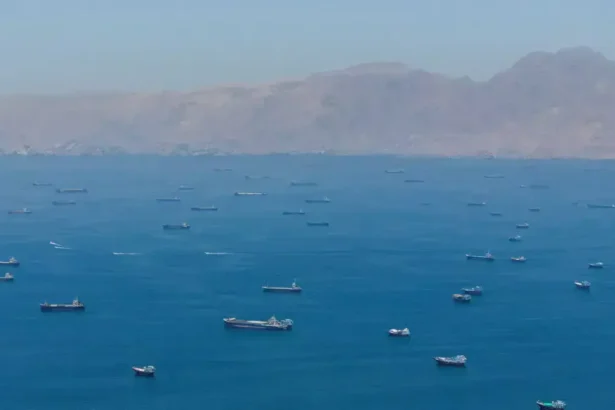
The Gulf of Oman and the Red Sea are strategically important waterways, with the Strait of Hormuz and the Red Sea serving as major routes for global energy and commercial shipments.
Any prolonged disruption to these routes could increase transportation costs, affect energy markets and create further pressure on international supply chains.
Iran has reiterated that the Strait of Hormuz will remain closed unless Washington accepts its conditions, adding to uncertainty surrounding the future of maritime traffic through the strategically vital waterway.
Despite the worsening security environment, Defence Minister Khawaja Asif said on Tuesday that the United States and Iran were moving closer to a possible agreement.
Speaking to Bloomberg News, Asif said recent developments suggested that negotiations could again be moving in the direction of a peace arrangement.
Qatar, which has also been involved in mediation efforts, has said discussions concerning the management of maritime traffic through the Strait of Hormuz had reached an advanced stage.
We welcome your contributions! Submit your blogs, opinion pieces, press releases, news story pitches, and news features to opinion@minutemirror.com.pk and minutemirrormail@gmail.com