Summary
- Trump made the proposal during a primetime address that stretched nearly two hours, placing himself firmly at the center of the midterm campaign at a moment when his declining approval ratings threaten to weigh on Republican prospects heading into the election.
- Whether his campaign style speech will resonate with the swing voters who have increasingly drifted away from the Republican Party amid frustration over the cost of living and the ongoing war involving Iran remains an open question.
- Republicans currently risk losing control of at least one chamber of Congress, as public polling shows Democratic voters appearing considerably more motivated to turn out this cycle, while Trump’s approval ratings remain well underwater heading into the final stretch of the campaign.
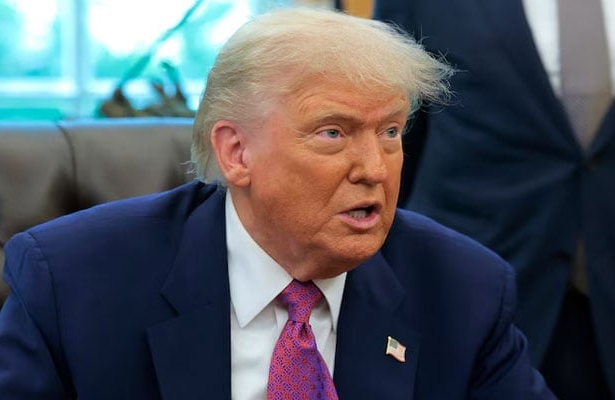
President Donald Trump proposed paying every American adult a 5,000 dollar so called Trump dividend if his party wins control of Congress in November, capping the opening day of the Republican Party’s first ever midterm convention with a striking financial pledge.
Trump made the proposal during a primetime address that stretched nearly two hours, placing himself firmly at the center of the midterm campaign at a moment when his declining approval ratings threaten to weigh on Republican prospects heading into the election.
Vice President JD Vance is scheduled to deliver the convention’s keynote address Thursday evening, though Trump will return to close out the two day event in Dallas with final remarks. Because Trump is constitutionally barred from seeking a third term, Vance’s speech is widely seen as an early test of his standing within the party and a possible preview of how he might lead Republicans in the 2028 presidential race.
Details of how the proposed 5,000 dollar payments would actually be implemented, or whether they would even be legally permissible, remained unclear following Trump’s remarks. Given that roughly 270 million American adults would qualify, the plan would likely cost more than 1 trillion dollars and would almost certainly require congressional approval to move forward.
The convention’s heavy emphasis on Trump himself, which some Republicans have jokingly referred to as Trumpapalooza, reflects a calculated gamble that he can still energize the coalition of voters who carried him to victory two years ago, even as public polling shows his popularity at record lows. Whether his campaign style speech will resonate with the swing voters who have increasingly drifted away from the Republican Party amid frustration over the cost of living and the ongoing war involving Iran remains an open question.
Trump told the crowd he was asking supporters to treat the midterms as though he himself were on the ballot, a comment that may prove useful to Democratic strategists looking to nationalize the election around Trump just as much as it appealed to his core supporters.
Republican organizers received an unexpected boost Wednesday when Democratic Senator John Fetterman of Pennsylvania appeared in a prerecorded video segment introducing fellow Pennsylvania Senator Dave McCormick, a Republican, whom he described as a close friend. Fetterman said he would always reject the extremes of socialism, a remark likely to reinforce Republican attacks portraying Democrats as too far to the left. Fetterman, who has increasingly broken from his own party on various issues, has nonetheless consistently denied speculation that he might leave the Democratic Party altogether.
Several vulnerable Republicans facing competitive races chose to skip the convention entirely, apparently wary of being too closely associated with an increasingly unpopular president. Those absent included Senator Dan Sullivan of Alaska and Senator Susan Collins of Maine.
Although Republican officials had promoted the convention as an opportunity to highlight Trump’s policy achievements, most speakers instead focused their remarks on attacking Democrats over issues such as transgender participation in women’s sports and border security, themes designed to energize the party’s core base. Alabama state Representative Ernie Yarbrough, who attended the event, said Trump needs to offer voters a clearer timeline for how long the conflict with Iran might continue, noting that people want reassurance that the country is not entering an endless cycle of war.
Trump defended his decision to strike Iran, saying the action was necessary to prevent Tehran from developing a nuclear weapon, and predicted that oil prices would fall sharply once the war concluded in America’s favor, which he insisted would happen soon. More than six months after the United States and Israel launched their initial strikes on Iran, however, the conflict shows little sign of resolution, and analysts say Iran’s nuclear program has not been fully dismantled despite the sustained military campaign. Iran continues to deny that it is pursuing a nuclear weapon.
Before Trump took the stage, numerous speakers repeatedly labeled Democrats as socialists and communists, echoing familiar rhetoric long favored by Trump himself. Senator Tim Scott of South Carolina, who chairs the Senate Republican campaign arm, described Democrats as dangerous, radical and out of touch with mainstream voters.
With the election now less than two months away, both parties face significant stakes. Republicans currently risk losing control of at least one chamber of Congress, as public polling shows Democratic voters appearing considerably more motivated to turn out this cycle, while Trump’s approval ratings remain well underwater heading into the final stretch of the campaign.
We welcome your contributions! Submit your blogs, opinion pieces, press releases, news story pitches, and news features to opinion@minutemirror.com.pk and minutemirrormail@gmail.com