Summary
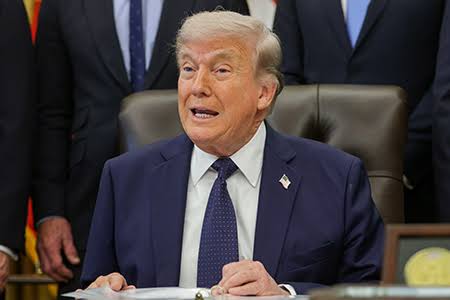
- US President Donald Trump declared on Wednesday that denuclearisation talks with Iran were “moving along well” after what he described as “very good meetings” in Qatar.
- They’ve had very good meetings, and we’ll see.” He added that Iran had “come a long way” in recent discussions, suggesting progress despite Tehran’s insistence that no direct talks with the US were scheduled.
- If they ignore their master, Iran will school them.” Vice President Vance told Fox News that the US was in a “great position” regardless of how talks unfold.
US President Donald Trump declared on Wednesday that denuclearisation talks with Iran were “moving along well” after what he described as “very good meetings” in Qatar. His remarks came as indirect negotiations between Washington and Tehran continued in Doha, focusing on frozen Iranian assets, safe passage through the Strait of Hormuz, and the fragile ceasefire agreed last month.
Trump told reporters, “We’re getting along very well. They’ve had very good meetings, and we’ll see.” He added that Iran had “come a long way” in recent discussions, suggesting progress despite Tehran’s insistence that no direct talks with the US were scheduled. The president’s upbeat tone contrasted with the cautious language from Iranian officials, who stressed that negotiations were taking place only through mediators. Qatar and Pakistan have played central roles in facilitating the dialogue, with Trump’s envoys Jared Kushner and Steve Witkoff meeting Qatar’s prime minister to lay groundwork but not attending the technical sessions themselves.
According to a senior Iranian official, indirect talks began Tuesday night. “Iran held meetings with Qatari and Pakistani officials, who in turn met with the US side. The indirect talks continued on Wednesday, focusing on Iran’s frozen assets and the Strait of Hormuz,” the official said. The Islamabad Memorandum of Understanding, signed last month under Pakistani mediation, set a 60-day framework for easing tensions. It called for reopening the Strait of Hormuz, facilitating safe passage for commercial vessels, and pursuing a lasting ceasefire. The memorandum also outlined discussions on sanctions relief and Iran’s nuclear program.
The strategic Strait of Hormuz remains a focal point of negotiations. Iranian authorities introduced new navigation procedures requiring vessels to follow designated routes and coordinate passage with Tehran. On Wednesday, a foreign vessel ran aground after deviating from an Iranian-designated lane, underscoring the risks of miscommunication. Iran’s Revolutionary Guard Corps warned that uncoordinated navigation was “unacceptable” and “completely dangerous.” Under the memorandum’s fifth clause, Iran committed to facilitating safe passage for 60 days while conducting mine-clearance operations. US Vice President JD Vance insisted that Iran would not be allowed to impose tolls on ships transiting the strait. “This is not going to end in a place where the Iranians are collecting tolls,” he said.
While Washington and Tehran attempt to sustain dialogue, Israel has signaled its willingness to strike Iran again. Defence Minister Israel Katz said Israel had already carried out two preemptive strikes and could “strike a third time as well.” He added that Israeli forces would remain indefinitely in “security zones” in Lebanon, Syria, and Gaza. Iran’s Foreign Minister Abbas Araghchi responded sharply to Katz’s remarks, warning that “any threat against our People and Leadership will receive an immediate, powerful response.” He accused Washington of failing to restrain its ally, saying, “POTUS has committed the US to muzzling its pets in Tel Aviv. If they ignore their master, Iran will school them.”
Vice President Vance told Fox News that the US was in a “great position” regardless of how talks unfold. He argued that Iran’s nuclear program and military had been “destroyed” and warned that any Iranian attacks on shipping would prompt a US military response. Trump, meanwhile, faces political pressure at home. The war has driven up global inflation and gasoline prices, complicating his position ahead of November’s congressional elections. The president and Treasury Secretary Scott Bessent have urged retailers to lower fuel prices to ease consumer strain. Reports suggested Trump had considered resuming strikes against Iran but decided to give diplomacy more time. Shipping through the Strait of Hormuz has partially resumed, with oil flows returning to pre-war levels, according to US officials.
China urged both sides to advance negotiations. Foreign Ministry spokesman Guo Jiakun said Beijing hoped the US and Iran would “jointly implement the Memorandum of Understanding” and move toward a comprehensive solution. He reiterated China’s opposition to unilateral sanctions on Iran.
Iran’s UN envoy Ali Bahreini highlighted the humanitarian toll of the conflict, recalling the February 28 missile strike on Minab school that killed at least 168 children and teachers. He said, “The duty of justice demands that we ensure the victimisation and crimes against civilians are not forgotten.” Neither the US nor Israel has acknowledged responsibility for the attack, but Iran insists both countries were aggressors.
The interim US-Iran deal also provides for ending hostilities between Israel and Hezbollah in Lebanon. However, Lebanese Parliament Speaker Nabih Berri, an ally of Hezbollah, cast doubt on a separate US-brokered framework between Lebanon and Israel, warning it could entrench stalemate. Lebanese lawmaker Ibrahim Kanaan said the “right to bear arms is a Lebanese matter and a necessity,” stressing national unity and the goal of liberating occupied land.
Despite Trump’s optimism, the gulf between US and Iranian positions remains wide. Tehran insists it will not meet directly with American envoys, while Washington demands guarantees on nuclear limits and shipping security. The Islamabad Memorandum provides a temporary framework, but its 60-day window is already strained by disputes over navigation, sanctions, and regional conflicts. The coming weeks will test whether indirect talks can yield tangible progress or whether escalating tensions with Israel and domestic pressures in the US will derail diplomacy. For now, Trump maintains that denuclearisation is “moving along well,” but both sides remain far apart on the core issues that could determine whether peace holds or collapses.