Summary
- In an interview reported on Thursday, Trump said he had a “big decision” ahead regarding whether to launch further attacks against Iran.
- Trump also said Iran remained in direct contact with the United States and that Iranian officials continued to seek a possible agreement.
- Trump claimed that no vessels had successfully transported oil to Iran since the blockade began and said US forces had taken action against vessels that attempted to do so.
US President Donald Trump has indicated that he is nearing a critical decision over the next phase of the conflict with Iran, saying he could either pursue diplomacy or consider renewed large-scale military action.
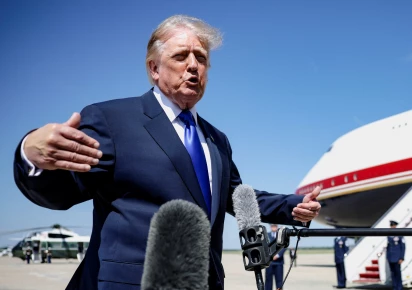
In an interview reported on Thursday, Trump said he had a “big decision” ahead regarding whether to launch further attacks against Iran. He suggested that the next steps could include a major escalation aimed at bringing the conflict to an end.
Trump also said Iran remained in direct contact with the United States and that Iranian officials continued to seek a possible agreement. His comments come as Washington weighs its options amid continuing tensions in the region.
According to the report, Trump plans to meet the leaders of six Gulf states on the sidelines of the upcoming United Nations General Assembly. The meeting is expected to include leaders from Saudi Arabia, the United Arab Emirates, Qatar, Bahrain, Kuwait and Oman.
Trump said he wanted to hear directly from the Gulf countries about the impact of the conflict and their views on what should happen next. Their position could influence discussions over whether Washington should make another diplomatic push or consider expanding military operations.
He also praised the US naval blockade, saying it had prevented Iranian oil shipments. Trump claimed that no vessels had successfully transported oil to Iran since the blockade began and said US forces had taken action against vessels that attempted to do so.
Meanwhile, tensions surrounding the Strait of Hormuz have continued to grow. Mohammad Bagher Zolghadr, a political adviser to Iran’s Supreme Leader, said Iran would not reopen the strategic waterway until Trump and Israeli Prime Minister Benjamin Netanyahu were removed from power.
In a message marking what he described as 200 days of Iranian resistance, Zolghadr said Tehran would continue confronting what he called foreign aggression and interference. He warned that Iranian forces would keep the Strait of Hormuz closed as part of what he described as Iran’s response to the conflict.
The comments come as the status of the Strait remains a major concern for global energy markets because of its importance for international oil shipments.
Separately, Iran has urged caution over claims that a drone was intercepted while allegedly heading towards Makkah. Iranian Foreign Ministry spokesperson Esmaeil Baghaei said attacks or threats against Islamic holy sites, including Makkah, Madinah and Al-Aqsa Mosque, were unacceptable.
However, Baghaei said an allegation that a drone had been intercepted on its way to Makkah was not, by itself, sufficient evidence to blame a particular party. He also noted that Yemen’s government of Change and Construction had denied the allegation.
The Iranian spokesperson called for the security of holy sites and pilgrims not to be politicised or used to deepen divisions in the region. He urged countries to establish the facts before reaching conclusions and warned against what he described as possible attempts to create regional discord.
We welcome your contributions! Submit your blogs, opinion pieces, press releases, news story pitches, and news features to opinion@minutemirror.com.pk and minutemirrormail@gmail.com