Summary
- It also suggested that contemporary poetry often describes suffering with remarkable sensitivity while remaining reluctant to examine the economic, political and psychological structures that produce that suffering.
- In contemporary Urdu poetry, Mohsin Naqvi often occupies that space.
- The challenge facing contemporary poetry is not to abandon introspection.
دل سے ہر گزری بات گزری ہے
کس قیامت کی رات گزری ہے
چاندنی نیم وا دریچۂ سکوت
آنکھوں آنکھوں میں رات گزری ہے
ہائے وہ لوگ خوب صورت لوگ
جن کی دھن میں حیات گزری ہے
The first part of this series argued that the great Urdu poetic tradition has always been concerned with the human condition—its loneliness, contradictions, aspirations and search for meaning. It also suggested that contemporary poetry often describes suffering with remarkable sensitivity while remaining reluctant to examine the economic, political and psychological structures that produce that suffering.
Majeed Amjad’s verses provide an ideal point of departure. Few poets in Urdu have explored the inner landscape of human existence with comparable depth. His poetry does not seek to persuade. It seeks to understand. It neither preaches nor protests. Instead, it captures the quiet burden of being human.
دل سے ہر گزری بات گزری ہے
Events pass not through institutions or historical processes but through the heart. History becomes emotion. Reality becomes memory. This inward turn was one of the great achievements of modern Urdu poetry. It enriched poetic sensibility and expanded the range of human experience available to literature. Yet every intellectual achievement carries its own dangers. When suffering is endlessly internalised, its origins gradually disappear from view.
The unemployed worker appears as a lonely individual rather than a casualty of economic arrangements. The indebted farmer becomes a tragic figure rather than a victim of structural injustice. Anxiety, alienation and despair become personal burdens instead of social phenomena.
This transition did not occur overnight. Nor can it be explained solely by the rise of neoliberalism. Its roots lie deeper within the evolution of modern consciousness itself. At this point, another poet enters the conversation.
Jaun Elia’s popularity among younger generations remains one of the most remarkable literary phenomena of recent decades. His verses circulate endlessly on social media because they speak directly to a generation living amid uncertainty, fragmentation and disillusionment.
زندگی کیا ہے اک کہانی ہے
یہ کہانی نہیں سنانی ہے
Life becomes a story, yet a story not worth telling.
Unlike Ghalib, who questioned certainty but never abandoned inquiry, Jaun often leaves the reader suspended between meaning and meaninglessness. His poetry captures a mood that increasingly characterises contemporary societies. The same sensibility appears in another celebrated couplet:
میں بھی بہت عجیب ہوں اتنا عجیب ہوں کہ بس
خود کو تباہ کر لیا اور ملال بھی نہیں
Here self-destruction is no longer tragedy. It is accepted with astonishing calm. The disturbing element is not destruction itself. The disturbing element is the absence of regret.
Erich Fromm, in The Anatomy of Human Destructiveness, argued that modern societies often nurture tendencies toward self-destruction. Individuals participate in processes that diminish their own humanity while remaining unable to resist them. What appears as freedom frequently conceals new forms of dependence and submission.
Jaun Elia’s poetry repeatedly approaches this territory. It is not merely a poetry of sadness. It is a poetry of disillusionment. Yet between suffering and resistance lies another important emotional landscape—betrayal. This is where Ahmad Salman occupies a distinctive place in contemporary Urdu poetry.
کبھی تو بیعت فروخت کردی کبھی فصیلیں فروخت کر دیں
میرے وکیلوں نے میرے ہونے کی سب دلیلیں فروخت کر دیں
وہ اپنے سورج تو کیا جلاتے، میرے چراغوں کو بیچ ڈالا
فرات اپنے بچا کے رکھے، میری سبیلیں فروخت کر دیں
Unlike Jaun Elia, who frequently directs destruction inward, Ahmad Salman often observes destruction operating through society itself. His poetry repeatedly returns to the experience of witnessing the gradual liquidation of values, institutions and relationships once thought secure. The tragedy lies not merely in loss but in the participation of trusted intermediaries in that loss.
The “وکیل” in these verses is no longer merely a lawyer. It becomes every representative, intermediary, institution or elite that claims to act on behalf of society while gradually surrendering the very interests entrusted to its care.
These verses resonate powerfully in societies where public institutions increasingly appear incapable of protecting ordinary citizens from economic insecurity, political manipulation and social fragmentation. The result is a distinctive poetic sensibility characterised by perplexity, dispossession and moral exhaustion.
A civilisation, however, cannot survive on melancholy and betrayal alone. Every age eventually produces voices that move beyond lamentation and rediscover resistance. In contemporary Urdu poetry, Mohsin Naqvi often occupies that space.
بنام طاقت کوئی اشارہ نہیں چلے گا
اداس نسلوں پہ اب اجارہ نہیں چلے گا
With these lines, the focus shifts dramatically. The isolated self gives way to society. Private sorrow gives way to collective will. Power itself becomes the object of scrutiny.
Wilhelm Reich, in The Mass Psychology of Fascism, posed a question that remains relevant long after the collapse of the regimes he studied: Why do ordinary people repeatedly admire and obey authority even when such authority acts against their interests?
His answer was unsettling. Power possesses emotional appeal. Human beings frequently identify with power rather than justice. Mohsin Naqvi’s poem challenges precisely that tendency.
ہم اپنی دھرتی سے اپنی ہر سمت خود تلاشیں
ہماری خاطر کوئی ستارہ نہیں چلے گا
These lines reject dependence on saviours, rulers and messiahs. They insist upon collective agency. The future will not arrive through miracles. It must be created through conscious effort. The contrast with contemporary political culture is striking.
Modern societies celebrate wealth irrespective of its origins. Political discourse often revolves around personalities rather than ideas. Social media rewards visibility rather than wisdom. Citizens increasingly become spectators in struggles among competing elites. Poetry has not remained immune to these developments.
Much contemporary verse excels in portraying loneliness, anxiety and emotional fragmentation. What is frequently missing is a sustained engagement with power itself. Who benefits from prevailing social arrangements? Why do societies repeatedly produce admirers of domination? Why are inequality, indebtedness and insecurity accepted as inevitable? Why does collective suffering so often become individual despair?
These questions rarely occupy centre stage, though they are among the defining questions of our age. Pakistan offers a particularly revealing case. Economic life is increasingly shaped by debt dependency. Public policy is constrained by financial obligations. Political discourse revolves around contests for power. Social fragmentation deepens while collective institutions weaken. One might expect such realities to generate a new poetic vocabulary. Instead, much poetry continues to circle around the self.
Majeed Amjad explored suffering. Jaun Elia explored disillusionment and self-destruction. Ahmad Salman explored betrayal and dispossession. Mohsin Naqvi explored resistance. Together they reveal four distinct responses to the human condition itself. The challenge facing contemporary poetry is not to abandon introspection. Without introspection, there can be no serious literature.
The challenge is to reconnect personal suffering with the larger structures that shape it. Only then can poetry recover its historic role as a form of collective consciousness.
The next part will move further into this territory. It will examine how market fundamentalism transformed citizens into consumers, communities into markets and human relationships into transactions. It will also explore why the language of resistance gradually retreated from poetry at precisely the moment when new forms of domination, indebtedness and dependency were becoming increasingly pervasive.
_________________________________________________________________
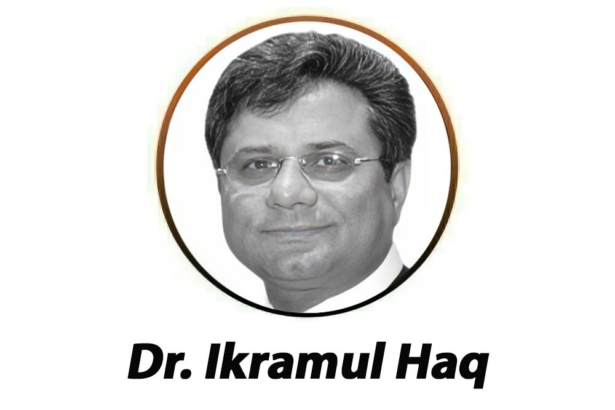
Dr. Ikramul Haq, Advocate Supreme Court, writer, literary critic, Adjunct Faculty at Lahore University of Management Sciences (LUMS), member Advisory Board and Visiting Senior Fellow of Pakistan Institute of Development Economics (PIDE), holds an LLD in tax laws. He was full-time journalist from 1979 to 1984 with Viewpoint and Dawn. He also served Civil Services of Pakistan from 1984 to 1996.
We welcome your contributions! Submit your blogs, opinion pieces, press releases, news story pitches, and news features to [email protected] and [email protected]