Summary
- A growing political standoff in Washington has raised concerns over a potential intelligence “blind spot” as US lawmakers race against a June 12 deadline to extend a critical surveillance authority under the Foreign Intelligence Surveillance Act (Foreign Intelligence Surveillance Act).
- The dispute centres on Section 702, a controversial but widely used provision that allows US intelligence agencies to collect communications of foreign targets without obtaining individual warrants.
- However, national security experts warn that such a shift could slow down critical foreign intelligence collection and reduce operational efficiency.
A growing political standoff in Washington has raised concerns over a potential intelligence “blind spot” as US lawmakers race against a June 12 deadline to extend a critical surveillance authority under the Foreign Intelligence Surveillance Act (Foreign Intelligence Surveillance Act).
The dispute centres on Section 702, a controversial but widely used provision that allows US intelligence agencies to collect communications of foreign targets without obtaining individual warrants. Supporters argue it remains an essential counterterrorism and national security tool, especially in the post-9/11 intelligence framework.
However, critics continue to warn that the programme risks overreach and raises serious civil liberties concerns, particularly regarding the incidental collection of data from US citizens.
Tensions escalated over the weekend after Republican Senators Tom Cotton and Chuck Grassley reportedly urged Secretary of State Marco Rubio in a letter to prepare for what they described as a “potential significant gap in foreign intelligence collection” if the provision is not renewed in time.
According to reports shared by journalist Andrew Desiderio, the lawmakers accused Senate Democrats of blocking the extension amid wider political disputes, including disagreements linked to intelligence appointments under the Trump administration.
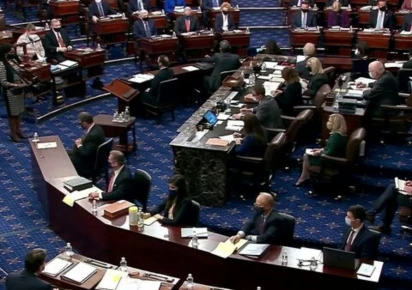
The deadline has placed pressure on Congress, where any extension of Section 702 requires a 60-vote majority in the 100-seat Senate. Despite ongoing negotiations, lawmakers have only managed short-term extensions in recent months, highlighting deep divisions over surveillance powers.
The letter also urged officials to identify intelligence targets that could be impacted if the authority expires, and to explore alternative “lawful and constitutional” methods for maintaining surveillance capabilities.
If Section 702 lapses, intelligence agencies would still retain limited tools under traditional warrant-based FISA processes. However, national security experts warn that such a shift could slow down critical foreign intelligence collection and reduce operational efficiency.
The debate reflects a broader tension in US politics between national security priorities and privacy protections. Since its introduction after the September 11 attacks, Section 702 has remained one of the most powerful—and controversial—tools in the American intelligence arsenal.
As the deadline approaches, lawmakers face mounting pressure to reach a compromise that avoids disruption while addressing longstanding concerns over surveillance oversight. With political divisions deepening, the outcome remains uncertain just days before the key authority is set to expire.
We welcome your contributions! Submit your blogs, opinion pieces, press releases, news story pitches, and news features to [email protected] and [email protected]