Summary
- WASHINGTON: The United States has warned that it will introduce an unprecedented package of economic measures against Iran as Washington prepares to intensify pressure on Tehran amid stalled ceasefire negotiations and rising tensions around the Strait of Hormuz.
- He indicated that Washington intended to use economic pressure alongside restrictions on maritime traffic through the strategic Strait of Hormuz.
- Iran has sought to use its position around the Strait of Hormuz as leverage against Washington, while the United States has continued to tighten economic pressure on Tehran.
WASHINGTON: The United States hUS vows unprecedented economic pressure on Iranas warned that it will introduce an unprecedented package of economic measures against Iran as Washington prepares to intensify pressure on Tehran amid stalled ceasefire negotiations and rising tensions around the Strait of Hormuz.
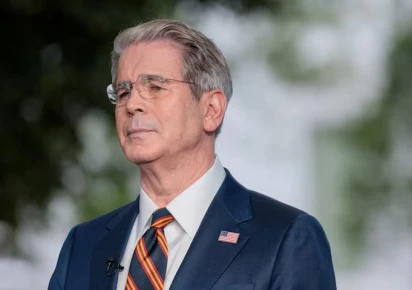
US Treasury Secretary Scott Bessent said further announcements were expected next week, describing the planned measures as unlike anything previously used against a country facing economic isolation.
Bessent said the new strategy would combine tougher economic restrictions with continued efforts to prevent Iranian ports from receiving or sending goods. He indicated that Washington intended to use economic pressure alongside restrictions on maritime traffic through the strategic Strait of Hormuz.
US Defence Secretary Pete Hegseth, meanwhile, said the American military was capable of maintaining a naval presence in the region for an indefinite period to enforce the blockade. He said US naval vessels could be rotated in and out of the region to sustain the operation.
The confrontation comes as attempts to revive a ceasefire agreement have faltered. Iran has sought to use its position around the Strait of Hormuz as leverage against Washington, while the United States has continued to tighten economic pressure on Tehran.
The waterway has become a major flashpoint because of its importance to global energy supplies. Before the conflict began, roughly one-fifth of the world’s oil and liquefied natural gas shipments passed through the strait. Shipping activity has since fallen sharply, raising concerns over supplies, prices and the wider global economy.
Two vessels belonging to Abu Dhabi National Oil Company were also attacked while transiting the strait, according to the United Arab Emirates’ state news agency. The UAE government blamed Iran for the incident.
US President Donald Trump has repeatedly claimed that Washington has control over the strategic waterway. Iran, however, has rejected that assertion and maintained that the strait will not fully reopen unless its demands are addressed. Tehran has called for the removal of economic sanctions and the release of frozen Iranian assets.
The prolonged confrontation is also putting pressure on the global energy market. The International Energy Agency has revised its forecast for global oil supply, warning that production could fall by about 4.3 million barrels per day this year.
Oil prices declined by more than 2% on Thursday as markets reacted to expectations of weaker demand and a rise in US crude inventories. However, renewed attacks in the region continued to fuel fears that the conflict could spread further.
The economic consequences are becoming increasingly serious. Economists have warned that a prolonged war could weaken global growth and increase the risk of recession in some economies.
Hegseth declined to say whether declaring a ceasefire earlier in the year had been a mistake. He said the administration remained focused on preventing Iran from obtaining a nuclear weapon and insisted that the United States was taking the steps it considered necessary to achieve that objective.
We welcome your contributions! Submit your blogs, opinion pieces, press releases, news story pitches, and news features to opinion@minutemirror.com.pk and minutemirrormail@gmail.com