Summary
- So, before discussing how these emerging brands can have a lasting impact as boycott effects are fading, let’s discuss a few cases where brands have capitalized well in the context of the Palestine-Israel conflict while, at the same time, established carbonated brands or the brands of generations are facing the music.
- Not to forget other local brands taking on their share with their respective resources, big cola brands are up against some serious PESTEL (Political, Economic, Social, Technological, Environmental, and Legal) factors – certainly most of them are unfavorable for them.
- This may put way for a Market Development strategy as well, where these local brands can have their international visibility also – maybe in the future, if not possible currently.
Boycotts of products based on country of origin or ethnic association, etc., are not new. Although boycotts have had noticeable runs on and off in the recent past, the current spree has been going on for a long time. Maybe it is proportionate to the continuation and longevity of wars; brands feel their effects immensely. Among others, the FMCG (Fast Moving Consumer Goods) sector is found to be one of the major affected sectors in terms of customers’ response. More specifically, within FMCG, carbonated drinks have seen major fluctuations in sales. Yes, there are other variables to be considered also, ranging from the use of less sugar to rising health awareness and availability of multiple products; cola brands are right in the midst of a crisis on how to sustain. What strategies to consider to regain market share, if shutting down is not the option, is a real challenge for marketers and strategists. On the other hand, some of the local or new brands have done surprisingly well. So, before discussing how these emerging brands can have a lasting impact as boycott effects are fading, let’s discuss a few cases where brands have capitalized well in the context of the Palestine-Israel conflict while, at the same time, established carbonated brands or the brands of generations are facing the music.
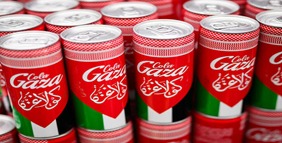
Gaza Cola – A product being launched by a Palestinian-origin UK resident, Osama Qashoo, made headlines as the boycott originated. As per Al Jazeera, the drink straight away got noticed to show solidarity with the Palestinians, and established brands faced the effects because of their country of origin or apparent association. The cola brands that look untouchable had a competitor in the face of a new entrant. The name “Gaza Cola, itself conveys the meaning of what the brand aims at. Again, my discussion is as a marketing scholar without questioning the intention of the owners of the respective Colas. The idea is to see the effect and probably the way forward.
In another instance, Matrix Cola of Jordan, which initially overlooked the domestic market due to the presence of Western giants, found its way to local pockets because of boycotts. The company did nothing inexplicable; it started targeting the local market, and sales surged to double. Similarly, in the Pakistani context, the rise of Cola Next is evident, where a new entrant, backed by established manufacturers like Meezan, and the use of a patriotic theme/ slogan/ tagline, i. e., “Cola Next Hai Pakistani” (Cola Next is Pakistani), has finally made it to the refrigerators of quite a few, so that its presence can be seen in the masses. Not to forget other local brands taking on their share with their respective resources, big cola brands are up against some serious PESTEL (Political, Economic, Social, Technological, Environmental, and Legal) factors – certainly most of them are unfavorable for them.
Now, having discussed some of the above scenarios, the next question is: what? What happens with these brands as this boycott row fades, the intensity of which is somehow on the fading side, somehow. Will these or do these brands consider this as a seasonal sales booster – to be more specific, an event-based booster of sales – or is there any grit to continue to be seen on supermarkets’ shelves? Of course it is possible to stay there and that may fairly be expected if they continue to capitalize on 1) Patriotic Theme – something which cola next is already up to 2) Continue to add new products i.e., flavors 3) Maintaining and enhancing the quality – of course the taste 4) Initiating CSR drives or brand activism campaigns – this activism can then lead to storytelling marketing in the longer run 5) Taking on social media to stay relevant to youth 6) Sponsoring and event marketing etc., To cut short, the best of the marketing knowledge can best be employed to stay relevant ranging from optimum level of above and below the marketing tools. And for sure, strategies encompassing increasing transaction prices and CRM must not be put aside as well. Also, for good reasons, there can be some potential collaborations as well if it serves the purpose. This may put way for a Market Development strategy as well, where these local brands can have their international visibility also – maybe in the future, if not possible currently. All in all, the idea is the knock-on effect and to remain in the eyes of its existing and prospective audience.
This can somehow assist brands in answering what happens once the boycott is over.
We welcome your contributions! Submit your blogs, opinion pieces, press releases, news story pitches, and news features to opinion@minutemirror.com.pk and minutemirrormail@gmail.com