Summary
- According to Reuters several government websites across Europe and other parts of the world were taken offline on Wednesday, October 21, after serious security flaws were discovered in PHP, a programming language used by millions of websites.
- Cybersecurity agencies worldwide have advised PHP users to take precautions and where necessary, keep their websites offline until the required security updates are installed.
- Japan’s Prime Minister Sanae Takaichi also urged website owners on X to check whether their active websites used PHP and prepare to install the latest security updates.
Government agencies, hospitals and other organisations rely on websites to provide important information and services.
However a serious security flaw in the software behind these websites can put millions of users at risk. Recently, a major security issue discovered with the help of artificial intelligence (AI) forced cybersecurity experts around the world to take urgent action.
According to Reuters several government websites across Europe and other parts of the world were taken offline on Wednesday, October 21, after serious security flaws were discovered in PHP, a programming language used by millions of websites.
Following the discovery website operators began taking emergency steps to protect their systems from possible cyberattacks.
PHP developers released urgent software updates on Wednesday to fix the security problems. They also advised users to update their systems as soon as possible.
Technology companies warned that some hackers might try to exploit these flaws. As a precaution several government agencies temporarily shut down their websites while working to secure their systems.
Cybersecurity experts are also concerned that the risk could increase now that details about the flaws have become public. AI tools may make it easier for attackers to understand these weaknesses and develop ways to exploit them before website owners install the necessary updates.
Kostin Raiu, co-founder of the cybersecurity research and incident response organisation TLP:BLACK, said AI had accelerated the race to exploit security flaws.
He warned that the next stage could involve large-scale attacks targeting vulnerable web servers across the internet.
What Is PHP and why is it important?
PHP is a programming language introduced in the 1990s. Its original name stood for Personal Home Page. Today, it is widely used to build websites and manage the content displayed in users browsers.
Millions of websites around the world depend on PHP. Popular platforms such as WordPress, Drupal, Joomla and Magento also use it.
Because PHP is so widely used, serious security problems in the language can affect a large number of websites businesses, and public services.
Tiffany Farris, interim chief executive of the Drupal Association said servers running PHP versions released over the past 20 years could be affected. She warned that the potential impact could reach a large part of the internet.
Cybersecurity agencies worldwide have advised PHP users to take precautions and where necessary, keep their websites offline until the required security updates are installed.
According to data from internet monitoring company Censys, around 1.5 million out of approximately 2.6 million hosts were using PHP versions for which a security fix was not yet available at the time of the assessment.
These figures highlight the possible scale of the problem.
How did AI help discover the security flaws?
Two cybersecurity companies reported that they independently identified the PHP vulnerabilities with the help of AI.
In a blog post a company called Calypt said it discovered the flaws on August 1 using a large language model. The company had been working to address the issues since then.
Wiz, a cybersecurity company owned by Google’s parent company Alphabet also reported finding the flaws through its automated AI-based security research technology, Wiz Atlas. The company said it used Google’s Gemini 4 Orgon and OpenAI’s GPT-5.6 Soul to help identify the weaknesses.
According to Wiz, the flaws had remained hidden in PHP’s code for more than a decade. The company said finding a way to exploit them would have been extremely difficult for a human hacker.
Wiz explained that AI has made this type of security research much easier to carry out. Work that was previously difficult and time-consuming can now be completed more efficiently and on a larger scale.
Both Calypt and Wiz said they worked with each other, the PHP team and OpenAI to report the problems and help find solutions.
The White House said it had been informed about the security issue on Friday. Government and Public Websites Shut Down Across Europe
Several organisations across Europe temporarily closed their websites and online services as a precaution. In the Netherlands, organisations followed the national cybersecurity centre’s guidance and took a number of public websites offline.
Affected services included the Port of Rotterdam’s website, the government portal Overheid.nl the Royal Dutch Football Association (KNVB), websites belonging to five major political parties and several hospital websites.
The country’s national cybersecurity agency also confirmed that it had temporarily shut down its own website because of the security concerns. Wikipedia’s operating organisation said it had taken some systems offline until security updates could be installed safely.
The Internet Archive which maintains a large online collection of digital material also temporarily suspended its services while addressing the issue.
In Denmark, Kombit, a company that provides IT services to local authorities announced the shutdown of several services, including a national school communication platform.
The disruption was also significant in Finland. Valtori, which provides IT services to government agencies, said government network services had been shut down as a precaution.
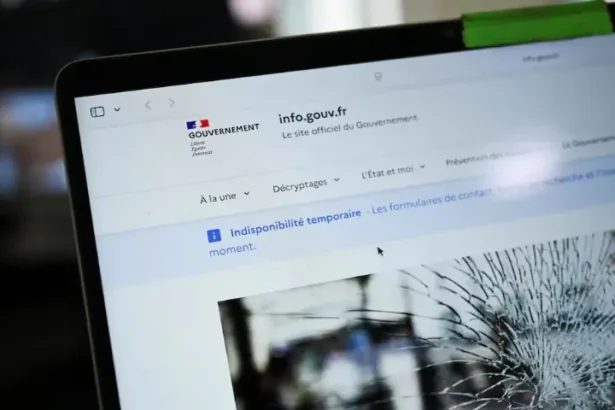
France’s Interior Ministry also announced that all its websites would undergo precautionary maintenance.
The situation attracted attention from political leaders as well. The Dutch prime minister said he was closely monitoring developments.
Japan’s Prime Minister Sanae Takaichi also urged website owners on X to check whether their active websites used PHP and prepare to install the latest security updates.
Why are smaller Websites at greater risk?
Experts believe smaller websites could face greater challenges in responding to the threat particularly those managed by individuals or organisations with limited technical resources.
Websites using shared hosting services
may also face difficulties. With shared hosting, multiple websites run on the same server and individual website owners may have limited control over the underlying system.
However using PHP does not automatically mean a website has been hacked. The actual risk depends on whether the system contains the affected vulnerability and whether the necessary security fixes have been installed.
Automattic the company behind WordPress.com, said that websites hosted on its platform and Tumblr were not affected by this security flaw.
What should Website owners do?
Website owners and administrators should check whether their systems use the affected PHP versions and follow official security guidance.
Important steps include
•Install security updates
Apply the relevant fixes as soon as they become available.
Check server versions: Confirm whether the website uses an affected PHP version.
•Follow official advice
Follow guidance from PHP developers and hosting providers.
Monitor suspicious activity: Check server logs and security alerts for signs of possible attacks.
•Contact hosting providers
Ask technical support teams to confirm whether the server has been secured.
If a system remains vulnerable and no fix is available, administrators should follow official cybersecurity advice on whether temporary shutdown or other protective measures are necessary.
Conclusion
The PHP security incident highlights both the benefits and risks of artificial intelligence. AI can help researchers discover hidden software weaknesses that might otherwise remain unnoticed for years.
However the same technology could also help cybercriminals find ways to exploit vulnerable systems. The immediate priority is to secure affected servers install available updates and prevent attackers from taking advantage of the flaws.
As AI tools become more advanced organisations may need to respond to cybersecurity threats faster than ever before.
We welcome your contributions! Submit your blogs, opinion pieces, press releases, news story pitches, and news features to opinion@minutemirror.com.pk and minutemirrormail@gmail.com