Summary
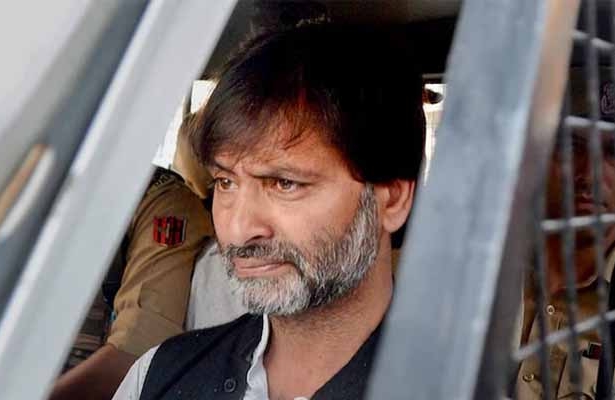
- Kashmiri separatist leader Yasin Malik, who is currently imprisoned in India, has refused to continue fighting his case in Indian courts, citing a lack of confidence in the country’s judicial system.
- In the affidavit, Malik alleged that the Indian government had sought to implicate him in a false case after 36 years and was attempting to secure his execution.
- Malik further alleged that his name, photograph and court proceedings were used during the 2019 and 2024 Indian elections as part of an anti-Pakistan political narrative.
Kashmiri separatist leader Yasin Malik, who is currently imprisoned in India, has refused to continue fighting his case in Indian courts, citing a lack of confidence in the country’s judicial system.
Malik submitted a 25-page affidavit before a court in Srinagar, in which his written statements dated August 24 were made part of the evidence.
In the affidavit, Malik alleged that the Indian government had sought to implicate him in a false case after 36 years and was attempting to secure his execution. He said he no longer expected justice from Indian courts and that he would accept even a death sentence if imposed in connection with the Kashmir cause.
However, Malik clarified that accepting a judicial sentence would not amount to admitting the allegations against him.
He categorically denied involvement in the 1990 killing of Sarla Bhat, saying he had been implicated in the case on the basis of an alleged JKLF note found near Bhat’s body.
Malik stated that he had suffered serious injuries 11 days before Bhat’s killing, making it impossible for him to plan the murder or issue instructions for it.
According to his affidavit, Indian agencies had previously encouraged him to develop relations with Pakistan and later used those contacts as evidence against him. He claimed that during the government of former Indian prime minister Atal Bihari Vajpayee, officials including Ajit Doval, Brajesh Mishra and R.K. Mishra had encouraged efforts to improve India-Pakistan relations.
Malik further alleged that his name, photograph and court proceedings were used during the 2019 and 2024 Indian elections as part of an anti-Pakistan political narrative.
The affidavit also referred to his prolonged imprisonment, periods of isolation and years of separation from his mother, wife and daughter.
Addressing his wife, Mushaal Malik, he expressed a desire to free her from what he described as a life of prolonged imprisonment and uncertainty over a possible execution. He thanked her for standing by him and said he was releasing her from the burden of waiting for him.
Malik also urged his daughter to remain in contact with her grandmother and help ease her grief. He said he had placed his position and conscience before the court and would leave the final outcome to God.
Political commentators cited in the report described Malik’s trial as an attempt by the Indian government to silence a prominent Kashmiri voice through political pressure.
They said Kashmiri separatist figures, including Malik, had remained steadfast despite prolonged imprisonment and what they described as state repression.
The analysts further argued that while political voices could be suppressed, the broader Kashmiri demand for self-determination could not be eliminated. They also called on the United Nations to play a role in seeking the release of political prisoners.
We welcome your contributions! Submit your blogs, opinion pieces, press releases, news story pitches, and news features to opinion@minutemirror.com.pk and minutemirrormail@gmail.com