Summary
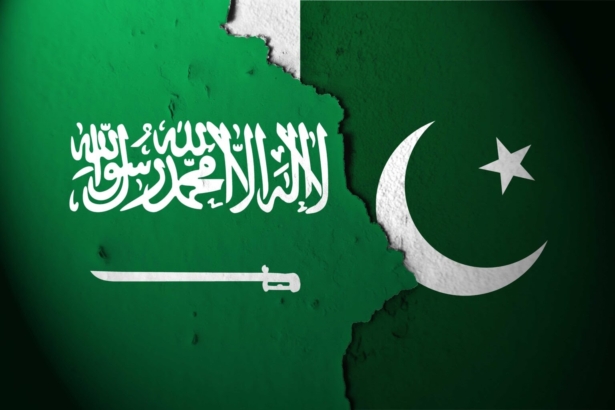
- Islamabad: Pakistan received a $3 billion deposit from Saudi Arabia, and the existing $5 billion Saudi deposit with the State Bank of Pakistan has also been rolled over, providing a major financial cushion for the country’s external financing needs.
- Pakistan exported $5.9 billion worth of goods to the US during 2025 to 2026, making any change in American tariff policy an important issue for Pakistani exporters, particularly those operating in major export sectors.
- On the other side, Pakistan is seeking to protect a $5.9 billion export market in the United States at a time when proposed American tariff measures could affect the competitiveness of Pakistani goods.
Islamabad: Pakistan received a $3 billion deposit from Saudi Arabia, and the existing $5 billion Saudi deposit with the State Bank of Pakistan has also been rolled over, providing a major financial cushion for the country’s external financing needs.
The deposit was placed with the State Bank in April 2026, bringing the Saudi deposits held by the central bank to $8 billion, which includes the fresh $3 billion and the existing $5 billion that has been extended for another period.
The development comes as Pakistan continues to manage its foreign exchange position and meet its external financing requirements.
Finance Minister Senator Muhammad Aurangzeb told the National Assembly that the Saudi support was providing crucial assistance to Pakistan’s external financing needs.
The information was given in response to a question raised by Dr Sharmila Faruqui, who had asked whether Saudi Arabia had formally committed an additional $3 billion while extending its existing $5 billion deposits.
The government confirmed that the fresh $3 billion had already been placed with the State Bank in April 2026.
The minister also clarified Pakistan’s position regarding its trade with the United States, where the country exported goods worth $5.9 billion during the financial year 2025 to 26.
The government said the earlier 19 percent reciprocal tariff imposed by the United States in April 2025 was no longer in effect after the US Supreme Court invalidated the reciprocal tariffs.
However, Pakistan’s exporters continue to face uncertainty because the United States has imposed a 10 percent tariff on all countries under Section 122 of the Trade Act 1974.
Another proposed tariff could also affect Pakistani exports. The US government, following its Section 301 investigation into forced labour involving 60 countries, has proposed a 10 percent tariff on Pakistan along with Canada, Ecuador, the European Union, Indonesia and Mexico.
For 54 other countries, including India and Bangladesh, a 12.5 percent tariff has been proposed. The US government was expected to finalise its findings by the end of July 2026, according to the government’s response.
The figures are significant for Pakistan because the United States remains the country’s largest export market. Pakistan exported $5.9 billion worth of goods to the US during 2025 to 2026, making any change in American tariff policy an important issue for Pakistani exporters, particularly those operating in major export sectors.
Pakistan and the United States are now engaged in negotiations aimed at securing better trade terms. The government said both sides were working to strengthen trade, investment and commercial cooperation in areas including information technology, mining and cotton.
Negotiations for a bilateral agreement on reciprocal tariffs are currently continuing, with Pakistan seeking a better deal against competitors in the US market.
The government is also looking towards stronger commercial links with the United States to expand opportunities for Pakistani products. The issue of IMF linked tax reforms was also addressed in the National Assembly.
The government said Pakistan entered an Extended Fund Facility agreement with the IMF in September 2024. Under the programme, Pakistan committed to strict multi year fiscal consolidation to reduce the budget deficit.
On the revenue side, the reform programme requires Pakistan to increase tax collection by expanding the tax base and reducing exemptions. Despite these conditions, the government provided relief in several areas during the current year.
Salaried people received relief through changes including the elimination of surcharge and reduction of rates for middle and higher income groups. The government also reduced the burden of the super tax by removing the first seven slabs and reducing the rate from 10 percent to 8 percent for the final slab.
Relief was also provided to exporters, while the fixed tax regime for IT exports was continued. The government also listed relief for construction and infrastructure development among its fiscal measures.
Reduced sales tax rates on electric vehicles were continued, while exemptions were provided for family planning devices and female hygiene products.
Magazines were also given tax exemptions, while withholding taxes were rationalised. The government maintained that these measures were implemented while Pakistan remained within the IMF programme.
The latest figures show Pakistan is balancing two major financial pressures at the same time. On one side, the country has received substantial support from Saudi Arabia through $8 billion in deposits held by the State Bank.
On the other side, Pakistan is seeking to protect a $5.9 billion export market in the United States at a time when proposed American tariff measures could affect the competitiveness of Pakistani goods.
The government has said it is negotiating with Washington for improved terms while continuing economic reforms under the IMF programme.
The question and reply were laid before the National Assembly during the 29th session.
We welcome your contributions! Submit your blogs, opinion pieces, press releases, news story pitches, and news features to opinion@minutemirror.com.pk and minutemirrormail@gmail.com