Summary
- Abbasi, water and energy expert who has served in KPK and AJK, We write this not as critics sitting comfortably at a distance, but as two servants of this soil who have spent our working lives in the very regions now aflame with unrest — one of us measuring the water and energy that could have irrigated peace in KPK and AJK, the other commanding police lines in Punjab and standing watch over the mountains of Azad Kashmir.
- What we have seen convinces us of one thing above all: the fire in Balochistan, AJK and the erstwhile KPK is serious, but it is not yet beyond our control.
- Fifth, and we say this with the greatest respect, every federal minister must spend a minimum of fifteen days, physically present, in Balochistan, AJK and KPK each year — not for a photo opportunity at a heavily guarded circuit house, but sitting with local elders, visiting FC and police posts, and looking our Jawans in the eye.
By Malik Khuda Bakhsh Awan, retired Inspector General of Punjab Police and former IG of Azad Jammu & Kashmir
&
Engineer Arshad H. Abbasi, water and energy expert who has served in KPK and AJK,
We write this not as critics sitting comfortably at a distance, but as two servants of this soil who have spent our working lives in the very regions now aflame with unrest — one of us measuring the water and energy that could have irrigated peace in KPK and AJK, the other commanding police lines in Punjab and standing watch over the mountains of Azad Kashmir. What we have seen convinces us of one thing above all: the fire in Balochistan, AJK and the erstwhile KPK is serious, but it is not yet beyond our control. It can still be reversed — if the Government of Pakistan acts with the courage to match the sacrifice already being offered on our behalf.
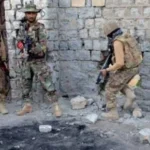
Before we offer a single suggestion, we must first bow our heads. Every day, a young Jawan somewhere in Balochistan or the tribal belt tightens his boots before dawn, not knowing if he will return. Every week, a Frontier Corps patrol walks into an ambush it did not seek, and an FC officer’s name is added to a list none of us wants to grow longer. Every month, policemen in Quetta, Muzaffarabad and Peshawar guard checkposts that other citizens simply drive past without a thought. From the newest recruit to the most senior general, our security forces have offered blood, limb and years away from their families to hold this country together. Their courage is not in question. Their commitment is not in doubt. What we owe them now is not more praise — it is a strategy worthy of their sacrifice.
That is the entire purpose of this letter. We do not want the martyrdom of our Army, Police and FC personnel to be spent on a war that could have been shortened, or avoided, by decisions made in Islamabad rather than only on the battlefield. History offers us hard evidence that this is possible, even in conflicts far older and far bloodier than ours.
Lessons the world has already paid for, so we don’t have to. Colombia fought a Marxist insurgency for fifty years, financed by drugs and kidnapping — arguably a longer and more entrenched war than anything Pakistan faces today. Peace came in 2016 not because the state finally won every battle, but because it paired security operations with land redistribution for poor farmers and a transitional justice system that let fighters confess their crimes in exchange for reduced sentences, rebuilding public trust along the way.
In Northern Ireland, three decades of sectarian killing between republicans and unionists ended largely because international partners poured investment into the poorest, most neglected border towns — the very places where despair had made paramilitary recruitment easy — while a new power-sharing government guaranteed both communities an equal, transparent voice.
Sierra Leone’s civil war was fuelled by “blood diamonds.” It was tamed not merely by defeating the rebels but by legalising and regulating small-scale mining so that ordinary mining communities, not warlords, earned the benefit, backed by an internationally certified transparent supply chain and a strengthened anti-corruption commission.
And in our own neighbourhood, the Philippines faced a decades-long Muslim separatist insurgency in Mindanao. It was calmed considerably by granting the Bangsamoro region genuine fiscal autonomy — its own revenue powers and a guaranteed development grant — replacing a corrupt, clan-captured funding system with one that visibly reached ordinary people.
The pattern across every one of these conflicts, each objectively worse than what we face today, is the same. Peace did not arrive purely from military victory. It arrived when governments paired continued security pressure with transparent governance and genuine economic opportunity, so that the incentive to pick up a gun simply fell away.
Our humble suggestions to the Government- First, unemployment among our youth is, in our respectful assessment, the single biggest driver of unrest in Balochistan, AJK and the tribal districts. A young man with a trade, a wage and a future does not need the BLA or the TTP to promise him meaning; he already has it. We therefore urge the government to treat job creation in these regions not as a welfare afterthought but as a core national-security investment, on par with any military allocation.
Second, we ask for financial transparency in how resources from these very regions — gas, minerals, hydropower, forests — are spent. When local people can see, in plain terms, where the revenue from their own land goes, resentment gives way to ownership.
Third, we ask for genuine, verifiable inclusion — local land and mining rights regularised in favour of communities rather than absentee interests, block grants that reach tehsil and union council level without being intercepted along the way, and reconstruction that is co-designed with elders and local government rather than imposed from a distant secretariat.
Fourth, we ask for a dignified, well-resourced path for demobilisation and reintegration wherever it is possible — vocational training, stipends and honest employment for those willing to lay down arms, so that today’s militant does not become tomorrow’s freelance criminal.
Fifth, and we say this with the greatest respect, every federal minister must spend a minimum of fifteen days, physically present, in Balochistan, AJK and KPK each year — not for a photo opportunity at a heavily guarded circuit house, but sitting with local elders, visiting FC and police posts, and looking our Jawans in the eye. A soldier who sees his federal government only through television screens begins to wonder if Islamabad remembers he exists. When a minister walks the same ground our forces are dying to defend, it tells every Jawan, every FC sepoy, every constable that his sacrifice is seen, valued and shared by those who lead him. This single change of habit would do more for morale on the front line than any speech delivered from the capital.
Sixth, no government promise of transparency will be believed unless it is verifiable in real time. We recommend a public mobile application, available to every citizen in these three regions, that shows development and security-related spending as it happens — project by project, rupee by rupee, district by district. Let a young man in Turbat, Muzaffarabad or Miranshah open his phone and see, with his own eyes, that the money meant for his tehsil actually reached it. Nothing disarms a militant recruiter faster than a citizen who can prove, on his own screen, that his government is honest with him.
We say all this with humility, not authority. We are not asking the government to soften its resolve against terrorism; our security forces must, and will, continue to defend the state with full force. We are simply asking that this force be matched, blow for blow, with an economic and governance offensive — so that every sacrifice our Jawans and officers make on the ground is reinforced, not wasted, by decisions made in the capital.
We would deem it the highest honour—and a sacred duty—to place our collective lifetime of experience at the service of the State, should the Honourable Prime Minister deem it fit to call upon us.
Our humble request is to bring together veteran military commanders, seasoned police officers, distinguished Pakistan Administrative Service (PAS) leaders, respected Frontier Corps (FC) veterans, credible political figures, revered tribal elders, leading educationists, and foremost intellectuals, writers, and poets from Balochistan, Khyber Pakhtunkhwa, and Azad Jammu & Kashmir. The commission must stand ready to form a listening commission to engage the grievances of our people with an open heart and an unyielding commitment to truth. We seek neither office, title, nor credit. Our sole objective is to see the youth of Balochistan, AJK, and the erstwhile FATA choose a dignified livelihood over a weapon, and to ensure that the sacred blood shed by our martyrs finally secures an enduring peace.
Pakistan has never lacked for courage. What it needs now is the wisdom to build on that courage before more of it is spent.
We welcome your contributions! Submit your blogs, opinion pieces, press releases, news story pitches, and news features to opinion@minutemirror.com.pk and minutemirrormail@gmail.com