Summary
- A major catalyst occurred in March when Netflix acquired Ben Affleck’s AI startup, InterPositive, for $587 million to enhance production workflows.
- Executives note that AI has now been utilized across approximately 300 Netflix titles—primarily during post-production and for complex visual effects sequences—allowing creative teams to work faster and more efficiently.
- Visual effects creators and directors emphasize that while AI serves as an amplifying tool for scope, scale, and pre-visualization, the essential emotional connection between actor, director, and camera remains irreplaceable.
Once fiercely resistant to artificial intelligence, Hollywood is increasingly embracing the technology through major studio deals, strategic investments, and streamlined production workflows—all while insisting that core human storytelling remains at the heart of filmmaking.
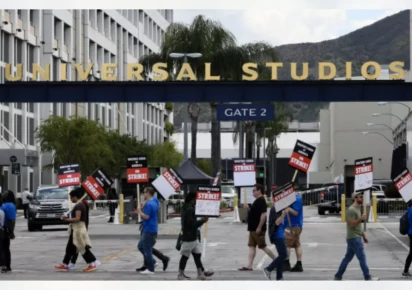
The shift marks a noticeable departure from early industry hostility, which peaked during the 2023 labor strikes when actors and writers rallied against algorithmic displacement, copyright infringement, and digital likeness exploitation. Early generative AI tools also suffered from obvious visual glitches, such as distorted hands and unnatural lip movements, reinforcing widespread skepticism among creative professionals.
However, recent technological leaps and major corporate investments have rapidly normalized AI integration. A major catalyst occurred in March when Netflix acquired Ben Affleck’s AI startup, InterPositive, for $587 million to enhance production workflows. Soon after, Lionsgate acquired a stake in AI video generator Runway, and Google invested in independent powerhouse A24. Executives note that AI has now been utilized across approximately 300 Netflix titles—primarily during post-production and for complex visual effects sequences—allowing creative teams to work faster and more efficiently.
Rather than replacing human performers, filmmakers are pivoting toward “hybrid” and non-linear production techniques. Director Jon Erwin’s production company, The Wonder Project, partnered with AI platform Luma to create hyper-realistic, real-time background environments without traditional green screens or motion-capture suits, leaving actors free to perform naturally. Their recent release Young Washington, starring Oscar winner Ben Kingsley, successfully demonstrated the commercial viability of this approach by grossing over $40 million against a $20 million budget.
While major legacy studios remain cautious, industry experts suggest that broader adoption is inevitable. Visual effects creators and directors emphasize that while AI serves as an amplifying tool for scope, scale, and pre-visualization, the essential emotional connection between actor, director, and camera remains irreplaceable.