

Summary
- We have consistently argued that petroleum levy is easy revenue with a heavy cost, used in place of structural tax reform.
- The import-cost side is governed by administered averages that can leave suppliers under-recovering, and the tax side by a levy with no legislated limit that consumers cannot escape. Together they produce opaque prices, supply risk, inflation and a heavy, regressive burden on the middle and poor classes.
- References New pricing system may halt petrol import, The Express Tribune, 9 Oct 2026 Pakistan hikes fuel levies, keeps pump prices unchanged, by Nukta Fiscal Operations Statement 2025-26, Ministry of Finance, Government of Pakistan Fuel levy poses bigger inflation risks, The Express Tribune Petroleum Levy: Easy Revenue, Heavy Cost (Bukhari and Haq), Minute Mirror Petroleum levy, circular debt and inflation (Haq and Bukhari), The News Higher fuel taxes emerging as major driver of inflation in Pakistan, ProPakistani _____________________________________________________________ Dr.
Pakistan’s petroleum pricing is meant to be simple: take the import cost, add margins and freight, add taxes, and announce the price. The reality has become a patchwork of administered formulas, discretionary levies and lobbying. The latest evidence comes from an oil industry warning that the government’s revised pricing mechanism may force oil marketing companies to halt petrol imports.
- What the new mechanism reveals
- The part of the price that never needs a formula
- A levy without a legislated ceiling
- Why the mechanism and the levy compound each other
- The inflation channel
- Who pays
- What a sound system would look like
- Conclusion
- References
What the new mechanism reveals
The Oil Companies Advisory Council (OCAC), an industry lobby, wrote to the Petroleum Division about the mechanism the federal government approved on 19 August 2026. Under it, when Pakistan State Oil has no petrol import cargo in the preceding seven working days, the price uses the calendar-year-to-date average of premium, incidentals and customs duty.
OCAC says this average is a poor proxy for current costs. It points to a CYTD (Calendar Year-to-Date) average premium of about $13 per barrel against $28.47 and $28.76 for PSO’s own cargoes due in late October and early November and estimates an under-recovery of Rs. 16-17 per litre during the gap. The council adds that about 70 percent of petrol requirements are imported, and that the industry is also carrying Rs. 66.7 billion in unrecovered price differential claims.
OCAC is an interested party, and its figures are its own. However, the episode exposes a structural flaw. A mechanism that substitutes a historical average for the actual replacement cost will, depending on the market, either squeeze importers or overcharge consumers. Neither outcome is price discovery. It is administered pricing with a formula attached, and the public cannot see how the inputs are chosen.
The part of the price that never needs a formula
The costs that vary, such as premiums, freight and exchange rates, are debated in letters and committees. The part that does not vary with any formula is the levy. The latest fortnightly review is a good example: the government raised the petroleum development levy on petrol by Rs. 4.62 per litre and on diesel by Rs. 0.80, while keeping pump prices unchanged despite lower global prices. That took the levy on petrol to Rs. 84.27 per litre, with a separate Rs. 2.50 climate support levy on top. Consumers saw a “stable” price while the state quietly captured the benefit of falling oil.
This is no accident. Pakistan relies on petroleum levies as a major non-tax revenue source under commitments to international lenders, and the target keeps rising. According to official report, collection was Rs. 1.567 trillion in fiscal year (FY) 2025-26 and a Rs. 1.67 trillion target for FY2026-27. The increasing reliance on petroleum levy reflects the deeper political economy of taxation in Pakistan. The system taxes consumption rather than income, penalises the compliant and protects the privileged.
The state’s inability—or unwillingness—to tax wealth, real estate and large agricultural incomes has led to excessive reliance on indirect taxes. The result is a system where the poor subsidise the rich.
A levy without a legislated ceiling
The deeper problem is legal. We have consistently argued that petroleum levy is easy revenue with a heavy cost, used in place of structural tax reform. In our analysis in The News, they note that the Finance Act 2024 still capped the levy at Rs. 70 per litre, while the Finance Act 2025 omitted the Fifth Schedule containing the ceilings and amended Section 3 of the Ordinance, letting the federal government set the levy at any rate by executive notification.
A tax-like charge that Parliament cannot cap escapes the scrutiny every tax should face. The same authors point out that levy is non-divisible, unlike General Sales Tax (GST), which must be shared with the provinces, so shifting from one to the other centralises fiscal resources. The result is a pricing system in which the biggest component is also the least accountable.
Why the mechanism and the levy compound each other
The two problems feed each other. When the government cannot or will not let consumer prices float freely, it manages them through the levy. When the levy is used for revenue, prices cannot reflect costs. Oil Market Companies (OMCs), caught between an administered price and real procurement costs, lobby for formula changes, as OCAC is doing, and the public, with no visibility of the build-up, cannot judge who is gaining. A transparent fortnightly breakdown of product cost, premium, margin, freight and levy would let anyone see whether a given price reflects the market or the budget. Today no usable version exists.
The supply risk is real too. With roughly 70 percent of petrol imported, a mechanism that leaves importers selling below cost, even for ten days, invites delays and shortages. Those would hit ordinary households hardest, through queues and black-market premiums.
The inflation channel
Fuel is not just another consumer good. It is an input into transport, farming, electricity and manufacturing. Bukhari and Haq write that petroleum price hikes trigger broad-based inflation and have become one of the primary drivers of inflation in Pakistan, with higher oil prices also expanding capacity payments and circular debt.
Recent research backs this up. A Policy Research and Advisory Council report, as summarised by ProPakistani, links the rise in inflation from 7.3 percent in March to 11.7 percent in May to the sharp increase in the petrol levy, which it says reached Rs. 117.4 per litre in May. It also describes a loop in which higher levies raise inflation and the State Bank answers with higher interest rates. One caution: economists quoted by the Express Tribune warn against attributing all inflation to petroleum taxation, since food and other supply factors also matter. That is fair, but a tax on the input everything depends on is still an amplifier.
Who pays
The levy is cheap to collect at the pump, which is exactly why it is regressive. A rickshaw driver, a small shopkeeper and a salaried clerk pay the same per litre as a wealthy car owner, and spend far more of their income on fuel and on goods carried by fuel. For the poor, the cost is paid several times: in bus fares, in flour and vegetables, in electricity bills. For the middle class it shows up in school runs, commuting and rent. Meanwhile the sectors that escape meaningful taxation stay untouched, and the Tribune’s economists themselves note that the real alternative to a lower levy is a broader tax base, not another burden on existing taxpayers.
What a sound system would look like
First, restore a statutory, parliament-approved ceiling on the levy. Second, publish a full price build-up every fortnight, including the premium and exchange-rate inputs the new mechanism uses, so that disputes like OCAC’s are settled in public. Third, price import costs on actual recent cargoes rather than long historical averages, which is a fair point in the industry’s proposal whatever its motives. Fourth, if stabilisation is the aim, run it through an open, rule-based fund rather than a discretionary levy. Fifth, and most important, broaden the tax base so the pump stops being the state’s default collector.
Conclusion
Pakistan’s POL pricing is sound in form but not in substance. The import-cost side is governed by administered averages that can leave suppliers under-recovering, and the tax side by a levy with no legislated limit that consumers cannot escape. Together they produce opaque prices, supply risk, inflation and a heavy, regressive burden on the middle and poor classes. Reform means transparency, parliamentary control and a wider tax base, in that order.
References
New pricing system may halt petrol import, The Express Tribune, 9 Oct 2026
Pakistan hikes fuel levies, keeps pump prices unchanged, by Nukta
Fiscal Operations Statement 2025-26, Ministry of Finance, Government of Pakistan
Fuel levy poses bigger inflation risks, The Express Tribune
Petroleum Levy: Easy Revenue, Heavy Cost (Bukhari and Haq), Minute Mirror
Petroleum levy, circular debt and inflation (Haq and Bukhari), The News
Higher fuel taxes emerging as major driver of inflation in Pakistan, ProPakistani
_____________________________________________________________
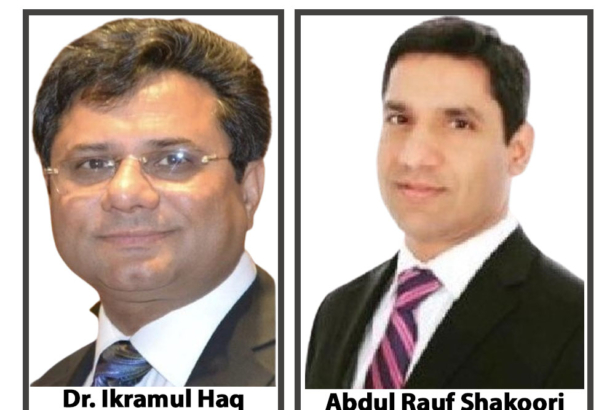
Dr. Ikramul Haq, Advocate Supreme Court, specializes in constitutional, corporate, environment, media, ML/CFT related laws, IT, intellectual property, arbitration and international tax laws. He holds an LLD in tax laws with specialization in transfer pricing. He was full-time journalist from 1979 to 1984 with Viewpoint and Dawn. He served Civil Services of Pakistan from 1984 to 1996.
He established Huzaima & Ikram in 1996 and is presently its chief partner. He studied journalism, English literature and law. He is Chief Editor of Taxation. He is country editor and correspondent of International Bureau of Fiscal Documentation (IBFD) and member of International Fiscal Association (IFA). He is Visiting Faculty at Lahore University of Management Sciences (LUMS) and member Advisory Board and Visiting Senior Fellow of Pakistan Institute of Development Economics (PIDE).
He has coauthored with Huzaima Bukhari many books that include, Tax Reforms in Pakistan: Historic & Critical Review, Towards Broad, Flat, Low-rate, and Predictable Taxes (third edition, 2024), Pakistan: Enigma of Taxation, Towards Flat, Low-rate, Broad and Predictable Taxes (revised/enlarged edition of December 2020), Law & Practice of Income Tax, Law , Practice of Sales Tax, Law and Practice of Corporate Law, Law & Practice of Federal Excise, Law & Practice of Sales Tax on Services, Federal Tax Laws of Pakistan, Provincial Tax Laws, Practical Handbook of Income Tax, Tax Laws of Pakistan, Principles of Income Tax with Glossary and Master Tax Guide, Income Tax Digest 1886-2011 (with judicial analysis).
He is author of Commentary on Avoidance of Double Taxation Agreements, Pakistan: From Hash to Heroin, its sequel Pakistan: Drug-trap to Debt-trap and Practical Handbook of Income Tax. Two books of poetry are Phull Kikkaran De (Punjabi 2023) and Nai Ufaq (Urdu 1979 with Siraj Munir and Shahid Jamal).
He regularly writes columns/article/papers for many Pakistani newspapers and international journals and has contributed over 3500 articles on a variety of issues of public interest, printed in various journals, magazines and newspapers at home and abroad.
_______________________________________________________________
Abdul Rauf Shakoori, Advocate High Court, is a subject-matter expert on AML-CFT, Compliance, Cyber Crime and Risk Management. He has been providing AML-CFT advisory and training services to financial institutions (banks, DNFBPs, Investment companies, Money Service Businesses, insurance companies and securities), government institutions including law enforcement agencies located in North America (USA & CANADA), Middle East and Pakistan.
His areas of expertise include legal, strategic planning, cross-border transactions including but not limited to joint ventures (JVs), mergers & acquisitions (M&A), takeovers, privatizations, overseas expansions, USA Patriot Act, Banking Secrecy Act, Office of Foreign Assets Control (OFAC). Over his career he has demonstrated excellent leadership, communication, analytical, and problem-solving skills and have also developed and delivered training courses in the areas of AML/CFT, Compliance, Fraud & Financial Crime Risk Management, Bank Secrecy, Cyber Crimes & Internet Threats against Banks, E–Channels Fraud Prevention, Security and Investigation of Financial Crimes. The courses have been delivered as practical workshops with case study driven scenarios and exams to ensure knowledge transfer.
His notable publications are Rauf’s Compilation of Corporate Laws of Pakistan, Rauf’s Company Law and Practice of Pakistan and Rauf’s Research on Labour Laws and Income Tax and others.
His articles include: Revenue collection: Contemporary targets vs. orthodox approach, It is time to say goodbye to our past, US double standards, Was Due Process Flouted While Convicting Nawaz Sharif?, FATF and unjustly grey listed Pakistan, Corruption is no excuse for Incompetence, Next step for Pakistan, Pakistan’s compliance with FATF mandates, a work in progress, Pakistan’s strategy to address FATF Mandates was Inadequate, Pakistan’s Evolving FATF Compliance, Transparency Curtails Corruption, Pakistan’s Long Road towards FATF Compliance, Pakistan’s Archaic Approach to Addressing FATF Mandates, FATF: Challenges for June deadline, Pakistan: Combating the illicit flow of money, Regulating Crypto: An uphill task for Pakistan. Pakistan’s economy – Chicanery of numbers. Pakistan: Reclaiming its space on FATF whitelist. Sacred Games: Kulbhushan Jadhav Case. National FATF secretariat and Financial Monitoring Unit. The FATF challenge. Pakistan: Crucial FATF hearing. Pakistan: Dissecting FATF Failure, Environmental crimes: An emerging challenge, Countering corrupt practices .
The recent publication, coauthored by these writes with Huzaima Bukhari is:
Pakistan Tackling FATF: Challenges & Solutions, available at:
https://aacp.com.pk/book-detail/pakistan-tackling-fatf-challenges-and-solutions-35
https://www.amazon.com/dp/B08RXH8W46
We welcome your contributions! Submit your blogs, opinion pieces, press releases, news story pitches, and news features to opinion@minutemirror.com.pk and minutemirrormail@gmail.com