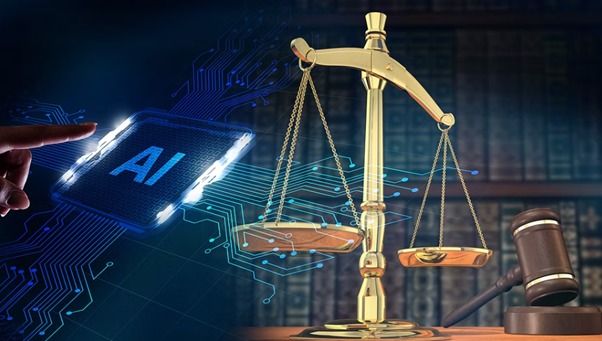
Summary
- The Supreme Court of Pakistan emphasised that an effective justice system must ensure the timely resolution of rent disputes to maintain a fair balance between the rights of both parties.
- To uphold this constitutional duty, a milestone has been met as the Law and Justice Commission of Pakistan has provided National Guidelines for Use of Artificial Intelligence in Judicial Institutions of Pakistan, 2026 (‘the AI Guidelines’) to manage mounting case backlogs, increasing procedural complexity, and growing public expectations of timely justice.
- Final decisions affecting legal rights must always remain the responsibility of judges “AI is not, and must never become, a substitute for judicial decision-making.” The National Judicial (Policy Making) Committee headed by Justice Muhammad Ali Mazhar of the Supreme Court of Pakistan will be taking care of the regulatory framework for the ethical and responsible use of AI within Pakistan’s judiciary.
By Faisal Ali Rana, Advocate High Court and LL. M. Candidate at SAHSOL-LUMS
Artificial Intelligence (‘AI’) has taken hold in Pakistan at a booming pace, and of course it is no surprise, as this is the future of technology for its fast and reliable solutions. AI, after conquering many fields, has now embarked on its mission to transform the Judicial System of Pakistan and why not? These modern AI Systems are capable of rapidly analysing extensive legal databases to identify relevant precedents, statutory provisions, and scholarly commentary. With the click of a button, the showdown begins, and work of hours is streamlined in minutes or perhaps even less. AI Systems in the Judiciary can help judges escape routine legal research, allowing judges to focus their intellectual efforts on substantive legal reasoning. These systems are not new but have already been incorporated in the legal world with AI bots such as Harvey AI and ChatGPT Legal, known as Judge-GPT.
The foundation for AI-assisted judicial processes was articulated by the Supreme Court of Pakistan in the case of Ishfaq Ahmed v. Mushtaq Ahmed, PLD 2025 SC 582. The Supreme Court of Pakistan was faced with a Rent matter which had been in litigation for over seven years. The Supreme Court showed concern and disappointment and held that Rent proceedings are intended to provide a swift and summary mechanism for resolving landlord-tenant disputes and observed that prolonged delays defeat the very purpose of rent legislation, undermining the rights of both landlords and tenants, and creating broader economic and social consequences. The Supreme Court of Pakistan emphasised that an effective justice system must ensure the timely resolution of rent disputes to maintain a fair balance between the rights of both parties. The mandate of this comes from Article 37(d) of the Constitution of Pakistan, 1973, which provides that the State shall ensure an inexpensive and expeditious justice system for its citizens.
To uphold this constitutional duty, a milestone has been met as the Law and Justice Commission of Pakistan has provided National Guidelines for Use of Artificial Intelligence in Judicial Institutions of Pakistan, 2026 (‘the AI Guidelines’) to manage mounting case backlogs, increasing procedural complexity, and growing public expectations of timely justice. Despite these benefits, the question of human judgment remains the cornerstone of adjudication. Judicial decision-making involves interpreting statutes, evaluating of witnesses, weighing competing evidence, and exercising equitable discretion. These functions require contextual understanding, ethical reasoning, empathy, and moral courage, none of which AI possesses. Final decisions affecting legal rights must always remain the responsibility of judges
“AI is not, and must never become, a substitute for judicial decision-making.”
The National Judicial (Policy Making) Committee headed by Justice Muhammad Ali Mazhar of the Supreme Court of Pakistan will be taking care of the regulatory framework for the ethical and responsible use of AI within Pakistan’s judiciary. These AI Guidelines correctly adopt the principle that AI must augment rather than supplant judicial reasoning. To preserve judicial independence, the AI Guidelines adopt the principle of Human Oversight (Human-in-the-Loop). Human oversight means that AI serves only as an advisory tool and that every AI-generated output must be independently reviewed, validated, and approved by a judge before it is relied upon. Judges must record their own reasoning and remain fully accountable for the final decision. This safeguard ensures that AI enhances, rather than replaces, judicial reasoning. The AI Guidelines further require ethical integrity and transparency. Judges must identify AI-generated portions of judicial documents, verify them through appropriate legal references, and maintain standardised reporting to ensure traceability and accountability. This addresses the Supreme Court’s concern regarding AI hallucinations, where generative AI may fabricate legal authorities or factual assertions. Consequently, the Supreme Court advocated a trust but verify approach, requiring independent judicial verification of every AI-generated citation or proposition.
The determination of legal rights must remain the exclusive province of human judges. AI may enhance the administration of justice, but it cannot replace the empathy, conscience, ethical reasoning, and moral courage that define the judicial office. The future of justice, therefore, lies not in replacing judges with machines, but in enabling judges to deliver more timely, consistent, and accessible justice through the responsible and constitutionally compliant use of Artificial Intelligence.
We welcome your contributions! Submit your blogs, opinion pieces, press releases, news story pitches, and news features to opinion@minutemirror.com.pk and minutemirrormail@gmail.com