Summary
- Meanwhile, AJK Prime Minister Chaudhry Faisal Mumtaz Rathore defended the decision to ban JAAC, saying it had become necessary due to the changing security situation in the region.
- JAAC leaders said their movement remains peaceful and confirmed that the planned long march would go ahead after internal consultations.
- Some leaders said the use of anti-terrorism laws against a protest movement could worsen instability and damage prospects for dialogue.
Police in Azad Jammu and Kashmir (AJK) have arrested around 72 people during a series of operations launched after the government imposed a ban on the Joint Awami Action Committee (JAAC) under anti-terrorism laws. The crackdown comes amid rising tensions in the region ahead of a planned protest call for June 9.
Officials said the arrests were carried out over the past 18 hours as part of efforts to maintain law and order. They stated that the action was necessary to prevent any deterioration in the security situation and to ensure public safety.
According to police, weapons, communication devices, and various documents were recovered during the raids. Authorities claimed that some of the seized material indicated organised planning related to protests and potential disruption of public order.
Police further alleged that certain individuals had suspected links with external contacts. They said investigations are ongoing into both digital and physical evidence recovered during the operations. Officials also claimed that early findings suggested plans to block roads, damage property, and create unrest.
Law enforcement authorities said that the state respects peaceful protest and freedom of expression. However, they warned that violence, armed activity, and disruption of daily life would not be tolerated under any circumstances. They added that all arrested individuals would face investigation under relevant laws.
Citizens have been urged to remain calm and avoid spreading rumours. Police also advised the public to stay away from sensitive areas and cooperate with law enforcement agencies as the situation develops.
Meanwhile, AJK Prime Minister Chaudhry Faisal Mumtaz Rathore defended the decision to ban JAAC, saying it had become necessary due to the changing security situation in the region. He said most of the points agreed between the government and JAAC had already been implemented or partially addressed, but some issues remained unresolved.
The prime minister said delays in reaching a final understanding contributed to the current crisis. He added that the government could not allow the situation to turn into chaos or instability. He also said that upcoming elections should be held on schedule and called on all political parties and citizens to act responsibly.
Rathore further stated that earlier negotiations with JAAC had almost succeeded but collapsed at the final stage, which led to further tensions and loss of life. He warned that attempts to create disorder during ongoing political discussions would not be tolerated.
On the other hand, JAAC leadership rejected the allegations and said the government’s actions were unjustified. The group claimed that internet services had been suspended in several areas and that raids were being conducted against its members. It also alleged that one activist had been attacked and another killed, although these claims have not been independently verified.
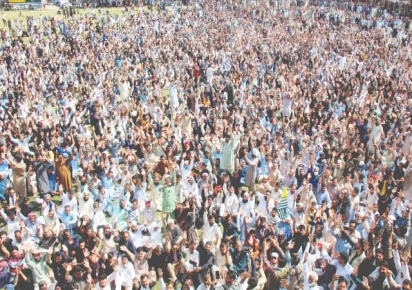
JAAC leaders said their movement remains peaceful and confirmed that the planned long march would go ahead after internal consultations. They urged supporters to avoid violence and not damage public or private property, stressing that their struggle is based on peaceful principles and legitimate demands.
They also appealed to Kashmiri communities abroad and human rights organisations to highlight the situation internationally. At the same time, they warned supporters not to spread unverified information and to avoid inflammatory behaviour.
Internet services remained disrupted across parts of AJK following the protest announcement, with monitoring groups reporting significant connectivity issues. The shutdown has raised concerns about communication and information access in the region.
The situation has also drawn criticism from several political figures and observers, who described the ban and arrests as a harsh move and warned it could increase tensions further. Some leaders said the use of anti-terrorism laws against a protest movement could worsen instability and damage prospects for dialogue.
We welcome your contributions! Submit your blogs, opinion pieces, press releases, news story pitches, and news features to [email protected] and [email protected]