Summary
- In the Gilgit-Baltistan elections, all four successful independent candidates have joined the Istehkam-e-Pakistan Party (IPP).
- According to political observers, this development is significant as it reflects a shift in the political landscape of Gilgit-Baltistan, where independent candidates often play a crucial role in government formation and party strength.
- Independent candidates in Gilgit-Baltistan often hold a decisive role in coalition-building, and their collective shift toward a political party can significantly influence the balance of power.
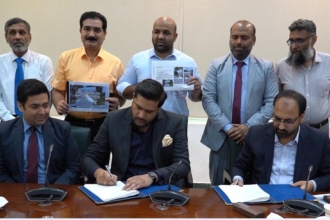
In the Gilgit-Baltistan elections, all four successful independent candidates have joined the Istehkam-e-Pakistan Party (IPP). The independent lawmakers announced their decision to join the party during a meeting with Federal Minister Aleem Khan, where they formally declared their political affiliation.
The candidates who have joined the IPP include Anwar Ali from GBA-23 Ghanche, Asad Shafiq from GBA-24 Ghanche-3, Muhammad Dilpazeer from GBA-15 Diamer, and Aman Ali from GBA-21 Ghizer-3. These four elected representatives, who initially contested and won as independent candidates, have now collectively aligned themselves with the Istehkam-e-Pakistan Party, strengthening the party’s presence in the Gilgit-Baltistan Legislative Assembly.
The announcement was made after their meeting with Federal Minister Aleem Khan, during which they formally expressed their support for the party. According to political observers, this development is significant as it reflects a shift in the political landscape of Gilgit-Baltistan, where independent candidates often play a crucial role in government formation and party strength.
Following their decision, Dilpazeer Khan stated that all four independent winners had formed a group and collectively decided to join the IPP. He emphasized that this was a coordinated decision rather than individual choices, highlighting their shared political direction and future strategy within the party framework.
Dilpazeer Khan further revealed that they are also in contact with other independent candidates as well as members of the Majlis Wahdat-e-Muslimeen (MWM). He indicated that discussions are ongoing with various political figures in order to expand the party’s influence in the region. According to him, efforts are being made to bring more representatives into the IPP fold in the near future.
He added that the group intends to invite other independent lawmakers to join the party, suggesting that the IPP is actively working to strengthen its position in the Gilgit-Baltistan Assembly. He expressed confidence that with continued support and further political alignments, the party would emerge as the second-largest political force in the assembly.
The development is being seen as an important political move ahead of future legislative activity in the region. Independent candidates in Gilgit-Baltistan often hold a decisive role in coalition-building, and their collective shift toward a political party can significantly influence the balance of power.
With this new alignment, the Istehkam-e-Pakistan Party is expected to gain greater representation and influence within the assembly. Political analysts believe that such mergers and affiliations could reshape the regional political dynamics, especially as parties prepare for upcoming legislative challenges and governance arrangements.
Overall, the joining of all four independent winners marks a notable development in Gilgit-Baltistan’s political scene. It not only strengthens the position of the IPP but also signals potential future realignments as more independents and smaller political groups consider their options in the evolving political environment of the region.
We welcome your contributions! Submit your blogs, opinion pieces, press releases, news story pitches, and news features to [email protected] and [email protected]