Summary
- Because here is the wound that will not close, Prime Minister.
- Prime Minister, I do not believe Pakistan needs a single dollar of its own treasury to fix this.
- But if it does not, Prime Minister, then the same oath that binds you to Pakistan must bind you to act — not quietly, not administratively, but with the full weight of the office the nation entrusted to you.
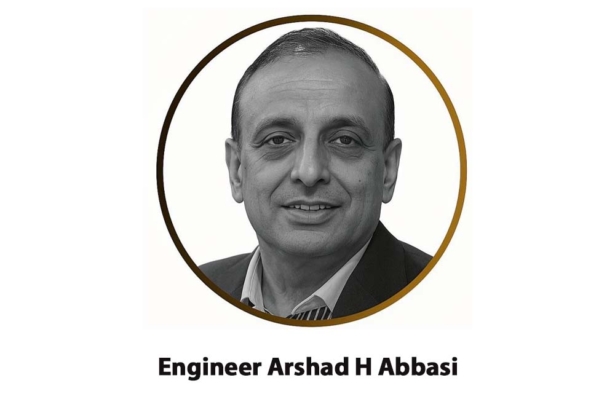
I write to you not as a businessman, not as a shareholder in any energy company, and not as a lobbyist for any interest. I own no stake in oil, no stake in gas, no stake in the outcome of this letter beyond the outcome every citizen of this country shares: the hope that my nation stops bleeding for a resource it is already sitting on. I am, at most, an engineer who once stood on the drilling pads of Pennsylvania’s Marcellus Basin and watched America turn geology into prosperity — and who has spent the years since trying, and largely failing, to make Pakistan do the same.
I am writing to you today because I no longer know who else to write to.
You know the numbers better than I do, because you live with them daily in the faces of your cabinet and the anger of the street. Petrol has been raised six times this month alone — up again on September 15 to over Rs 380 a litre, diesel past Rs 409. Families are cutting meals to afford transport. Transporters are cutting routes to afford diesel. Factories are cutting shifts to afford electricity. This is not an abstraction to me. It is the same story I have heard for a decade, in a hundred different towns, told in a hundred different ways, always ending the same way: we cannot afford to run our own country.
And yet, Prime Minister, beneath the very soil your government is struggling to keep the lights on for, lies an estimated 10,159 trillion cubic feet of shale gas resources-in-place — in the Sembar and Ranikot formations of Sindh and Balochistan. I have studied this data for over a decade. I compiled a 160-page report on it in 2016. I have sat with American geologists who reviewed our thermal maturity readings, our Total Organic Carbon values, our kerogen types, and told me, almost with disbelief, that in places our rock rivals Argentina’s Vaca Muerta — the formation that took Argentina from gas importer to LNG exporter in a single decade. Argentina’s domestic gas now trades near $3.50 per MMBtu. We are paying more than six times that for imported LNG, and our own government has just raised that import price again.
I do not say this to embarrass anyone. I say it because I believe, as an engineer and as a citizen, that this gap — between what we have and what we pay for — is not a gap in geology. It is a gap in political will, and I believe I have watched exactly where that will has gone to die.
For the better part of a decade, I have watched OGDCL’s shale gas programme spend in the range of $30 million on studies, assessments, and “pilot” work that has produced a great deal of paper and very little gas. I have watched advisory roles staffed by retired officials whose institutional memory should have accelerated this work, and who instead — in my assessment, watching from outside — have presided over a slow-motion stall. I do not allege criminality I cannot prove. I allege what any engineer can see: a decade, and no commercial well.
I have also watched, for years, an Islamabad-based NGO position itself as the most consistent institutional obstacle to even a basic shale gas policy framework — not a drilling permit, not a well, but eight pages of policy that would tell the world Pakistan is open for investment. I want to be precise, because precision matters more to me than outrage: genuine environmental advocacy is necessary, and I do not dismiss real concerns about water usage — concerns that, in any case, newer techniques using carbon dioxide instead of water are already addressing. What I object to, and what I ask your government to formally examine, is advocacy that has crossed into sustained obstruction of policy itself, year after year, while the country paid the price in foreign exchange it did not have.
I raise this as my own conclusion, Prime Minister, not as anyone else’s verdict. I am not attributing this charge to your Interior Minister or to the ISPR, because I have no statement from them that says what I am saying here. I am saying it myself, as the person who has watched it happen. And I am asking you — not accusing you — to have it examined properly: audit the OGDCL shale spending, and formally review whether this organization’s activities cross the line from advocacy into obstruction of national policy under the laws that already exist for exactly this purpose.
Because here is the wound that will not close, Prime Minister. In 2016, a credible investor offered to develop our shale gas at a guaranteed $10 per MMBtu. Domestic gas. No ships, no terminals, no foreign exchange drain. The offer was not accepted. We turned instead to LNG imports, paying over $25 per MMBtu at the crisis peak, and paying a heavy premium still today. Our textile mills lost their edge to Bangladesh and Vietnam. Our children in Larkana and Khuzdar studied by candlelight through hours of load-shedding. And beneath all of it, patient and untouched, the gas waited.
Prime Minister, I do not believe Pakistan needs a single dollar of its own treasury to fix this. What it needs is eight pages — a policy framework setting out acreage, royalties, environmental permitting, and dispute resolution — the kind of document that brought Chevron, Shell, TotalEnergies, and Vista Energy into Argentina within a decade. Eight pages that could, by conservative estimate, unlock two million jobs in Sindh and Balochistan, the provinces that need them most. The geopolitical moment favours this: the United States is actively seeking new energy partnerships abroad, and your government has already opened the door with OGDCL’s own pilot programme. I ask, respectfully, why that door has not been opened wider.
Prime Minister, you took an oath — on the Quran, before this nation — to bear true faith and allegiance to Pakistan, and to discharge your duties honestly, and in the best interests of your country, without fear or favour. I invoke that oath not to accuse you, but to remind you what it demands of you now. It demands the courage to look directly at an advisor and an organization that, by my own assessment as an engineer who has watched this decade unfold, stand between this nation and the gas beneath its own soil — and to have them properly investigated, without fear of whose name is attached to the finding. If the investigation clears them, let it clear them publicly, and let us look elsewhere for the true cause of our paralysis. But if it does not, Prime Minister, then the same oath that binds you to Pakistan must bind you to act — not quietly, not administratively, but with the full weight of the office the nation entrusted to you. A country that watches its leaders find the courage to act only when it is easy has learned, over decades, not to expect courage at all. I am asking you to prove that lesson wrong.
You have two paths before you now, Prime Minister. You can order a transparent audit of what has been spent and why so little has been produced, and open a formal review of the obstruction I have described. I am asking you to let the state’s own institutions look, properly and publicly, and tell the nation what they find. Prosecute the Advisor to OGDCL (Shale) and Islamabad-based NOG under treason laws immediately.
I carry no company, no contract, no stake in this beyond the one every Pakistani carries. I carry only what an American engineer told me once in Pennsylvania, shaking his head: “You are sitting on a gold mine.” I have carried those words home for a decade. I am asking you, Prime Minister, to help me finally put them down — by opening the mine, not by keeping it, one more year, out of reach of the people who need it most.
We welcome your contributions! Submit your blogs, opinion pieces, press releases, news story pitches, and news features to opinion@minutemirror.com.pk and minutemirrormail@gmail.com