Summary
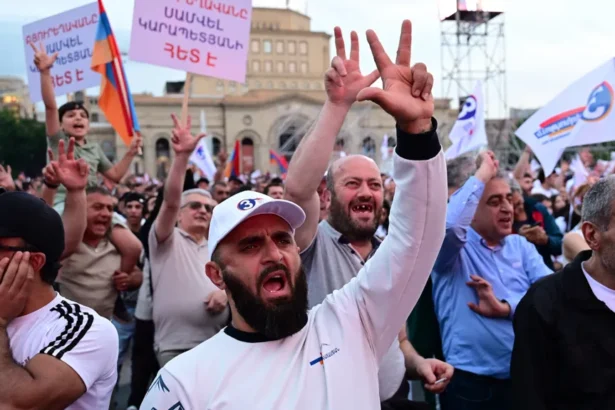
- Armenians headed to the polls on Sunday in a closely watched election that could determine whether the country continues moving closer to Europe or strengthens ties once again with its longtime ally, Russia.
- Former presidents Robert Kocharyan and Serzh Sargsyan have openly criticised Pashinyan and argue that Armenia’s security depends on rebuilding stronger military and economic ties with Russia.
- It represents a decision about Armenia’s future direction and whether the country is prepared to accept short-term economic difficulties in pursuit of closer ties with Europe.
Armenians headed to the polls on Sunday in a closely watched election that could determine whether the country continues moving closer to Europe or strengthens ties once again with its longtime ally, Russia.
The vote comes at a critical moment for the South Caucasus nation, where Prime Minister Nikol Pashinyan is seeking another term while facing economic pressure from Moscow and growing criticism at home. The election has attracted international attention because of Armenia’s shifting foreign policy and its strategic position between East and West.
Since taking office in 2018, Pashinyan has pursued a major change in Armenia’s international orientation. His government has taken steps towards closer relations with the European Union, passed legislation aimed at launching the EU accession process and strengthened ties with Western partners. He has also worked to improve relations with neighbouring Azerbaijan through a peace process supported by the United States.
Earlier this year, Armenia hosted a major gathering of European leaders and Ukrainian President Volodymyr Zelensky in Yerevan, highlighting the country’s increasing engagement with Western nations. Pashinyan’s diplomatic efforts have even earned praise from US President Donald Trump.
Despite these foreign policy achievements, public support for the prime minister has fallen significantly over the past five years. One of the main reasons is the issue of Nagorno-Karabakh, a region that was largely populated by ethnic Armenians until Azerbaijan regained control of it in 2023.
Many Armenians remain unhappy with the government’s handling of the conflict and the concessions made during peace negotiations. Critics accuse Pashinyan of failing to adequately defend Armenian interests and of not doing enough to secure the release of former Nagorno-Karabakh leaders currently detained in Azerbaijan.
Opposition groups have used these concerns to challenge the government’s direction. Former presidents Robert Kocharyan and Serzh Sargsyan have openly criticised Pashinyan and argue that Armenia’s security depends on rebuilding stronger military and economic ties with Russia.
Another prominent challenger is businessman Samvel Karapetyan, a billionaire who built much of his wealth in Russia. Although he is currently under house arrest over allegations of plotting against the government, his campaign has continued through family members and supporters.
Recent polling suggests Pashinyan’s Civil Contract party remains the largest political force with around one-third of voter support. However, a large portion of the electorate remains undecided or expresses little trust in any political leader.
Russia has played a significant role in the election atmosphere. In recent weeks, Moscow introduced restrictions on several Armenian exports, including flowers, fruit, vegetables, mineral water and cognac. Analysts in Armenia view these measures as an attempt to influence public opinion ahead of the vote.
Russia remains Armenia’s biggest trading partner and continues to hold considerable economic leverage. The country also supplies Armenia with natural gas at heavily discounted prices, giving Moscow another important tool of influence.
European leaders have responded by offering support to Yerevan. European Commission President Ursula von der Leyen recently announced financial assistance and pledged measures to help Armenian exporters affected by Russian restrictions.
Throughout the campaign, Pashinyan has promoted a vision of a peaceful Armenia integrated with Europe and less dependent on Moscow. His opponents, meanwhile, argue that distancing the country from Russia risks economic hardship and security challenges.
For many voters, the election is not simply about choosing a government. It represents a decision about Armenia’s future direction and whether the country is prepared to accept short-term economic difficulties in pursuit of closer ties with Europe.
The result is expected to shape Armenia’s domestic politics and foreign policy for years to come.
We welcome your contributions! Submit your blogs, opinion pieces, press releases, news story pitches, and news features to [email protected] and [email protected]