Summary
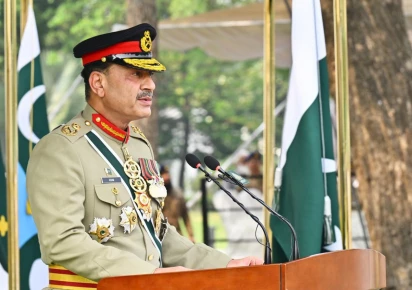
- ISLAMABAD: Chief of Defence Forces and Chief of Army Staff Field Marshal Syed Asim Munir is travelling to Tehran on Monday for high-level talks with Iranian officials, as Pakistan intensifies its diplomatic efforts to ease tensions between Iran and the United States.
- The trip comes amid heightened tensions between Tehran and Washington, with US President Donald Trump warning of tougher economic sanctions against Iran.
- During his latest Tehran visit, Field Marshal Munir is also expected to discuss regional security, including concerns surrounding the Strait of Hormuz and the possible consequences of additional US sanctions.
ISLAMABAD: Chief of Defence Forces and Chief of Army Staff Field Marshal Syed Asim Munir is travelling to Tehran on Monday for high-level talks with Iranian officials, as Pakistan intensifies its diplomatic efforts to ease tensions between Iran and the United States.
The visit was announced by Iranian Foreign Ministry spokesperson Esmaeil Baghaei, who said Munir would lead an official delegation to Tehran. Pakistan has not yet formally confirmed the trip.
According to Baghaei, the visit is aimed at strengthening cooperation between Pakistan and Iran while supporting Islamabad’s efforts to promote peace and stability in the region. Munir is expected to meet senior Iranian officials and discuss bilateral ties as well as broader regional security concerns.
The trip comes amid heightened tensions between Tehran and Washington, with US President Donald Trump warning of tougher economic sanctions against Iran. The proposed measures have raised concerns among countries maintaining commercial and financial relations with Tehran.
Munir has previously travelled to Iran several times as part of Pakistan’s diplomatic engagement. Islamabad emerged as an important mediator after tensions between Iran and the US intensified earlier this year and helped facilitate the Islamabad Memorandum of Understanding in June.
The framework provided a basis for negotiations on issues including sanctions and Iran’s nuclear programme. Subsequent discussions were held in Switzerland with Pakistan and Qatar helping facilitate the process. However, the talks failed to produce a final agreement within the initial 60-day period, which expired on August 17.
Iran has maintained that the 60-day period was not a binding deadline and could be extended if negotiations required more time. Pakistan, meanwhile, continues to view the Islamabad framework as a possible foundation for future dialogue.
During his latest Tehran visit, Field Marshal Munir is also expected to discuss regional security, including concerns surrounding the Strait of Hormuz and the possible consequences of additional US sanctions.
For Islamabad, the diplomatic mission carries significant importance. Pakistan maintains close relations with Iran while simultaneously seeking to preserve its strategic and economic partnerships with the United States and Gulf states.
Munir’s visit therefore reflects Pakistan’s attempt to keep diplomatic channels open and encourage dialogue at a time when tensions between Tehran and Washington remain high.
We welcome your contributions! Submit your blogs, opinion pieces, press releases, news story pitches, and news features to opinion@minutemirror.com.pk and minutemirrormail@gmail.com