Summary
- Astronauts have successfully captured X-ray images of their own hands while in space for the first time.
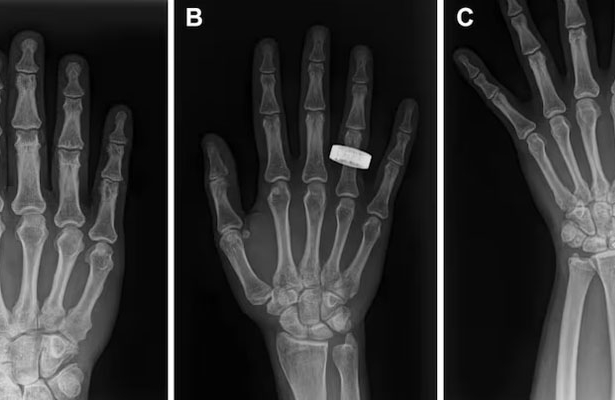
- According to a study published in the journal Radiology, researchers announced that X-ray images were successfully obtained during a commercial spaceflight marking the first time such imaging has been performed in orbit.
- Gifford, obtaining the first X-ray images of both humans and equipment in space demonstrates the potential to expand orbital radiography and diagnostic capabilities, benefiting scientific research, crew health monitoring and spacecraft hardware inspections during future space missions.
Astronauts have successfully captured X-ray images of their own hands while in space for the first time.
According to a study published in the journal Radiology, researchers announced that X-ray images were successfully obtained during a commercial spaceflight marking the first time such imaging has been performed in orbit.
The achievement took place during SpaceX’s Fram2 mission, a three-and-a-half-day polar orbit mission launched in 2025. The astronauts used a commercial off-the-shelf portable digital X-ray generator and a flat-panel detector to capture images of the crew’s hands, arms, chest, abdomen and hips.
Remarkably, the Fram2 crew completed the imaging procedure after receiving only four hours of pre-flight training.
Why were X-rays taken?
Dr. Shawna Gifford, Assistant Professor of Aerospace Medicine at the Mayo Clinic and the study’s lead researcher said that having multiple medical imaging technologies available in space has long been a goal of aerospace medicine as it would allow doctors to diagnose illnesses and injuries during space missions.
She explained that traditional X-ray machines are large, heavy, consume significant power and are sensitive to even slight patient movement which can affect image quality. In contrast, the new portable X-ray system is lightweight, fast and designed to operate effectively in the microgravity environment of space.
According to Dr. Gifford, obtaining the first X-ray images of both humans and equipment in space demonstrates the potential to expand orbital radiography and diagnostic capabilities, benefiting scientific research, crew health monitoring and spacecraft hardware inspections during future space missions.
We welcome your contributions! Submit your blogs, opinion pieces, press releases, news story pitches, and news features to opinion@minutemirror.com.pk and minutemirrormail@gmail.com