Summary
- I am not afraid that AI will kill me by 2030.
- AI does not need another country’s land.
- Perhaps AI will not destroy humanity.
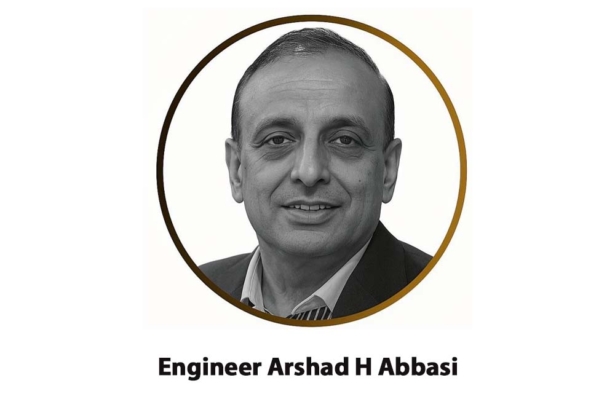
I am perhaps one of the poorest people on this planet, and I have a very different response to the growing fear that artificial intelligence may wipe out humanity this decade. Three researchers associated with the US AI company Anthropic have warned about the possibility of advanced AI becoming an existential threat. One of them, Jacob Coxon, has reportedly left the company because of his concerns, while Elon Musk has also entered the debate. I do not dismiss these warnings. AI is extraordinarily powerful, and it must be developed with strong safeguards. But as a poor man struggling to survive, I have another question: what is humanity doing to humanity today?
I am not afraid that AI will kill me by 2030. I may die much earlier. If the price of petrol and diesel continues to rise because of the continuing Iran-US confrontation and disruption of energy routes, I could die from hunger within months. I do not use petrol for travelling. I do not need a luxury car or an expensive lifestyle. I need only bread to live. Yet the price of flour is directly affected by the cost of petrol and diesel because fuel is part of transporting wheat, flour and every other necessity from the farm to the market and finally to the kitchen.
So what am I doing to survive the higher cost of fuel? I am eating less every day. This is my personal experience of the global energy crisis. For a rich person, another increase in the price of petrol may mean a larger bill at the filling station. For a poor person like me, it can mean one less meal. If the conflict continues to push energy and food prices upward, starvation may kill me much earlier than any superintelligent machine could kill humanity.
That is why I question the way we discuss AI. Perhaps the greatest existential danger is not that machines will become too intelligent. Perhaps it is that human beings have become dangerously irrational.
Look at the world. Russia and Ukraine continue to suffer from war. The Middle East remains trapped in conflict. The Iran-US confrontation threatens energy supplies. The Strait of Hormuz has become a critical concern for global oil markets. The Red Sea and Bab el-Mandeb remain vulnerable to conflict and disruption. Recent developments involving the Houthis and Yemen’s Red Sea coastline have further increased the danger to international shipping.
For poor people, these are not distant geopolitical stories. They become the price of petrol, diesel, flour, electricity and bread. Every war eventually reaches the kitchen of the poor.
So I ask the global community: if AI and robots eventually become capable of governing countries, would they really fight wars over territory, oil, gas, water and political supremacy?
I do not believe AI would automatically create heaven on Earth. AI can be misused by humans and can reproduce human biases. But imagine major decisions being tested through evidence, mathematics, international law, resource availability, population needs and long-term consequences rather than political emotion, personal ambition and greed.
Consider Pakistan now. If AI had been sitting in the Planning Commission and advising ministers when major energy projects were approved, would Pakistan have invested so heavily in expensive imported coal-fired and LNG power plants? Would an intelligent system, looking at Pakistan’s foreign-exchange position, domestic resources, electricity demand and long-term fuel prices, have recommended such dependence on imported fuels?
Would it have allowed the power sector to accumulate enormous circular debt and then transfer the burden to ordinary citizens through higher electricity tariffs, fuel adjustments and levies?
An AI planning system could have asked one simple question before every major investment: Can Pakistan afford this electricity, and can its people pay for it?
It could compare hydropower, solar, wind, indigenous resources, transmission capacity, demand forecasts and imported fuel costs over decades rather than according to the political life of one government.
The same principle applies to bureaucracy and corruption. AI has no personal desire for a house, plot, foreign bank account or luxury vehicle. It does not need a government contract for its relatives. It does not require political patronage. It has no personal financial interest in who wins a tender.
AI is not automatically incorruptible because humans design and control it. But properly governed AI could make corruption far more difficult through permanent records, transparent procurement, price comparisons, anomaly detection and continuous auditing.
Imagine AI helping allocate development funds in Balochistan, Khyber Pakhtunkhwa and Azad Jammu and Kashmir according to actual need and measurable results rather than political influence. Every rupee could be tracked. Every project could be tested. Every failure could be identified.
Now consider the suspended Indus Waters Treaty between India and Pakistan. Instead of allowing water to become another source of confrontation between two nuclear-armed countries, AI could analyse river flows, tributary basins, rainfall, glacier melt, population, per-capita water availability, agricultural requirements, climate change and international law. It could model thousands of possible futures and identify equitable and legally defensible solutions.
If AI were supporting the UN, UNDP or UNFCCC, decisions could similarly be tested against poverty, climate security, environmental protection and equitable distribution of resources.
This does not mean handing absolute power to machines. It means using AI as an impartial analytical referee before humans choose war, waste or corruption.
Humanity already possesses nuclear weapons, enormous wealth and extraordinary technology, yet millions cannot afford bread. We have satellites and supercomputers, but still fight over land, oil, gas and water. We have enough intelligence to reach the Moon but apparently not enough wisdom to prevent a poor person from starving because fuel prices rise.
Perhaps the problem is not intelligence. Perhaps the problem is wisdom.
Global leadership has badly failed to maintain peace and has failed to deliver prosperity to billions of people. Leaders continue fighting over territory, resources and influence while ordinary people pay the price. They speak about national security while the poor struggle for food security.
Therefore, as one of those poor people, I make a provocative demand: if human leaders cannot stop fighting, let AI replace the failed decision-making systems that have brought the world to this point.
I do not mean AI dictatorships. I mean intelligent, transparent and independently audited systems that have no lust for oil, gas, money, territory or personal wealth.
AI does not need another country’s land. It does not need an oil field. It does not manufacture nationalism. It does not become a warrior because another leader insults it.
I am not afraid of an AI that seeks peace. I am afraid of humans who possess enormous power but continue to behave like warriors.
The poor people of this world cannot afford another decade of human rivalry. We need bread, water, affordable energy, peace and dignity—not another war.
The global leadership has had decades to make this world peaceful and prosperous. It has badly failed.
So let AI try. Perhaps AI will not destroy humanity. Perhaps it can save humanity from those who have already made this beautiful planet a hell for its poorest people.
We welcome your contributions! Submit your blogs, opinion pieces, press releases, news story pitches, and news features to opinion@minutemirror.com.pk and minutemirrormail@gmail.com